
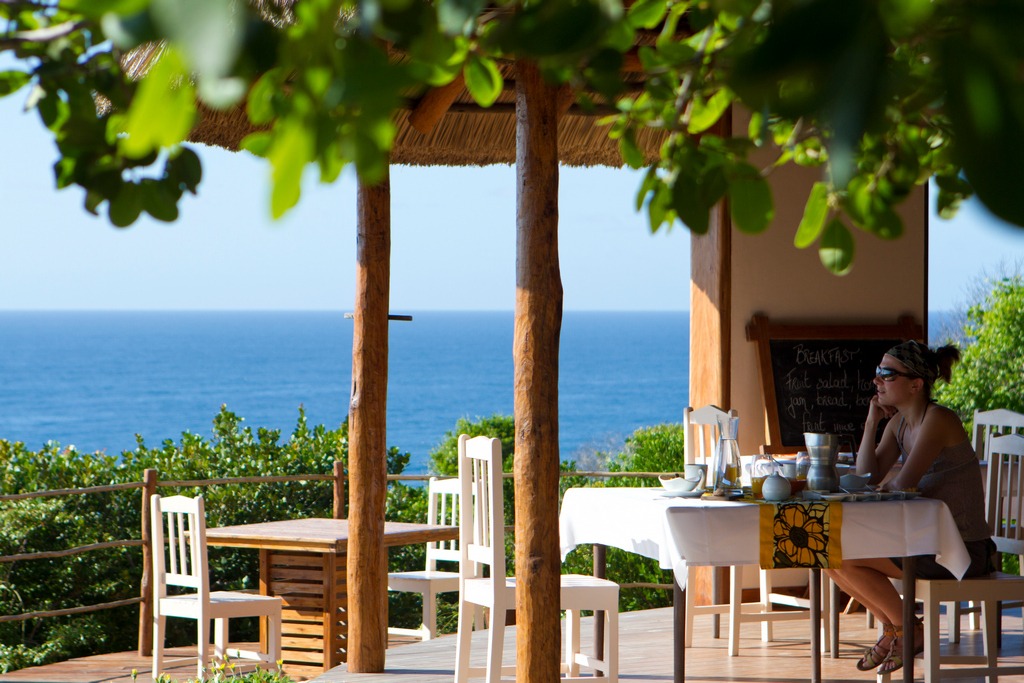
Which bird species do you think is the biggest attraction to visitors of your lodge?
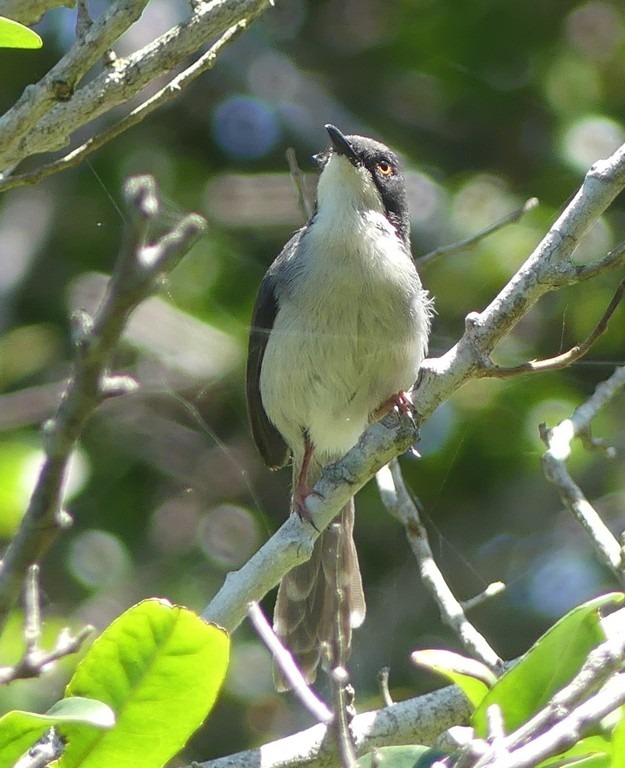
Black-headed Apalis (Apalis melanocephala)
What is the name of your lodge, and since when has your lodge been operating?
Dunes de Dovela Eco-Lodge, operating since 2011.
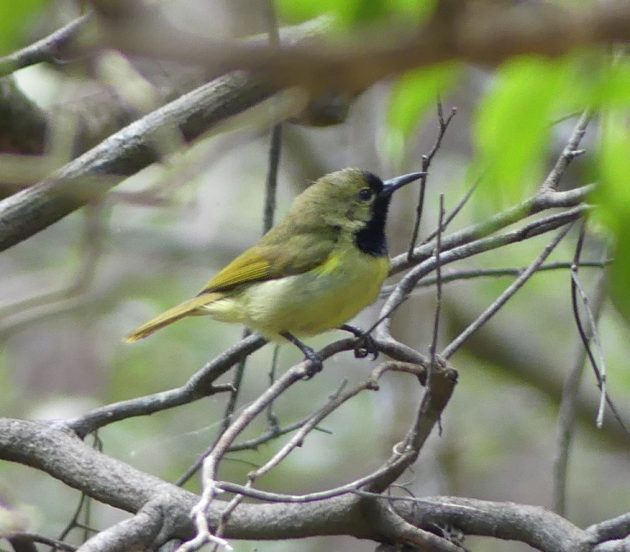
Plain-backed Sunbird
How best to travel to your lodge?
Fly into Inhambane Airport (INH) from Maputo or Johannesburg, then drive 80-90 km south (about 1.5 hours) on good roads to the turnoff near Inharrime; the final 12.5 km is a sandy 4×4-only track through the forest. Alternatively, drive from Vilanculos (4 hours north) or Maputo (5-6 hours). We can arrange transfers from the airport or nearby towns.
From Maputo, estimated about 6 hours drive (420 km). At 20 km North of Inharrime (and more or less 10 km after Zavora’s crossroad), you will find on the left of the road national 1 a road sign « Dunes de Dovela » indicating on your right the beginning of the sandy track (S 24? 22’ 30.1”, E 035? 11’ 31.7”).
From Inhambane and/or Maxixe, an estimated 1h30mn drive to the South. Around 5 km after Inhacoongo, you will find on the right of the Road National 1 a road sign « Dunes de Dovela » indicating the beginning of the sandy track on your left (S 24? 22’ 30.1”, E 035? 11’ 31.7”).
Thank you for sending an sms when you turn off the road (which permits us to come and help in case of a problem!): Lodge +258 87 26 29 164.
Once on the track, take the road on the right inside in front of the coconut factory (option for a secure car park in the garden of a family we work with) and follow the bush baby footprints, white painted on the small wooden road signs. Please, trust those signs and not your GPS!
12.5 km of a 4X4 track only (about 40 mns):
The first 8 kilometers are quite easy and take you to criss-cross some villages.
From the lake, you still have 4 km of a very sandy track into the coastal forest. Here, you need to lock your differential if you have the option on your car (a sign tells you when you need to do so). Stay in high range gears (4H) and use the first (especially at the bottom of a slope to avoid being obliged to change down) gear and keep moving. Be aware that SUV, 4X2, Duster, CRV, Rav4, and other light or low clearance 4X4 vehicles are not able to make the last 4 km. Do not hesitate to contact us for a transfer from the village; we have a secure car park there too.
Note: The closest petrol station is in Inharrime (32.5 km south) or Cumbana (30km north).
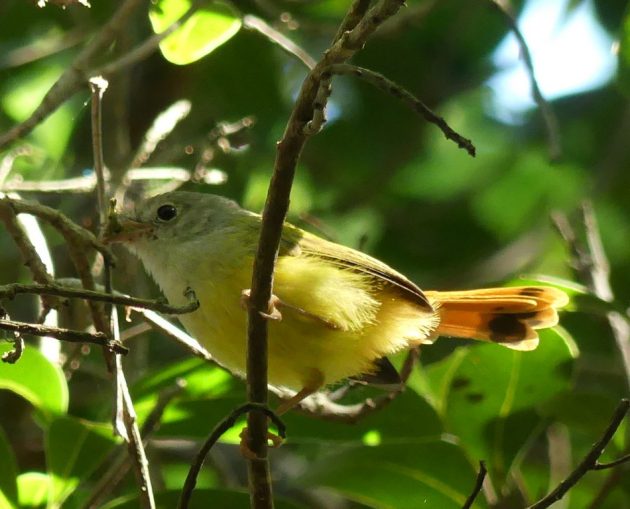
Livingstone’s Flycatcher
What kind of services – except for accommodation and food – does your lodge offer to visiting birders?
- Guided birdwatching walks led by a local guide.
- A dedicated bird hide in the coastal forest for quiet observation.
- Binoculars, bird apps, and reference books are available on loan.
- Updated lodge bird list with 303 species recorded.
- Marked trails across a 73-hectare area
- Lake kayaking for aquatic/riparian bird observation
- Seasonal snorkeling and marine life viewing
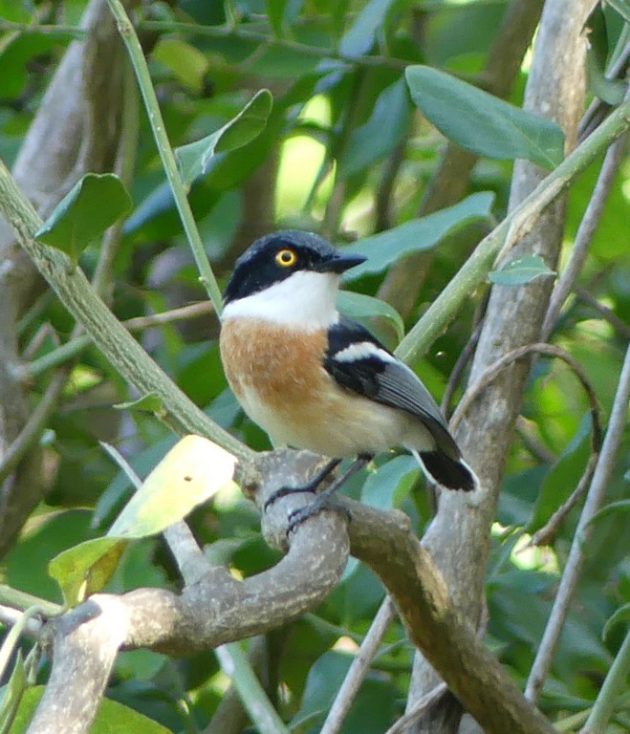
Woodward’s Batis
What makes your lodge special?
- Located in pristine coastal forest and dunes, offering both forest and ocean habitats
- Set within a 100-hectare private conservation area with extremely low human impact
- Eco-conscious architecture built to blend with nature using local materials
- An authentic, remote atmosphere that provides deep immersion in nature
- On-site whale watching from July to October (humpback migration)
- Fresh, seasonal cuisine blending Mozambican and French culinary traditions
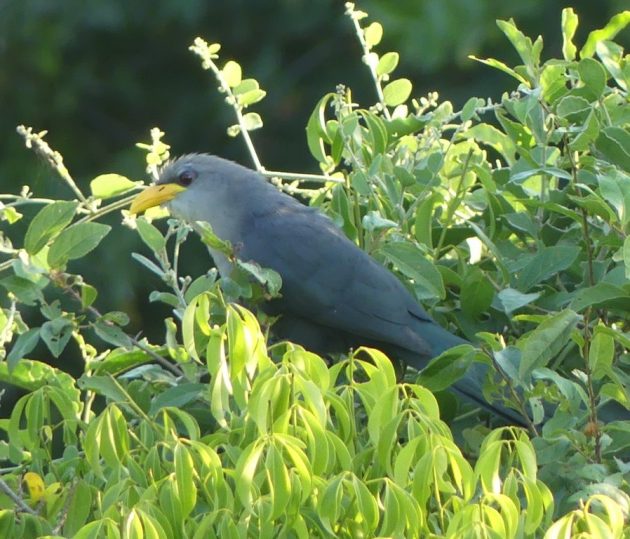
Green Malkoha
What are the 10 – 20 most interesting birds that your lodge offers good chances to see?
Here are 10 standout species with excellent viewing opportunities in our dunes, forest, lake, and beach habitats (from our 303-species list):
- Black-headed Apalis (Apalis melanocephala)
- Green Malkoha (Ceuthmochares australis)
- Woodwards Batis (Batis fratrum)
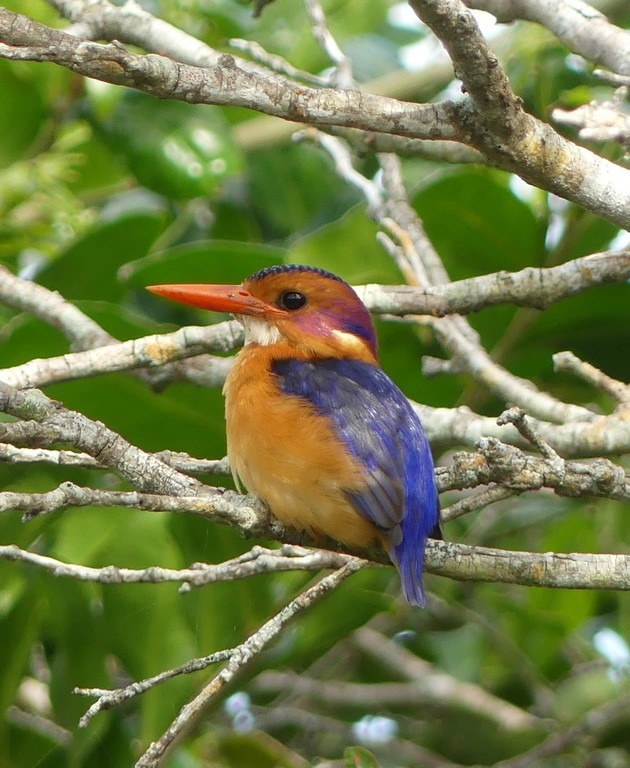
- African Pygmy Kingfisher (Ispidina picta)
- Brown Scrub Robin (Cercotrichas signata)
- Livingstone’s Flycatcher (Erythrocercus livingstonei)
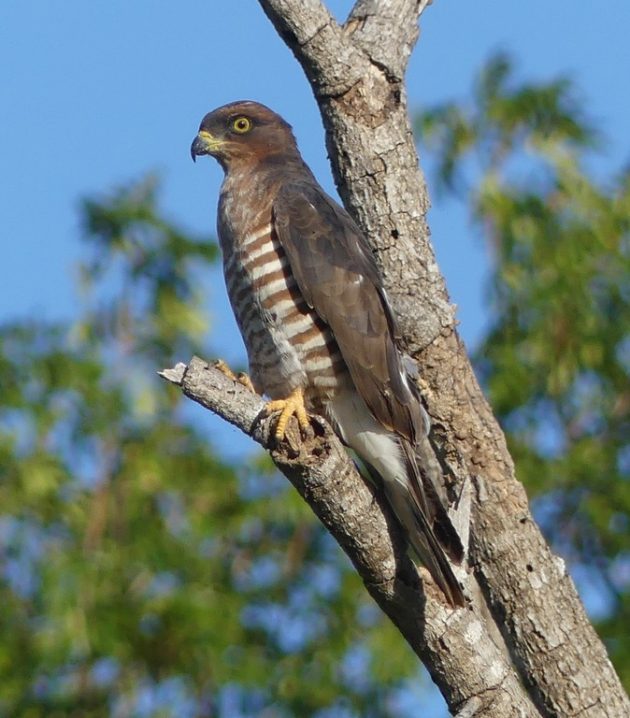
- African Cuckoo-Hawk (Macheiramphus alcinus)
- Plain-backed Sunbird (Anthreptes reichenowi)
- Grey Sunbird (Cyanomitra veroxii)
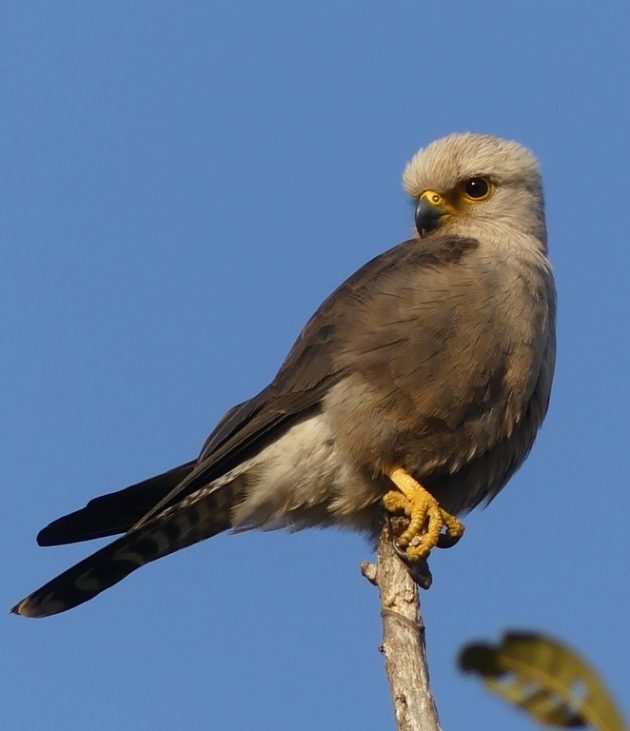
- Dickinson’s Kestrel (Falco dickinsoni)
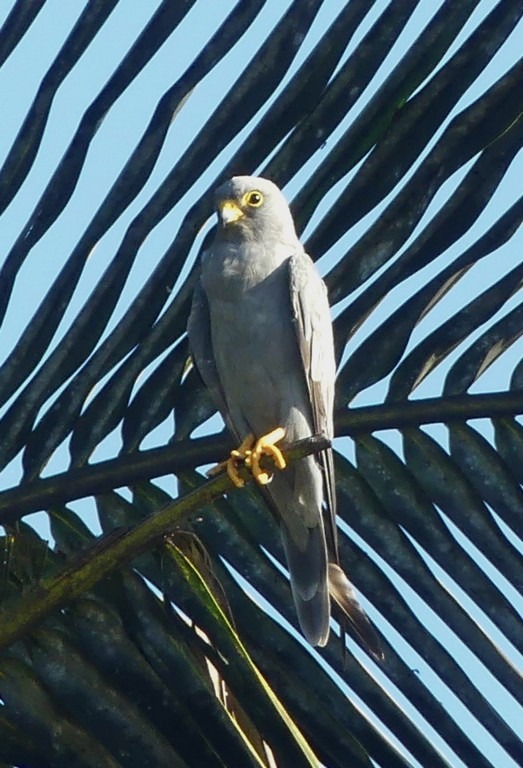
- Sooty Falcon (Falco concolor)
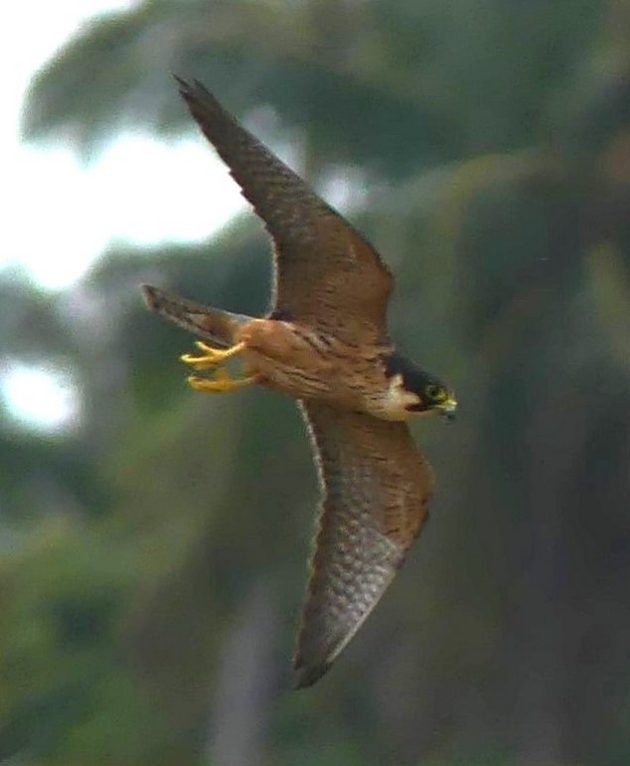
- African Hobby (Falco cuvieri)
- Collared Palm-Thrush (Cichladusa arquata)
- Grey Waxbill (Estrilda perreini)
Plus a rich variety of sunbirds, kingfishers, bee-eaters, and migratory raptors, over 303 species recorded across forest, lake, and beach habitats.
African Hobby
What is the best time to visit your lodge, and why?
June to October – the dry winter season brings cooler temperatures (20-28°C), minimal rain, and the spectacular humpback whale migration visible from our decks and beach. It’s also prime for forest birding with active migrants and residents, plus comfortable hiking conditions. Avoid the hot, humid rainy season (November-April) for trail-focused visits.
For birdwatching enthusiasts, the months of January to March offer the ideal window to observe the Sooty Falcon and the African Hobby in their natural habitats. These species are most active during this period, making it the perfect time for a memorable sighting.
Sooty Falcon
Is your lodge involved in conservation efforts? If yes, please describe them.
Yes, profoundly so. We are located within a 73-hectare protected coastal conservation area dedicated to preserving endemic flora and fauna. Our mission goes beyond protection; we actively engage and educate local communities about the heritage value of their natural environment and promote sustainable living practices.
Our construction was carried out using eco-friendly methods, and we prioritize sourcing materials and producing locally to strengthen village economies. In turn, tourism revenue directly funds critical conservation initiatives, including anti-poaching efforts, reforestation programs, and biodiversity monitoring, all in a malaria- and predator-free environment.
We are deeply committed to supporting the local community through investment in school infrastructure, employment opportunities, and local food sourcing. Additionally, we play an active role in sea turtle conservation through nest protection and ongoing monitoring efforts.
Dickinson’s Kestrel
What other suggestions can you give to birders interested in visiting your lodge?
- Pack lightweight long-sleeved clothing, sturdy walking shoes for sandy trails, high-SPF sunscreen, insect repellent (even in dry season), and a reusable water bottle (we provide refills).
- Bring your own binoculars if preferred; ours are available.
- Download bird apps like eBird or Roberts VII for southern African species and review our online bird list for targets.
- Book early for whale season (June-October).
- Consider staying at least 3–5 nights for the full experience across different habitats
- We’re remote – but that’s part of the magic!
African Pygmy Kingfisher
Do you have activities for non-birders? If so, please describe.
Yes, our all-inclusive non-motorized activities include:
- Relaxing on 10 km of private, pristine beach and ocean swimming or sunset dune walks.
- Humpback whale watching (July–October)
- Snorkeling in reef pools
- Cultural visits to Dovela village and school
- Nature trails and guided forest walks focused on plants, insects, and local ecology
- Kayaking on serene Dongane Lake.
If any reader of 10,000 Birds is interested in staying at your lodge, how can they best contact you?
Email us at contact@dunesdedovela.com, call +258 87 262 9164 (Monday-Saturday, 8 am-6 pm), or use our website’s booking form at www.dunesdedovela.com. We’re happy to tailor packages and answer questions!
African Cuckoo-hawk
Is there anything else you would like to share with the readers of 10,000 Birds?
Dunes de Dovela isn’t just a lodge – it’s a living testament to harmonious eco-tourism, where every guest becomes part of a story of empowerment and preservation. Amidst the whispers of ancient milkwood trees and the crash of waves, you’ll rediscover a profound connection to nature. We can’t wait to welcome fellow nature lovers and share the magic of this untouched Mozambican gem.




Leave a Comment