

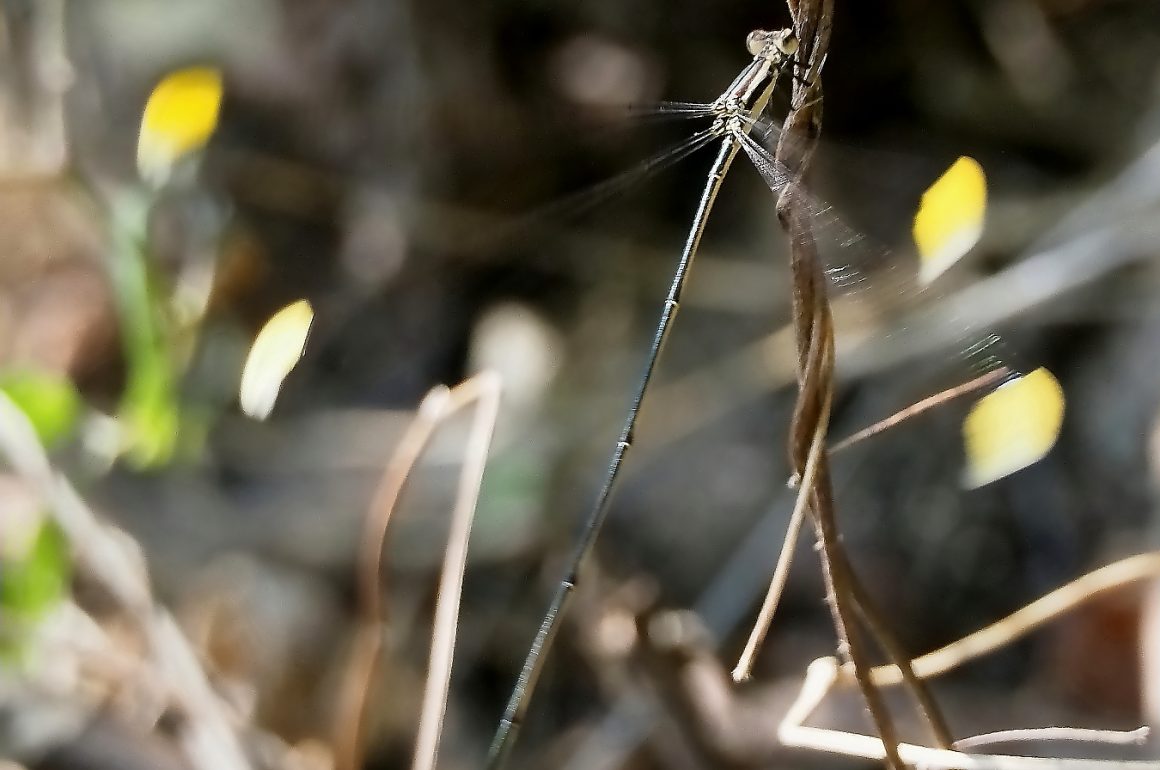
Truth in advertising: The strange apparition in this title did have wings, but it did not have feathers. Still, it was one of those serendipitous wonders one happens across only because one is birding. And now, back to those birds…
Just over a month ago, my wife and I came home to Mexico from the trip to Europe/Morocco about which I have recently been writing. A few days later, I was able to go birding with my ornithologist/guide friend Jonathan Vargas. We chose to drive along the Mil Cumbres (Thousand Peaks) route, which is as twisty and high as it sounds, topping off at 3,000 m/10,000 ft. Our plan was to check out some spots I have visited for years, and a couple of new spots.
A well-documented Golden Eagle had recently been spotted along this route, and Jonathan knew exactly where it was seen. But that was the first sighting in our state of Michoacán in some 50 years, so our chance of repeating the sighting was tiny to none. And it did not show up. (A week later, on a ministry trip, I saw a suspiciously large bird of prey fly over the highway, a good ways to the east of the above spot. I had never seen a bird of prey fly that way before: glide – flap, flap, flap – glide – flap, flap, flap – repeat in a steady pattern. This is apparently the way Golden Eagles often fly. So though I know it almost certainly isn’t true, I can go to my grave believing I saw the águila real michoacana.)
As you go higher in the Michoacán mountains, the species count tends to drop, but their interest level increases. We stopped at one very promising new spot, and while we “only” saw 45 species there, more than a quarter were colorful Wood Warblers (Black-and-White, Crescent-chested, Nashville, Yellow-rumped, Grace’s, Black-throated Gray, Townsend’s, Hermit, Golden-browed, and Red-faced Warblers, as well as the Painted and Slate-throated Redstarts). Every single one is a knockout. And four hummingbirds (Rufous, White-eared, Berylline Hummingbirds, and the Mexican Violetear) were buzzing around at the same time.
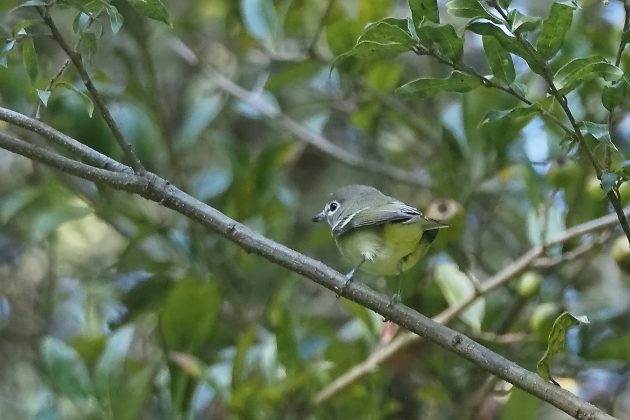
Unfortunately, it was an even poorer day for my already poor photography skills, so you’ll have to settle for this shot of a Cassin’s Vireo. He’s seen from behind because I asked him for a flirty pose.
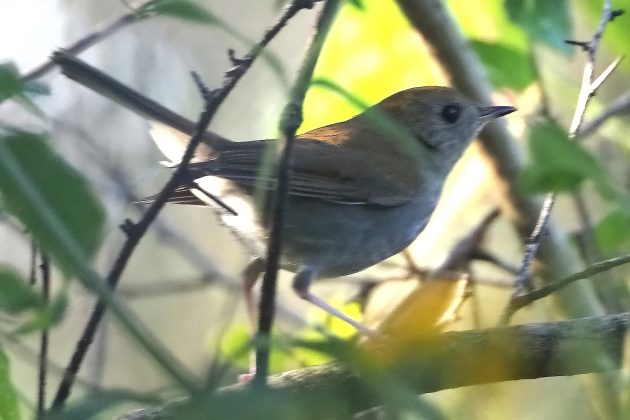
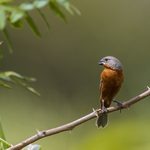
I’ll also include this photo of a Russet Nightingale-Thrush we saw, just because those are much harder to find here than Orange-billed Nightingale-Thrushes.
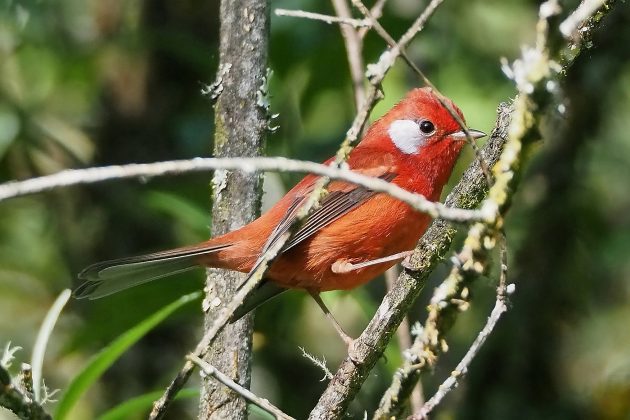
Once we got higher in altitude, we reached the zone where the charming Golden-browed and Red Warblers crowded out the Wood Warblers I mentioned above. Unlike those, this one did give me a fine shot:
Other than those, you’ll just have to take my word for it that we saw 67 species that day. Not bad at all for a high-altitude outing.
Which leaves just one thing more, which is that strange apparition I mentioned at the beginning of this post. On our first stop, at the base of a lovely waterfall next to the highway, I noticed the strangest dancing yellow lights. They sparkled and moved roughly in tandem, but we could see nothing that held them together. Since we were not in Britain, it seemed unlikely that these might be will-o’-the-wisps.
The actual explanation turned out to be almost as interesting as that fantastical theory. By following these golden lights, we eventually managed to see their source: three-inch-long, incredibly delicate damselflies with wings that were entirely transparent except for their golden tips. When they flew, those golden tips were the only thing one could see. And their name, once we determined it at home, was as unusual as these creatures themselves. These are apparently named Helicopter Damselflies. (My best uneducated guess is that they were Pseudogaster aberrans.)
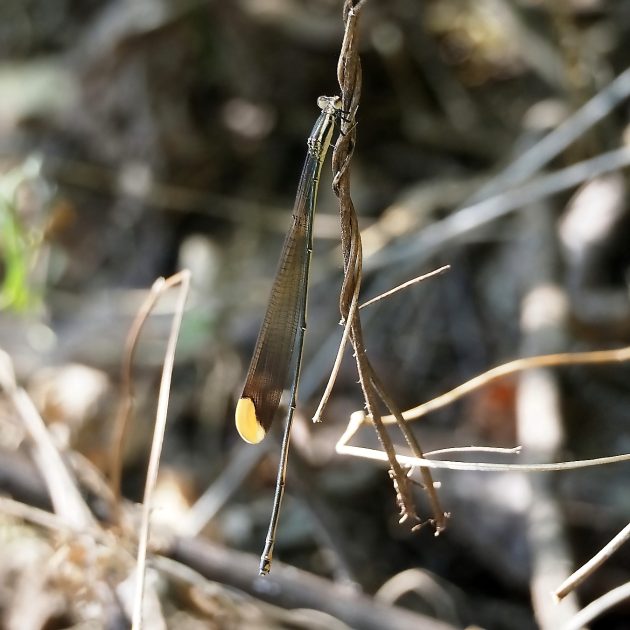
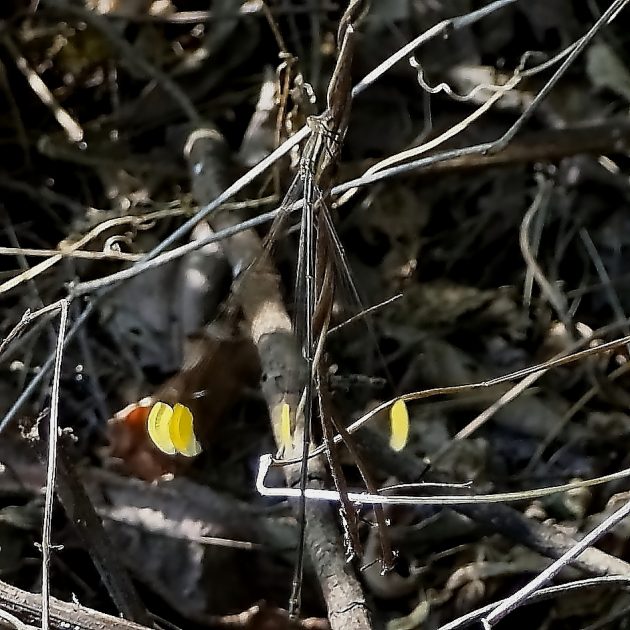
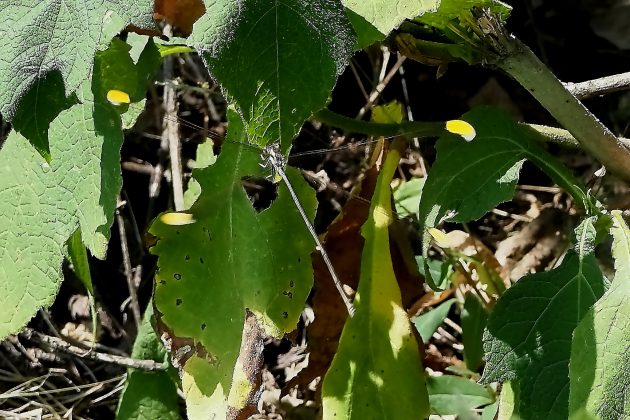
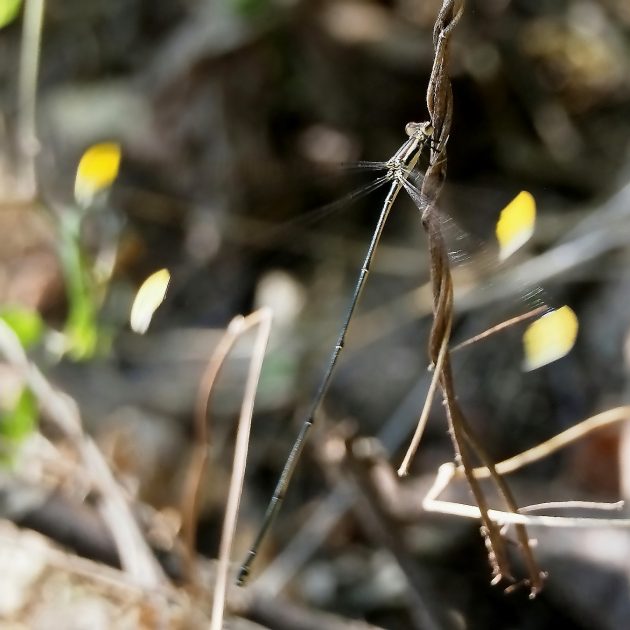
One sees the most interesting things while birding! (And what did they call Helicopter Damselflies before there were helicopters?)







What a great list of desirable birds again. I usually describe the flight of the Common Buzzard as glide – flap, flap, flap – glide – flap, flap, flap. Golden Eagle apparently flaps more but I have yet to see one in flapping flight. The long tail is a good ID point.
And Barn Owls and Barn Swallows before barns?
The helicopter damselflies are a really cool sighting. Apparently they are specialist predators of web spinning spiders, plucking them out of their webs while avoiding getting caught, and some species can live as long as seven months!
Wow, 67 species in a day – how thrilling! I thoroughly enjoyed reading this and looking up all these birds that I hadn’t heard of before. Thank you for your post.
This summer, while birding, I saw my first katydid. Also, I found a preying mantis, which I haven’t seen in years. Your stunning bugs beats them both,
One of these years I really need to get to Morelia and see some of the lovely birds you see. We are going to fly to Cancun soon and then drive south for birds. Nice to have a non-stop flight there and by going south avoid the most touristy places. I’m not sure how to get to Morelia and who would guide us but when the time comes I know whom to ask! I love your descriptions of the altitude changes, so special in Mexico.
Thanks to all for your comments! It’s interesting to know what and how these damselflies eat. Joan, it looks like you are in St. Louis. There are direct flights to Morelia from Dallas, Houston, and Chicago, as well as Los Angeles, San Jose and Oakland. And recently, direct flights have been added from… Cancun! I don’t do full-time guiding, so once a week is about my limit. But I now have several friends to fill in the gaps, such that you could spend as many days as you like with a little planning time. Also, Morelia is a UNESCO world heritage city, with all sorts of non-avian attractions.