

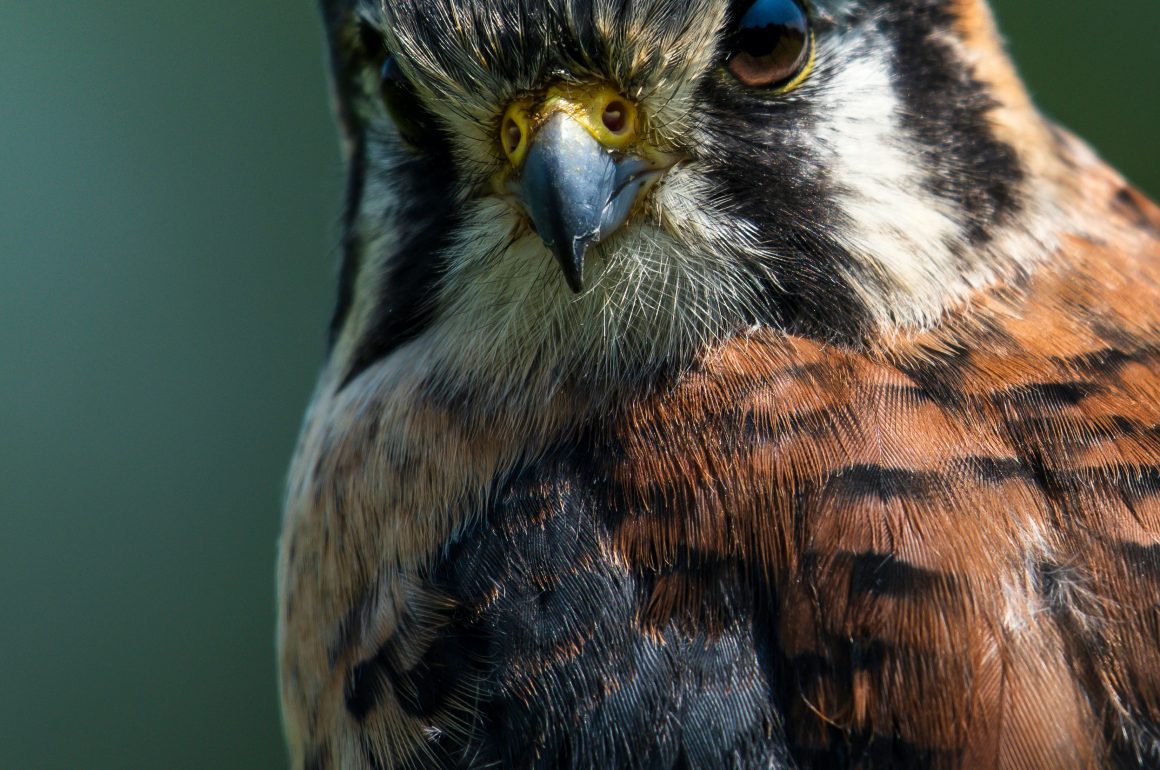
If you have been to cherry farms, you may have seen small birds with colorful plumage perched along fence posts or hovering over open fields. These are American kestrels, one of North America’s most approachable birds of prey. Their small size and habit of nesting close to human activity have made them a familiar sight across rural landscapes. What’s fascinating is that Michigan cherry farmers are discovering that these tiny falcons can play a protective role in orchard management, as well.
Pest Birds and Food Safety Risks in Cherry Farms
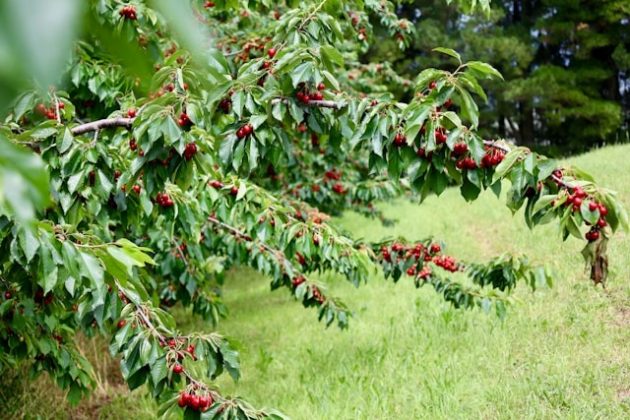
Cherry orchards are an ideal environment for many bird species. Ripening cherries attract flocks of Starlings, Robins and other fruit-eating birds capable of causing substantial crop losses in a short amount of time.
The problem is not limited to missing fruit alone. Pest birds also increase contamination risks by leaving droppings on cherries, branches and harvesting equipment. For example, analysis on birds sampled from U.S. farms found 8% were carriers of Campylobacter spp., 0.46% for Salmonella and 0.22% for Shiga toxin-producing Escherichia coli (STEC). For commercial growers operating under increasingly strict food safety standards, bird activity can pose both economic and logistical challenges.
You might not expect a small falcon to make a difference in commercial fruit production. However, research has shown that American kestrels can help reduce pest bird damage and contamination risks. By using nesting boxes to attract these birds, Michigan cherry farmers are effectively recruiting American kestrels as nature’s bodyguards for sustainable fruit production.
How American Kestrels Help Protect Cherry Crops
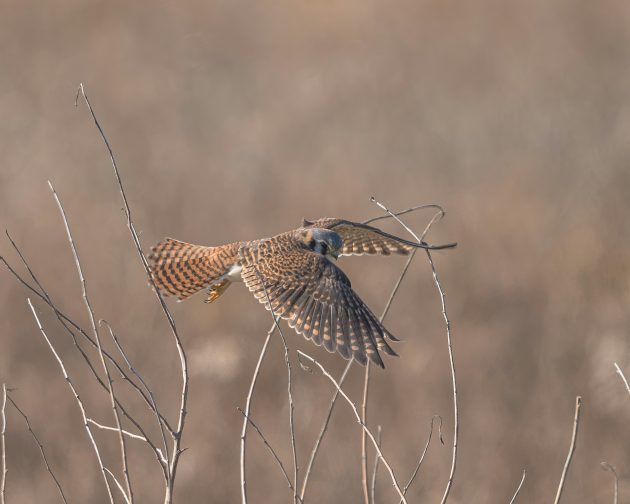
Cherry orchards are an ideal hunting territory for American kestrels. Unlike larger hawks that hunt over broad territories, these birds adapt extremely well to orchard landscapes. Cherry farms naturally provide open environments with scattered perches, making it easy for these predatory birds to access prey.
Once farmers install nesting boxes, American kestrels often establish territories nearby and begin hunting throughout the orchard itself. Their presence alone can dramatically alter pest bird behavior. Smaller nuisance birds become less likely to gather or feed in areas where American kestrels are regularly active. In this situation, these colorful predatory birds create a continuous natural deterrent. Rather than relying on temporary scare tactics that birds eventually ignore, growers benefit from an active predator integrated directly into the orchard ecosystem.
American kestrels also contribute in other ways. In addition to chasing off fruit-eating birds, they feed on insects, mice and small rodents that may damage orchard infrastructure or young trees.
American Kestrels as part of Sustainable Orchid Practices
You may notice that there’s a growing interest in the American kestrel nesting program, which reflects a larger shift in how many farmers now approach orchard management. Modern fruit production is increasingly focused on sustainability, long-term soil health and balanced ecosystems rather than relying entirely on intensive interventions.
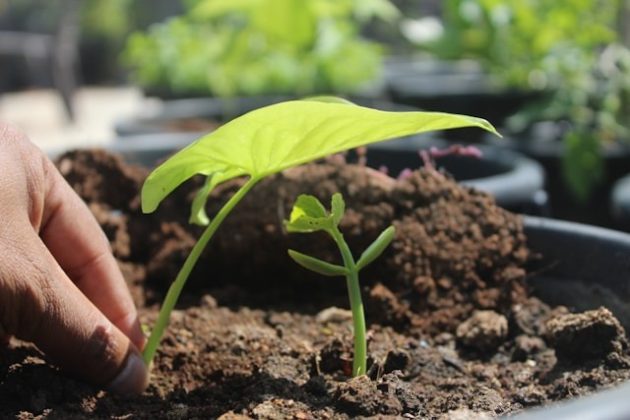
For example, nutrient planning is an important part of enriching soil naturally. As you may know, fruit trees depend on regular infusion of macronutrients such as nitrogen, magnesium, calcium, phosphorus, sulfur and potassium for healthy harvests. From the second growing season, growers supply nitrogen and additional macronutrients in measured amounts, typically about 1/8 pound of nitrogen for each year of the tree’s age. This practice highlights how nutrient management supports orchard sustainability.
The growing use of American kestrels complements this approach by offering Michigan farmers a form of natural pest control that works alongside careful soil, nutrient and tree management practices. It has proven effective when used in combination with other pest deterrent strategies, such as introducing beneficial insects that consume bugs or planting specific pest-repelling plants, to support healthier orchards with fewer chemical inputs.
Challenges of Using American Kestrels in Orchids
Despite the promise shown by American kestrel nesting programs, the approach also poses many challenges. One of the biggest obstacles is attracting these birds to the orchards. You may have read about American kestrel populations steadily declining -1.4% annually in parts of North America. This decline is leaving some farming regions without enough local breeding pairs to occupy newly installed boxes immediately.
Placement also matters significantly. Nesting boxes placed too close to busy roads, in areas with heavy pesticide use or in locations lacking open hunting space may remain unused. Poorly maintained boxes can attract competing species, such as squirrels or invasive birds.
American kestrels themselves can also become vulnerable within different agricultural environments. Larger Hawks, Owls and other predators may prey on them, especially in fragmented habitats where natural shelter is limited.
American kestrels cannot solve every pest problem. While they are effective at discouraging pest birds and controlling some small prey species, they do not deter deer, prevent plant pathogens or eliminate insect infestations.
Best Practices to Support American Kestrels
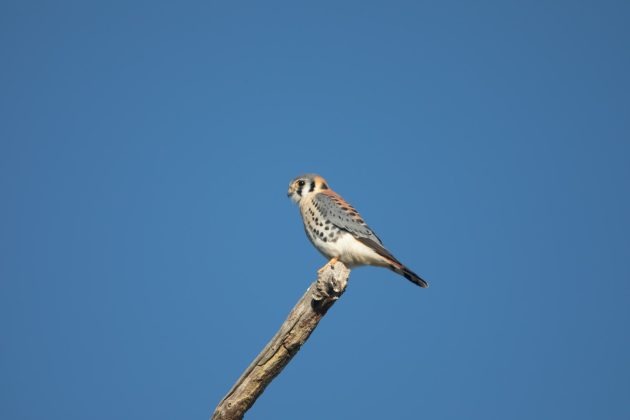
To overcome these challenges, many researchers and farmers have identified several best practices that improve nesting success while helping American kestrels become a more reliable part of sustainable crop protection.
The strategies include:
- Installing nesting boxes before breeding season: Early installation gives American kestrels time to establish territories before spring nesting begins and reduces competition from other species.
- Choosing open, low-disturbance locations: Boxes placed along orchard edges or near open hunting areas tend to attract more American kestrels than boxes installed near roads or heavy machinery activity.
- Maintaining boxes regularly: Cleaning nesting boxes between seasons helps prevent invasive birds, rodents and parasites from taking over nesting sites.
- Reducing unnecessary pesticide use near active nesting zones: Minimizing pesticide exposure around active nesting zones helps preserve the insects and small prey species that American kestrels rely on for food.
- Installing predator guards on nesting poles: Predator guards help protect American kestrels and their chicks from climbing predators such as raccoons, snakes and other animals that may raid nests.
- Preserving surrounding habitat: Maintaining nearby grasslands, tree cover and hedgerows provides American kestrels with safer hunting and shelter areas.
- Monitoring occupancy and bird activity: Some growers work with researchers or conservation groups to track kestrel nesting success over multiple seasons, helping improve box placement and long-term effectiveness.
A Sustainable Approach
For those of you exploring wildlife-friendly farming systems, American kestrels are a wonderful example of how even small predators can play a major role in modern farming. This approach shows that integrating specific predatory birds into orchards alongside other natural pest control methods can reduce reliance on chemical pesticides while supporting healthier, more balanced agricultural ecosystems.









Leave a Comment