

Over the past year, we’ve profiled about 60 bird guides from 35+ countries. Each of them brings unique knowledge of their own local conditions.
Now, while continuing the series as before, we add another format. In this one, instead of one guide answering many questions, many guides answer just one. Hopefully, by putting the same question to many professional birders from around the world, we will see patterns emerge. For this post, we asked
If you could protect just one bird species in your region, which would it be — and why?
Great Bustard in Hungary (the largest flying bird in Europe, restricted range). Resplendent Quetzal in Costa Rica (one of the world’s most special birds). Gabor Orban, Hungary/Costa Rica
If I could protect just one bird I Tanzania or a region, it would be an endemic race beesleyi (Beesley’s Lark, known in East Africa only, in semi-arid country north of the Arusha region in a small, isolated Masai land. The reason: the race beesleyi is only found in this small, isolated area and is vulnerable to livestock grazing. So a sustainable conservation plan is required. Furaha Amiri Mbilinyi, Tanzania
Northern Bald Ibis — critically endangered and iconic, Morocco has the only self-sustaining wild population. Mohamed Bargache, Morocco
I’d like to split this question into two parts: 1. “If you could only protect one bird species in your region, which one would it be – and why?”For me, it’s clearly the Lesser Spotted Eagle (Clanga pomarina). An impressive and rare bird of prey in my homeland. Its species name reflects my region, “Pomerania.” It is a flagship species for species conservation and requires quiet, near-natural forests and extensively managed grasslands. If its habitats are protected here in Germany, many other bird species will also benefit.
2. “If you could only bring back one bird species to your region, which one would it be – and why?”That would be the European Roller (Coracias garrulus). My last breeding pair of European Rollers in my homeland of northeastern Germany, I observed in 1979. This bird species requires large insects for food and nesting cavities at forest edges. Intensive agriculture and forestry, with their use of pesticides, are the causes of their extinction in Germany, coupled with enormous changes in their African wintering grounds and hunting during migration. I miss this colorful bird, which is so active during the mating season. Rolf Nessing, Germany
Grey-crowned Crane — Uganda’s national symbol, declining rapidly due to habitat loss and disturbance. Magada Haily Miriam, Uganda
I would choose the Albertine Owlet, one of the rarest and least known birds in Africa. It is endemic to the Albertine Rift and found in very few places, including Nyungwe. Protecting its habitat also safeguards many other species that share the same ecosystem. Jacques Habimana, Rwanda
Apolinar’s Wren — fragile and unique habitat still being damaged. Asherita Viajera, Colombia
Rufous-necked Hornbill in Sikkim — historically plentiful, now declining. Needs forest protection and native trees. Dibyendu Ash, Sikkim, India
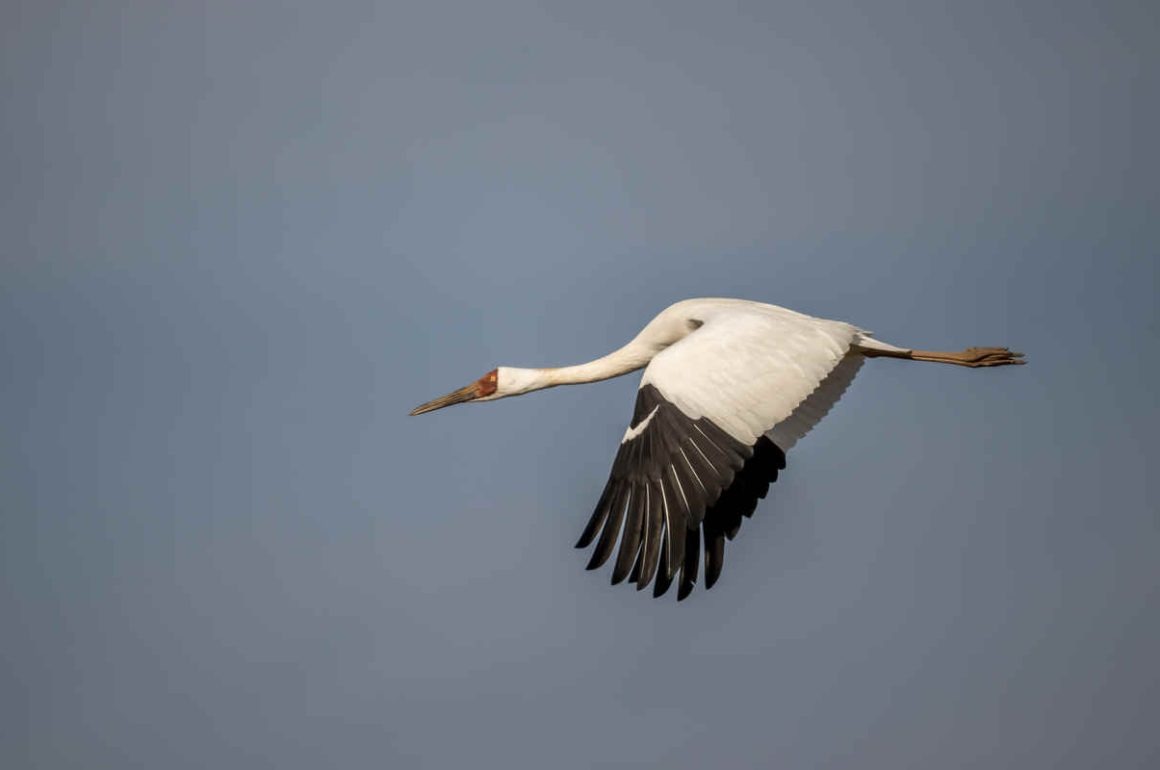
Siberian Crane — rare, vulnerable, flock-feeding species sensitive to food safety issues. Steven An, China
Blue-headed Quail Dove — Cuban endemic, evolutionary relict, very rare. Ernesto Reyes Mouriño and Tania Piñeiro, Cuba
Black-breasted Buttonquail, as they are almost ‘endemic’ to Queensland, and are fast disappearing, due to habitat loss. Tom Tarrant, Australia
If I could protect one bird species in my region, it would be the White-bellied Heron. This critically endangered species depends on very specific riverine habitats that are increasingly under threat from human activities. Protecting its habitat would not only help conserve this rare bird but also support many other species that share the same ecosystem. Rofikul Islam, India
Cordillera Ground Warbler. Because the density is low in the known area, the threat of forest destruction could wipe it out of the very small area it is known to be in. Irene Dy, Philippines
Spoon-billed Sandpiper. It’s a Critically Endangered species and still in decline, although slower than before. I recognized a staging site not far from where I live, which became a World Heritage site in 2019. Zhang Lin, China
If I could protect one bird in my region, that would simply be the rare endemic and localised Beesly’s Lark, the bird is on the brink of extinction with less than 100 individuals remaining. The saddest part is that Bird Life International still treats it as a race of spike-heeled lark of southern Africa. Issac Kilusu, Tanzania
Ortolan Bunting. Populations have collapsed in southern Finland, in parts due to poaching in south-western France. I’ve never seen one here. Samuel Bloch, Finland
Respondents highlighted the importance of protecting bird species that are rare, endangered, or highly localized. Many emphasized that conserving these birds often means safeguarding their unique habitats, which benefits entire ecosystems. Personal connections, iconic status, and vulnerability to human pressures were commonly cited reasons for prioritizing certain species.
Photo: Siberian Crane



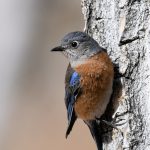


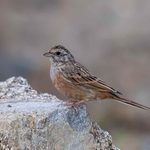

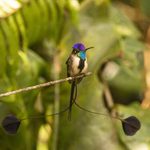

I have seen Apolinar’s Wren in Sumapaz paramo. What is amazing (in a negative way) is that the paramo is under threat while Colombians depend on this biotope for their water.
The one theme throughout is that if you protect the habitat, you protect the bird (and a host of other species, too).
I like all of these responses, and reasons for them, even though I don’t know most of the birds. However, I do know a couple: I agree with Gabor Orban in Hungary about the Great Bustard. I was also struck by Samuel Bloch’s selection of Ortolan Bunting. I must have been more in northern Finland when I saw a couple this past May. However, we did only see two, both singing males, and it makes me wonder—well, better to say it this way—it may also be in trouble further north. It is a marvelous bird.