


What is your favorite bird species?
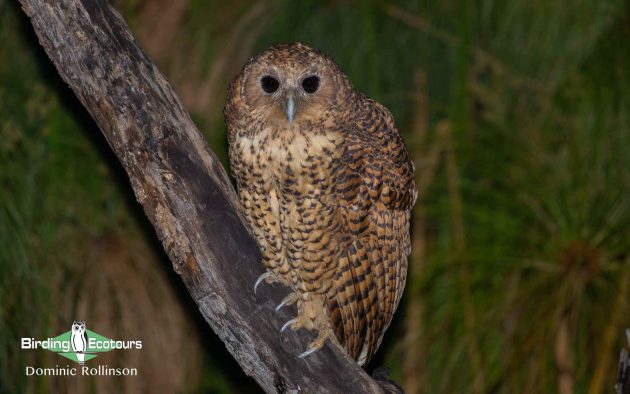
Tricky one, but I think I’d have to go with Pel’s Fishing Owl. Every sighting I have of this species is just so special, and one of the ultimate highlights of my birding career was a nocturnal sighting of Pel’s Fishing Owl all on my own at eye-level for around 5 minutes in the Okavango Panhandle.
What is your name, and where do you live?
Dominic Rollinson, Cape Town, South Africa. I am a senior birding guide and the website manager at Birding Ecotours.
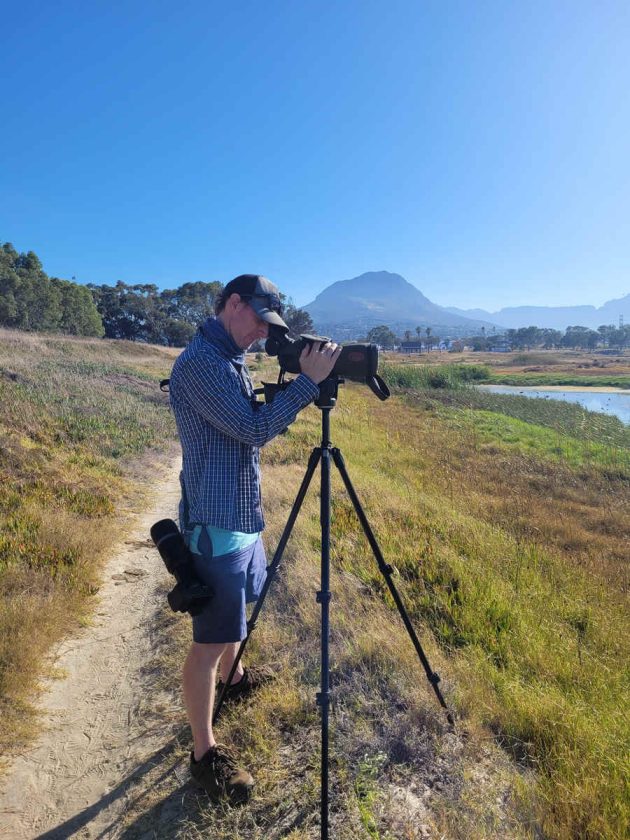
What are the main regions or locations you cover as a bird guide?
Africa, Europe, and Asia. Being based in South Africa, I mostly concentrate on African guiding but have led tours to several Asian and European countries.
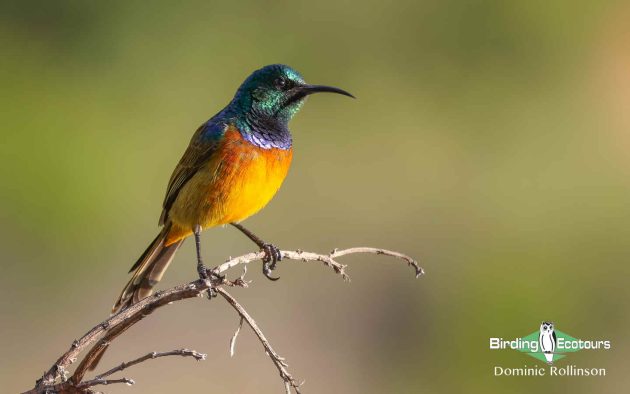
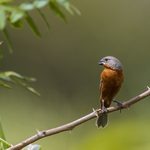
Orange-breasted Sunbird
How long have you been a bird guide?
I guided part-time during my studies but have been working for Birding Ecotours full-time as a guide since 2017.
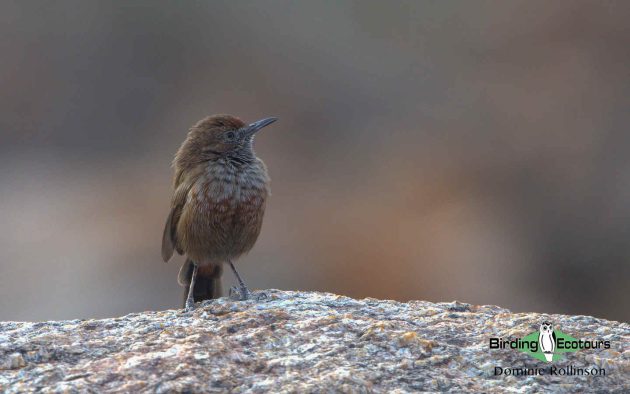
Cinnamon-breasted Warbler
How did you get into bird guiding?
While doing my PhD, I guided part-time on the side to make a bit of extra money (and get out more into the field) and realized the joy I get out of showing other people birds.
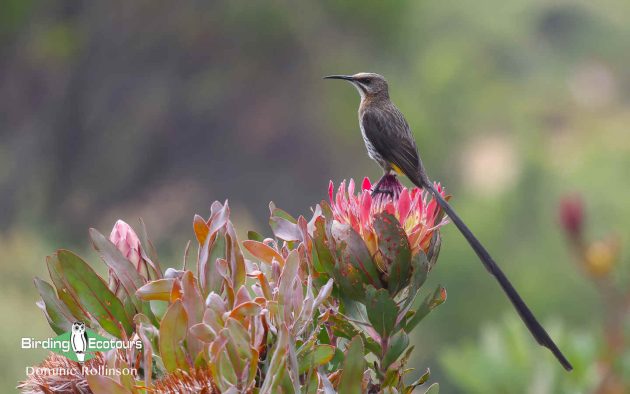
Cape Sugarbird
What are the aspects of being a bird guide that you like best? Which aspects do you dislike most?
The two things that excite me most about being a guide include getting to new areas to see new and exciting bird species and the thrill I get from showing people new birds. It’s particularly rewarding when you have to work hard to find a certain bird species, and then the hard work eventually pays off.
Being away from home for long periods of time can be very tough. Thankfully, my wife, Jaime, is a birder though, so we can head out birding together when I am home.
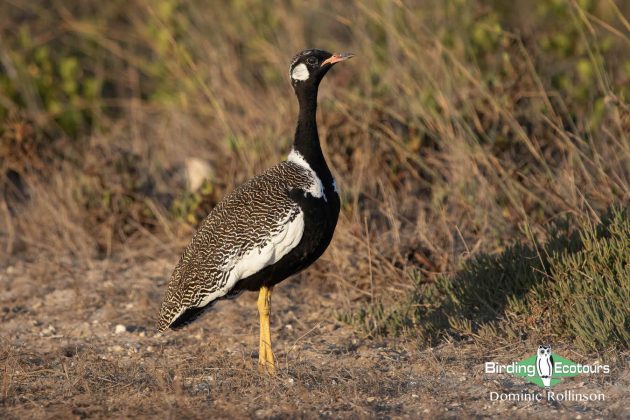
Southern Black Korhaan
What are the top 5-10 birds in your region that are the most interesting for visiting birders?
In the Cape Town area, I would probably say
- Cape Rockjumper
- Cape Sugarbird
- Fynbos Buttonquail
- Black Harrier
- Protea Canary
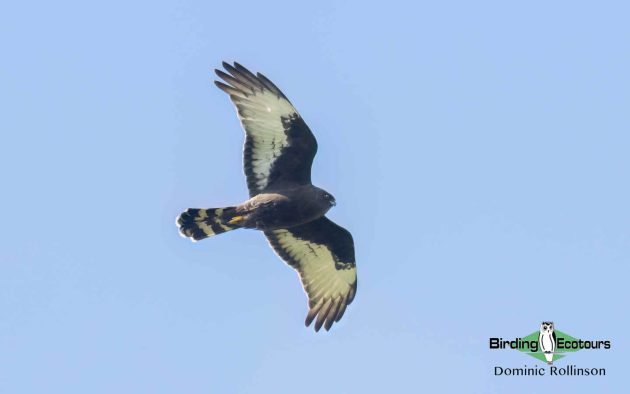
Black Harrier
Can you outline at least one typical birdwatching trip in your area? Please briefly describe the locations, the key birds, and the approximate duration of such a trip
Just about all of the Cape’s specials can be seen by spending roughly one week in the area. Typically, a few days are spent in the greater Cape Town area looking for Cape Sugarbird, Cape Rockjumper, Orange-breasted Sunbird, and Protea Canary. It’s always a good idea to try to book onto a Cape pelagic while you are in the area, as these pelagic trips offer some of the world’s best pelagic birding. A night or two up the west coast should get you various strandveld species, most notably Black Harrier and Southern Black Korhaan, along with an assortment of waders/shorebirds. Moving inland to the endemic-rich plains of the Tankwa Karoo for a couple of nights should then get you many dry-country specials such as Cinnamon-breasted Warbler, Black-eared Sparrow-Lark, and many other lark species. Another day or two might then be needed around Cape Town to search for the Cape’s toughest endemic, Fynbos Buttonquail.
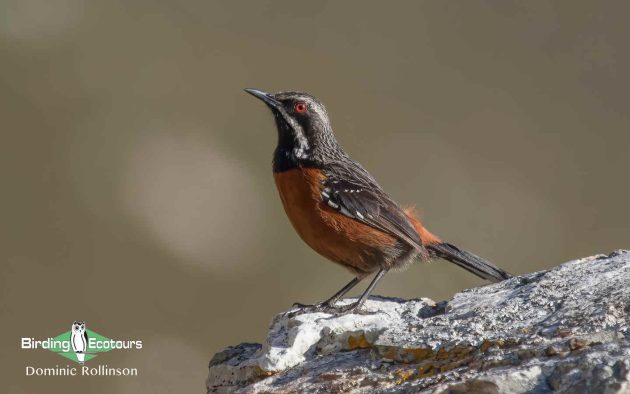
Cape Rockjumper
What other suggestions can you give to birders interested in your area?
Late spring/early summer is generally considered the best time to visit the Cape, as this is when many birds are actively displaying, and you can also combine a birding trip at this time of the year with a botanical excursion to enjoy the west coast’s fine spring floral display.
If any readers of 10,000 Birds are interested in birding with you, how can they best contact you?
Email is best: dominic@birdingecotours.com



Leave a Comment