

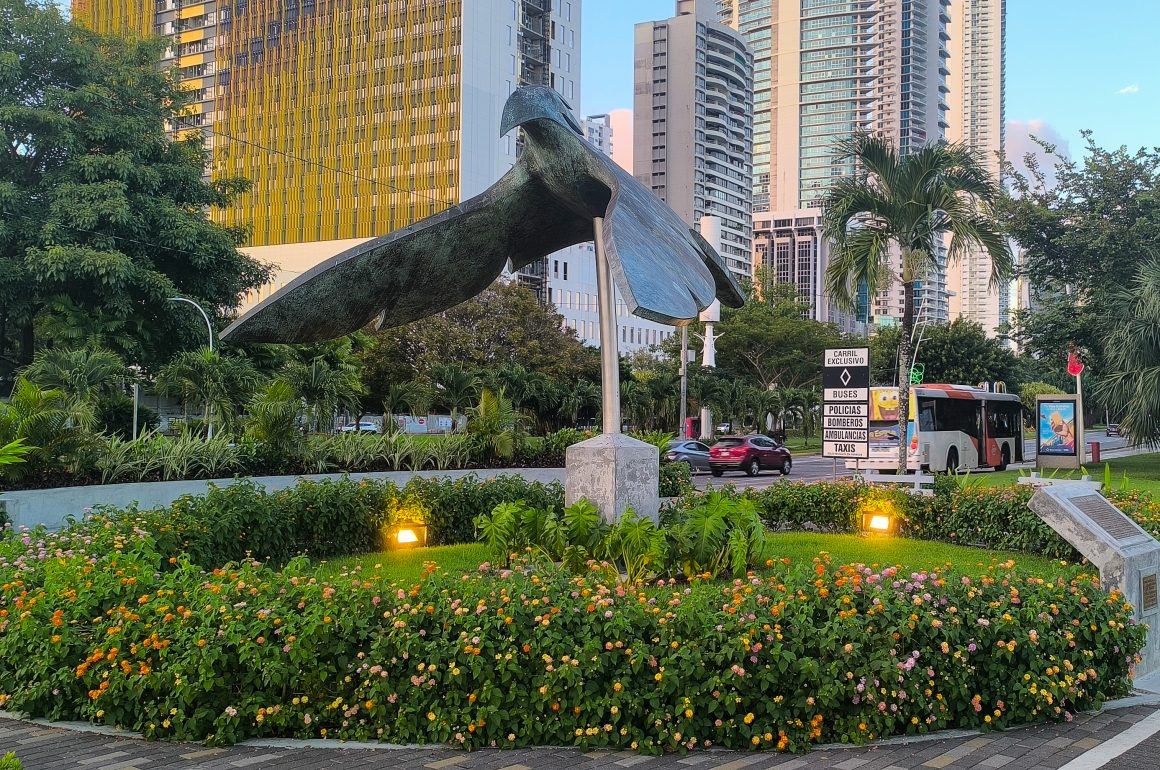
Most mornings, my birding begins without shoes.
No forest trail.
No heavy camera bag.
Just coffee, balcony railing, and the city slowly clearing its throat below.
Some days it is the Grey-Breasted Martin, zipping around just meters from my balcony, the Great-tailed Grackle in the trees along the streets below, loudly announcing that the neighbourhood still belongs to him. Other mornings it is more subtle. Pigeons murmuring on the nearby roof tops, Brown pelicans, Neotropical Cormorants, Gulls and Terns drifting around the bay.
And sometimes, thanks to a small microphone attached to an old laptop, quietly running a birding app on my balcony, I discover that birds have been around all night while I slept blissfully unaware, thinking the city was “quiet”.
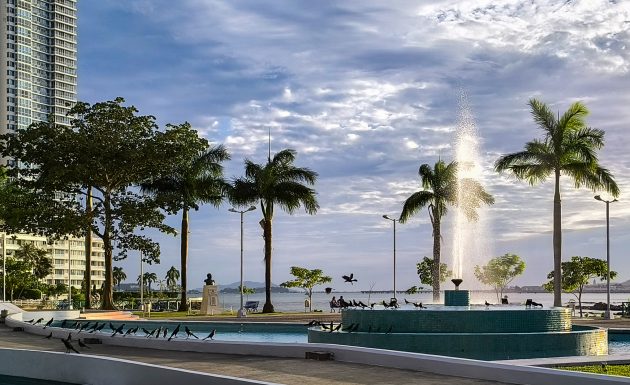
I always believed real birding happened elsewhere. Deep forest. Remote trails. Exotic lodges. Places with long checklists and even longer travel plans. Cities, I thought, were simply what you endured between proper birding trips.
These days, I am not so sure.
Many of us carry an unspoken ranking system in our minds, remote birds feel more meaningful, rare birds feel more valuable, and urban birds feel… ordinary. I certainly did. Some of the most unforgettable moments of my birding happened far from traffic and concrete; cloud forest encounters, rainforest surprises, lifers that made the heart race and the memory card fill dangerously fast. Compared to that, city birds felt like background noise.
But here is the problem with background noise: once you actually listen to it, you realise how much you have been missing.
When you watch birds daily, really watch them, you stop seeing “just Pigeons” or “just Grackles”. You start noticing personalities, patterns, rivalries, alliances, and the occasional questionable life choice. You begin to recognise individuals by behaviour. You learn who always arrives first, who bullies whom, who tolerates whom, who pretends not to care but absolutely does.
And you start noticing something else too: most people are already surrounded by birds. They just have not been invited to pay attention yet.
Sometimes when I am photographing birds in city parks or along shorelines, people often stop and ask…
“What bird is that?”
These are not seasoned birders. These are joggers, parents, teenagers, office workers. People who never set out to care about birds, and yet here they are, curious, engaged, asking questions.
Urban birding lowers the barrier to entry in a way few other forms of birding can. You do not need expensive gear. You do not need a guide. You do not need a travel budget. You need a window. A tree. A patch of sky. Sometimes not even that, just a lamppost that birds have decided belongs to them.
Technology has amplified this beautifully. Applications identify birds by sound. Mobile phones become field guides. Recordings reveal species active even while we sleep. Suddenly, discovery becomes possible for people who never imagined themselves part of the birding world. That is not a small thing. That is a cultural shift.
And cultural shifts are where conservation actually begins.
People are more prone to protect what they notice. People care about what they feel connected to. Urban birding quietly builds that connection every day. A child who grows up recognising neighbourhood birds carries that awareness for life. Someone who begins noticing seasonal changes in a city park starts caring about trees. A person who feeds backyard birds becomes invested in green spaces. These are not dramatic conservation victories. They are slower than that, but they are widespread, personal, and deeply powerful.
Big cities reach thousands of people daily. If just a few start paying attention to the birds around them, asking questions, forming small connections, it sets off a ripple far greater than any single reserve. Not because someone explained it to them, but because curiosity did the work.
For me, staying close to home did not shrink my birding. It did not make my experience smaller. It made it slower, and therefore richer and deeper.
It also reshaped how I think about conservation. Not as something happening only in distant protected areas, but as something unfolding every day in the shared spaces where most humans actually live.
This is not an argument against wilderness. Those places are irreplaceable and deserve fierce protection. But perhaps the next generation of birders will not begin on rainforest trails. Perhaps they will begin on balconies, in schoolyards, along pavements, in neighbourhood parks, at kitchen windows.
Perhaps the most important birders of the future will not be the ones who travel farthest, but the ones who learn to see what is already around them.
This morning, standing barefoot on my balcony, listening to the city wake up, I did not feel disconnected from nature. I felt surrounded by it. Not in spite of the city, but right there within it.
And if more people begin to experience that same realisation, that birds are not somewhere else, they are here, then urban birding may turn out not to be a side story at all.
It may be one of the most powerful tools bird conservation has.








What a lovely piece. I couldn’t agree more.
We have taken so much of the birds’ habitats. They’re making cities their homes. People are noticing them. Our bird club in Toronto has so many new members. Our birding walks now have waiting lists, because people really want to know what is living in our city.
This is written beautifully, and it’s such an important message. I’ve learnt so much about birds just by observing the usual visitors in my backyard over the year.
Food for thought, certainly!
Lovely essay! I absolutely agree, the value of urban birding is underestimated.