

Some birds are a little bit goofy. For example there are two birds I met on previous trips to Mexico’s southeastern state of Tabasco: the Northern Potoo, which spends daylight hours pretending it is a stick, and the Red-capped Manakin, famous for the males’ “moonwalk” mating dance. (To be honest, I only saw a female. But it was building a nest, so moonwalking was involved. You really should see that dance.)
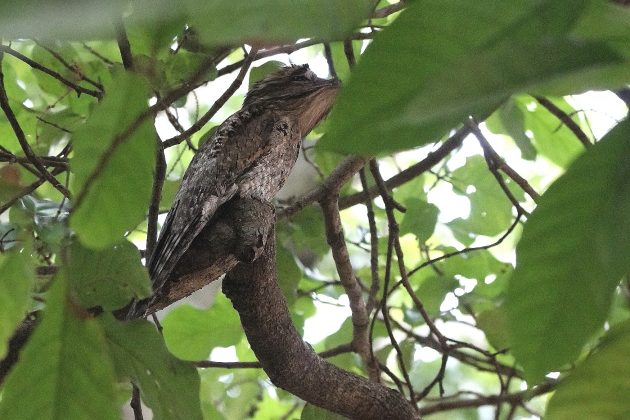
My Northern Potoo, from that previous trip, being a stick
Church work took me back to Tabasco last month. I now have a few good birding friends there as well, who seem happy to take me interesting places in my free times. That means I got to spend both of this trip’s Saturdays in different jungle habitats. Tropical rainforest is one habitat that cannot be found near Morelia, so that’s a treat for me.
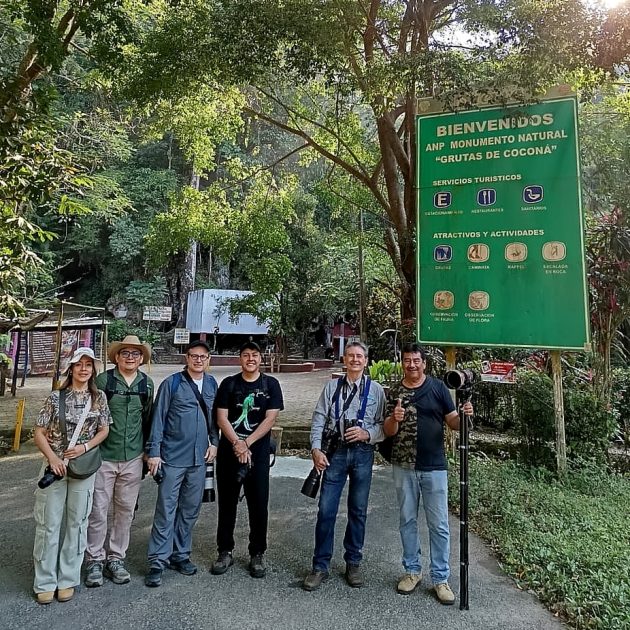
The first outing brought together quite a group: a local birding guide, a birding YouTuber (Pajareando ando), the state’s #1 eBirder, two of my friends, and me.
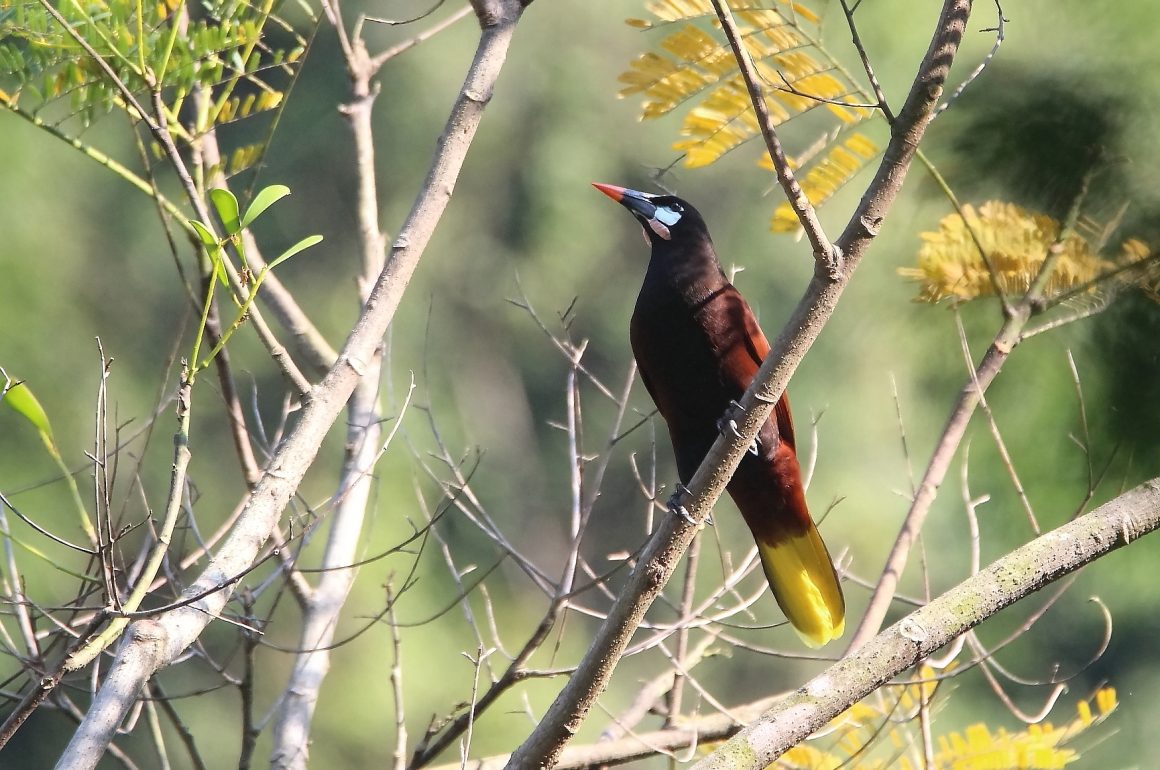
It also meant that I was able to see another weird bird, the Montezuma Oropendola. This member of the New World oriole family may not have a single overriding goofy characteristic, but they do add up. I’ll start with its face, which sports a large two-toned orange and black bill, a featherless blue cheek patch, and an odd pink wattle. That’s a lot going on for a single face. Their bright yellow tail makes a statement as well.
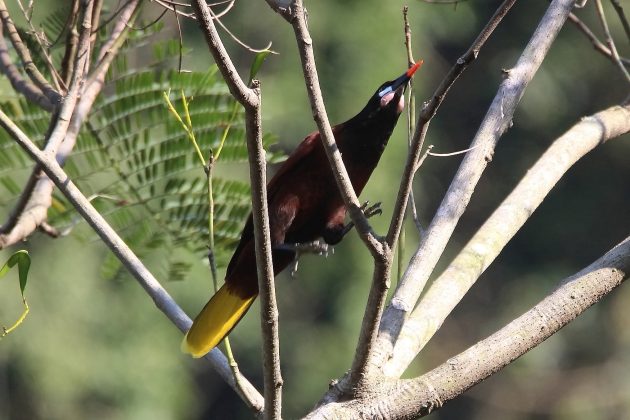
The Montezuma Oropendola is one of the very few bird species in which the male is twice as large as the female.
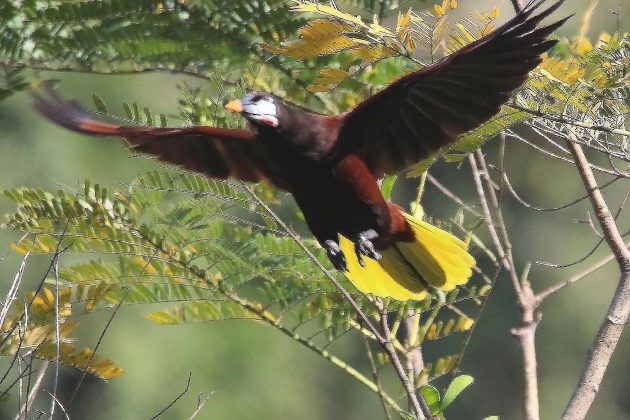
And then their is their voice, with a song that combines some wild bubble and gurgling sounds, along with various squeaky calls. Were they British, their favorite dish would definitely be Bubble and Squeak.
Sorry, no photos of their calls. But you can (and should) hear them here.
Finally, one must consider their nesting colonies, which consist of dozens (even more than 100) of intricately woven bag-shaped nests that can be up to six feet (180 cm) long. While the birds themselves are something to see, it’s the nest colony you will most remember.
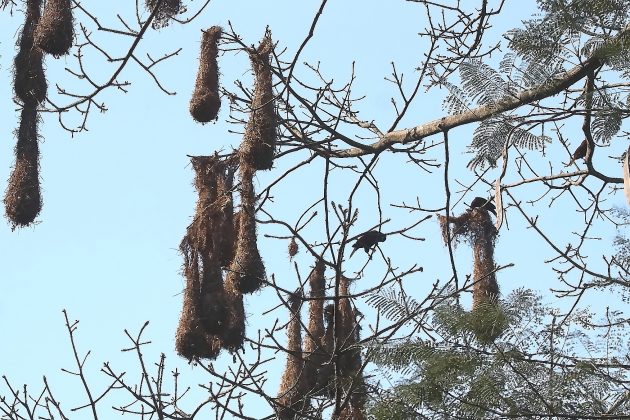
Eleven species have been given the common name of Oropendola. Most look as strange as Mexico’s Montezuma Oropendola, and have equally odd nest colonies. They are subjected to brood parasitism by Giant Cowbirds. Unfortunately, I was not the lucky one who managed to see the Giant Cowbird that was attempting to parasitize the nests we saw that morning.
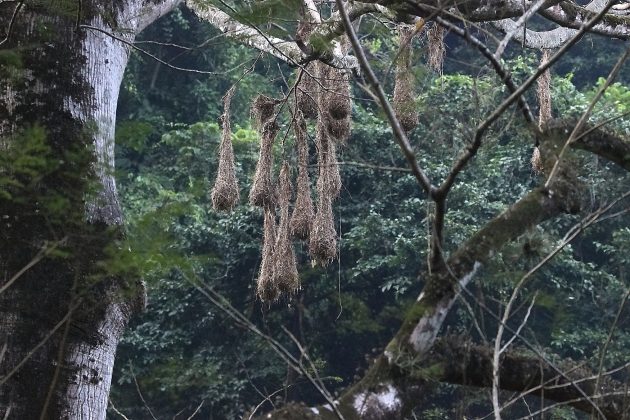
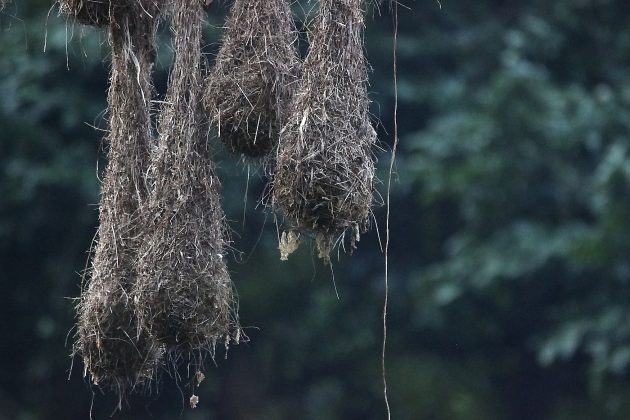
We did, however, see lots of entries and exits to the nests in question (see the first photo here of those nests). And we also saw some construction still in process.
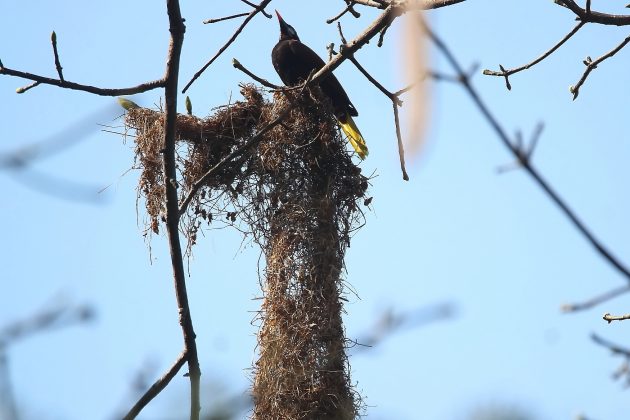
You can find these wacky Montezuma Oropendolas from southeastern Mexico to the Amazon basin. They’re not shy.












Lovely post, Paul
I saw Montezuma Oropendolas in Costa Rica. They are quite the bird. Also, I got to see two different potoos. Our guide challenged us to find them, but we couldn’t. They have amazing camouflage.