

In keeping with my habits of birding in places where people are typically looking for non-feathered animals, I decided to highlight some of the birds I’ve ran into (not literally or lethally, of course) while roaming the arid lands of Samburu, Kenya. On my trips to East Africa, Samburu typically forms the northernmost reaches of our journeys, and the only chance of encountering some unique and charismatic species.
Samburu lets us touch the Somali biome, and nothing says that you’re in this biome like the blue bare bits of an adult male Somali Ostrich. There is no mistaking this bird, however, it must be noted that they can (females, especially) resemble a large shrub from a distance.
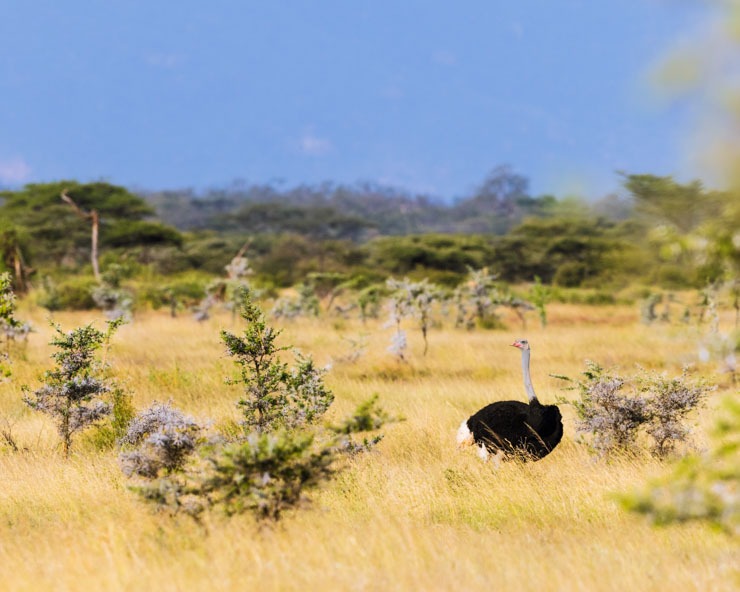
Somali Ostrich
One of the main targets when traversing these parts is the stunningly beautiful Vulturine Guineafowl. Typically a lover of drier habitats than the much commoner Helmeted Guineafowl, this souped-up guineafowl is not only larger, but also sports delicate white spots and vermiculations over a charcoal body with rich, royal blue underparts.
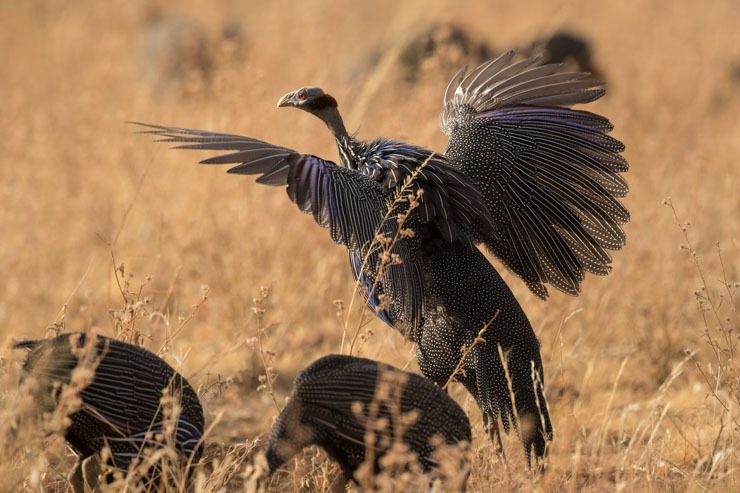
Vulturine Guineafowl
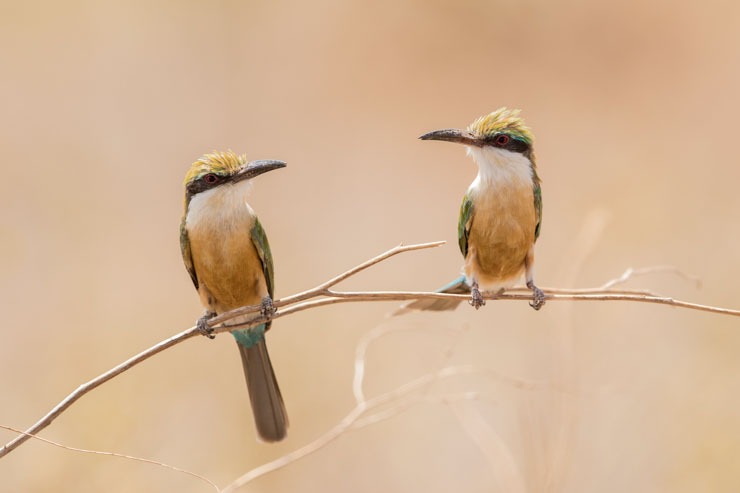
Bee-eaters abound around every bend – from the diminutive Little Bee-eater to the flashy White-throated Bee-eater, but the subtle, desert-infused hues of the Somali Bee-eater are unique within the family, rendering them a cut above the rest in my book, at least.
Somali Bee-eater
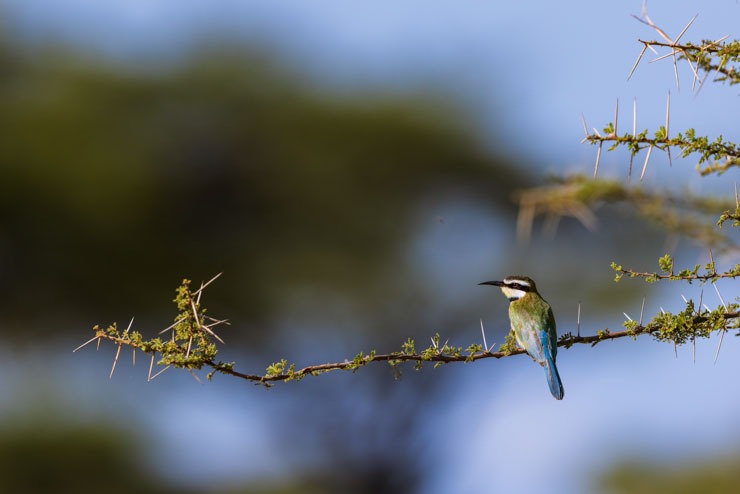
White-throated Bee-eater
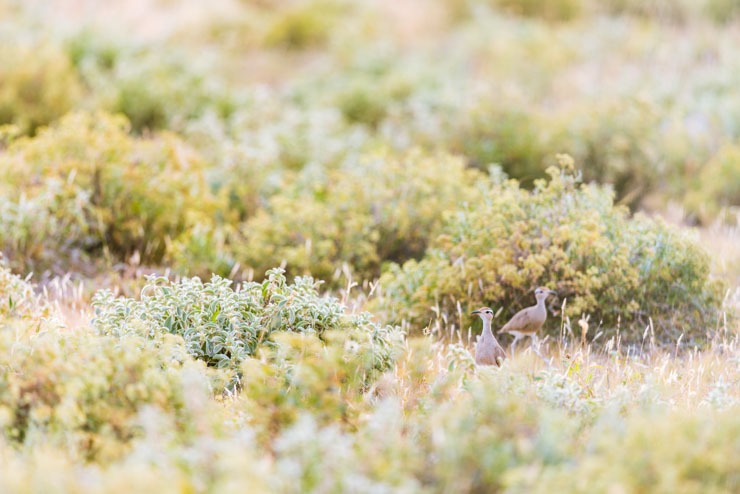
I spoke at length about coursers in this previous post, but it’d be remiss of me to exclude Somali Courser from this collection.
When we came across a small colony of Golden Palm Weavers I felt the urge to pinch myself as the adult males very much recalled the adult Saffron Finches I was already familiar with.
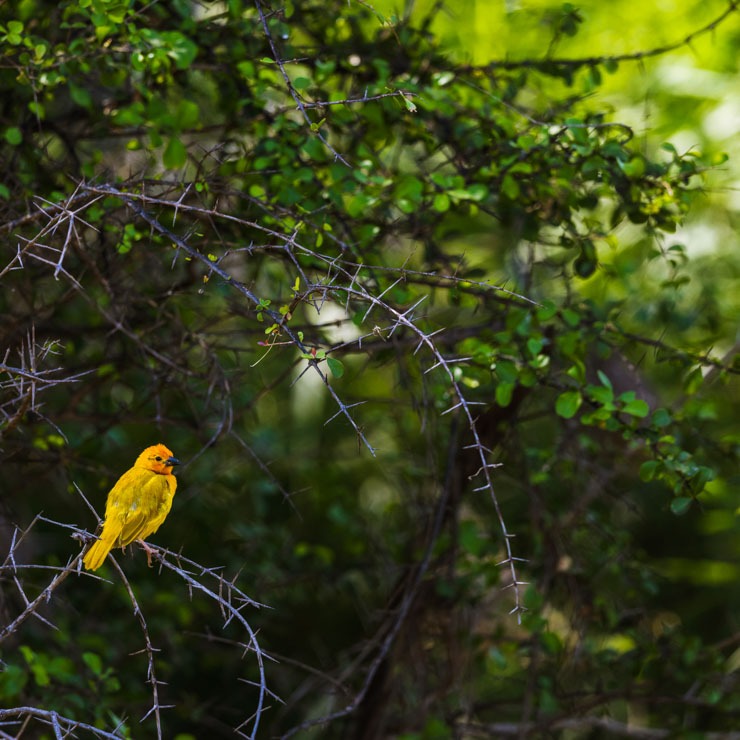
Golden Palm Weaver
Birds of the World describes the vocalisations of Donaldson-Smith’s Sparrow-Weaver as a “rambling combination of varied notes” – which I daresay is what they hear each time we say “Donaldson-Smith’s Sparrow-Weaver”.
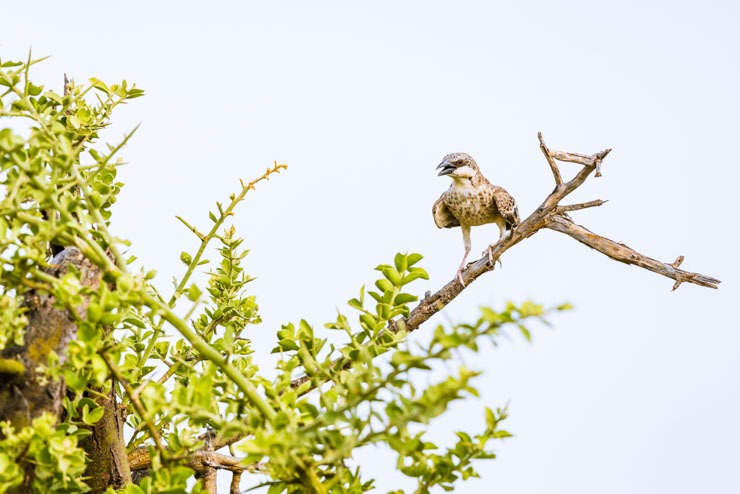
Donaldson-Smith’s Sparrow-Weaver
Surely, many of these birds can be found elsewhere, but Samburu remains – for me at least – the sole location where I’ve encountered these.







Samburu is a great place for both birds and animals. I have enjoyed some of my best views of leopards here, along with gerenuks and Grevy’s zebras, plus plenty of lions and elephants. The birds are terrific, too. When I first visited Samburu, Somali Coursers were still lumped with Cream-coloured Coursers, which are very similar in appearance. Among my favourite birds that are easy to find here are Golden Pipit, the stunning Rosy-patched Bush-shrike, and African Swallow-tailed Kite (much smaller than the American bird of the same name). The latter is a tricky bird to find in Kenya, so is always good to find.
Samburu for Christmas, please
Ah, I forgot to include Golden Pipit in this list. I do have a photo of one from Samburu rummaging around in some old elephant dung. I’ve never seen that kite, David – which I presume is what is known as Scissor-tailed Kite also.
Either way – in addition to all the fantastic animals that can be found in Samburu, what I really look forward to is the landscape with the doum palms.