

This is a collaborative post in two parts. In the first one, our writers shared their all-time favourite birding destination – a place to which they have actually been. In this, the second one, we dream about a destination we have not been to yet, and may never be able to go.
Juan Fernandez Archipelago
My dream birding destination would have to be the Juan Fernandez Archipelago, with a special focus on Alexander Selkirk Island, home to the Masafuera Rayadito. This bird has only 11 sightings on eBird and is endemic to an island off the coast of Chile that is incredibly hard to access. I am a sucker for birds that are rarely seen and reported by other birders, and this one is at the top of my list. On Juan Fernandez Island, you can find the Juan Fernandez Firecrown and the Juan Fernandez Tit-Tyrant, along with a few other endemics. Still, they are easier to find than getting out to Alexander Selkirk Island for that specialty species. Either way, it would be an incredible adventure!
(Hannah Buschert)
Trans-American Highway
My dream destination is no shorter than the Trans-American Highway from Alaska to Tierra del Fuego, with detours.
(Rolf Nessing)
South Georgia
Having organised and led birding holidays for many years, I’ve been lucky enough to have visited many wonderful birding destinations, but there are, inevitably, places that I’ve never managed to get to. Papua New Guinea is one – I’d really love to see a Twelve-wired Bird of Paradise, or a Black Sicklebill. The trouble with Papua New Guinea is that it’s not the safest country in the world to bird in, with local people who are not always welcoming to foreigners with binoculars and cameras.
This makes travelling to a destination that has no human population attractive, especially if that same place has a spectacular array of birdlife. Thus, I’ve no hesitation in naming my dream destination as the Atlantic island of South Georgia. Like all remote islands, the variety of species isn’t great, but the numbers are astonishing. There are 7 million penguins for starters, plus several species of breeding albatross – Wandering, Grey-headed, White-capped, Light-mantled, Black-browed – while there’s also the chance to see the endemic pipit and pintail.
I have visited the Falklands, but they are relatively easy islands to get to. To visit South Georgia, you have to join an expedition, and with prices starting at around £15,000, it has to remain a dream destination.
(David Tomlinson)
Antarctica, the Falkland Islands, and South Georgia
Whenever I look at my library, the seabird books beckon… I have seen about a third of the species that make the high seas their home. I want more. I want all the penguins, all the albatrosses, all the shearwaters, and yes, all storm-petrels, including the cryptic species.
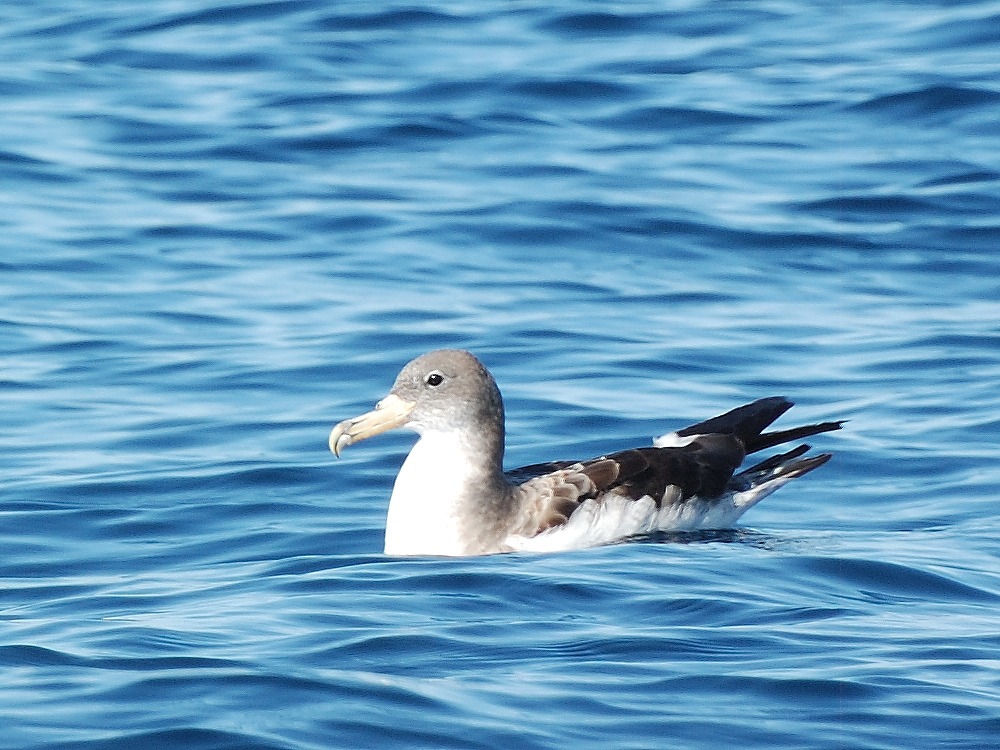
Cory’s Shearwater
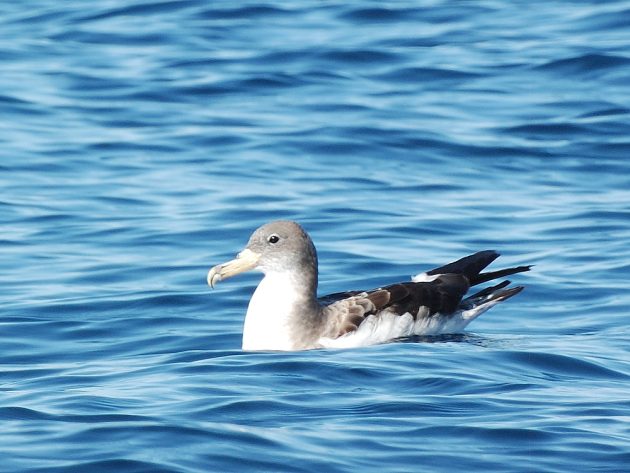
I am not comfortable at sea; I have fed the fish in pretty much all the Seven Seas. For me, there is a psychological and physiological element to the already daunting challenge of sea-birding, or “pelagic biding”. Daunting because the identification challenges are “off the scale”. The difference between the various albatrosses in their ever-changing plumage lies more often than not in the colour of the beak. Or worse, the lower mandible, or the cutting edge. Of course, that is not easily seen when these birds fly past at the speed of the roaring forties, dodging four-meter waves while you stand on a heaving ship’s deck. You think gulls are hard to identify? Just go out to the edge of the continental shelf and weep. However, here’s the interesting thing about pelagic birding: I have never been sick on a trip. They’re so good you forget to become sick. It should therefore not come as a surprise that my dream destination is just one continuous pelagic birding trip. I have been to Marion Island with BirdLife South Africa, but the real deal would be weeks at sea, months even. Starting in Chile or Argentina, traveling south to Antarctica, the Falkland Islands, and South Georgia.
(Peter Penning)
New Guinea
When I have a bit of free time, I sometimes go on Cloudbirders to skim through some recent trip reports birders have uploaded. Whenever one on New Guinea is among these, my heart jumps: did they see the birds of paradise? Which ones? What about the ridiculously colourful fruit doves, pitta, lory or paradise kingfisher? Obviously, I dream of visiting this huge island myself one day. This dream only became amplified now that I have been gifted Phil Gregory’s 2nd edition of Birds of New Guinea. This is a rather easy response since New Guinea, as the world’s second-largest island, is a rather big birding destination. I’m afraid I don’t know enough about the place, but if anyone advises me based on their experiences of birding in the region, I’m happy to narrow down my response.
(Luca Feuerriegel)
Uganda
Oh, those dream-birding locations, from eastern Sabah (Borneo) to southwestern Uganda and to Pantanal… But let’s talk Uganda! It has more than 1050 bird species, and over 550 may be observed in two weeks. The best season is December to February and July to September, when it is dry in the south. In “Where to Watch Birds in Africa”, Nigel Wheatley says, “In terms of its size, Uganda is the richest country for birds in Africa.”
For example, Queen Elizabeth II National Park is one of the very few areas on the planet with more than 600 species of birds! Almost 2000 km2 / 800 mi2 of savannah, dense forests, lakes and wetlands of the QENP represent the most popular and accessible savanna park of Uganda. Targets include Greater Painted-snipe, Swamp Nightjar, Black-bellied Bustard, Temminck’s Courser, Collared Pratincole, White-tailed and Red-capped Larks, Short-tailed Pipit… Lake Kikorongo offers Shoebill, Papyrus Gonolek, Martial and Crowned Eagles, Palm-nut Vulture, Grey Kestrel, African Skimmer, Swamp Flycatcher, etc. Birding is good anywhere, but especially at Mweya Peninsula (where a luxury lodge, budget hostel and a campsite are located), and the riparian forest of Ishasha. The furry kind is represented with 95 species – more than in any other Ugandan park, 10 primates among them, including the Chimpanzee.
Other usually visited reserves are Lake Mburo with 320 species, for montane forest species – Bwindi Impenetrable Forest with 350 sp. (incl. all of the 24 Albertine Rift endemics found in Uganda), for lowland forest species – Kibale NP with 375 sp., for savanna species QENP with 610 sp. and Murchison Falls NP with 450 sp., and for Guinea-Congo forest species the rarely visited Semuliki NP with 440 sp., an unspoilt 220km² of rainforest with more than 35 birds unknown from elsewhere in East Africa.
Bird book of choice is the “Birds of East Africa” by Terry Stevenson and John Fanshawe (second edition, 2020), a Helm Field Guide covering Kenya, Tanzania, Uganda, Rwanda and Burundi. Try to lay your fingers on a copy of “Where to watch birds in Uganda” by Jonathan Rossouw and Marco Sacchi. A travel guide for birders should be the “Bradt Guide to Uganda” written by Philip Briggs, who is a birder himself!
(Dragan Simic)






Leave a Comment