

We sent out another list of questions to bird guides who have already been profiled on 10,000 Birds. In the third edition of this second series, we ask
What is the hardest bird you regularly try to show—and why?
Here are the answers.
Silvery-fronted Tapaculo, because it is not easy or common. Gabor Orban, Hungary/Costa Rica
Spoon-billed Sandpiper. It lives on intertidal mudflats, which are a dangerous habitat. Somebody died there, although studying instead of just watching them, as I know. Zhang Lin, China
SA- Gorgeous Bushshrike- is a shy, tough bird that hides in the thick bush. Everyone wants to see it as it’s so beautiful. Uganda- Green Broadbill- it’s such a small bird with a limited distribution. It’s an Albertine rift endemic, with Uganda being the best place to see it. It’s a canopy species, so knowing the call is key. Marc Cronje, East and Southern Africa
In Extremadura, Spain, the bird that I find most difficult to find is the Little Bustard. When you are not looking for them, that is when they pop up! David Lindo, Spain
Lesser Spotted Woodpecker – massive declines in the UK and hard to catch up with. As numbers decrease, males don’t seem to make the effort to display. John Hague, UK
The Magellanic Woodpecker. It’s large and striking, but its territories are vast, and it can disappear into the lenga forests for hours. Clients expect it to be easy because of its size, but patience and luck are always required. Also, the Patagonian Snipe, which demands physical effort and real skill to find. Its elusive behavior and ability to camouflage in open habitats make it one of the greatest challenges in bird guiding. Marcelo Carlos De Cruzky, Argentina
Yellow-Headed Picathartes, Nkulengu Rail, and White-Crested Tiger Heron, because they are rare birds and every birder’s target in Ghana. Kwame Brown, Ghana
One of the hardest birds to regularly show clients is juvenile raptors. From my guiding experience, they can be particularly challenging because their plumage is often confusing, lacking the clear patterns and colors that make adults easier to identify. On top of that, they’re usually seen soaring high in the sky, often at a distance, where detail is limited. This combination—subtle features and far-off views—makes identification tricky, even for experienced guides; they require patience, sharp observation, and careful explanation to clients. Magada Haily Miriam, Uganda
The Sombre Tit is always hard to get, even in its breeding areas, but it is definitely a highlight due to its very restricted distribution worldwide. Spyros Skareas, Greece
Bicknell’s Thrush, for sure! Its range is restricted to the mountains of New England and Eastern Canada in the breeding season, so the first challenge is to get people into the high-elevation habitat, which is very limited, and with very few options other than strenuous hiking. Then, you really need to be there around dawn or dusk, so no matter how you get there, it’s a ridiculously early start (sunrise on the Summer Solstice in Western Maine is before 5:00 am, and sunset is not until around 9:00 pm, so it’s a very early or very late day). Then, the bird itself does not make things easy. It’s a virtually impenetrable habitat, so you’re tied to trails and edges, which the birds don’t exactly love. They are shy and often skulking, they often sing from within branches, and there are now similar-looking Swainson’s Thrushes amongst them in many places, meaning a good view becomes even more important. Furthermore, the bird has clearly become “taped out” at the few relatively easily accessible locations. Oh, and they are declining. So virtually everything is stacked against me as a guide! Therefore, I am extremely proud of my high success rate (nothing is 100%!) at showing people this enigmatic bird. Derek Lovich, Maine, USA
Several types of endemic birds on Biak Island, such as Biak Myzomela, Biak Leaf Warbler, and several other types, whose habitat has been damaged due to frequent tree felling. Eko Lesomar, Papua New Guinea
The Southern Antpipit is always a hard one to show as it lives in the dark understorey, close to the ground, it is small and restless, and leaves quickly after a couple of minutes, and the more the guide calls it, the more restless it becomes! René Santos, Brazil
The Elegant Crescent chest because people are always trying to photograph it, and it’s very shy. Sandra Maria Plua Alban, Ecuador
Our “Big Four” challenges are the Blue-eared Kingfisher, the Oriental Dwarf Kingfisher, the Malabar Trogon, and the Sri Lanka Frogmouth. These species are incredibly habitat-specific and are absolute masters of camouflage—even the vibrant ones can vanish into the forest canopy. While they are notoriously difficult to spot on a “normal” day, they have become our signature species. Our ability to consistently find these elusive birds is what defines our reputation and why birders choose us for their Goa expedition. Savio Fonseca, India
In my home region of Uckermark in Germany, this is the Little Crake – really difficult to spot. I sometimes manage to get it to call – which, for me as a faunalist, is also proof. But my guests would rather see it, which happens very rarely. Rolf Nessing, Germany
And wisdom from the editor who could never find any of these birds on is own:
Bird guides seem united by one professional truth: the birds clients most want to see are usually the ones least interested in cooperating. The hardest species tend to share a talent for hiding, vanishing, blending in, or living somewhere inconvenient, exhausting, or rapidly disappearing. Guiding success, then, becomes equal parts skill, endurance, optimism, and stubbornness.
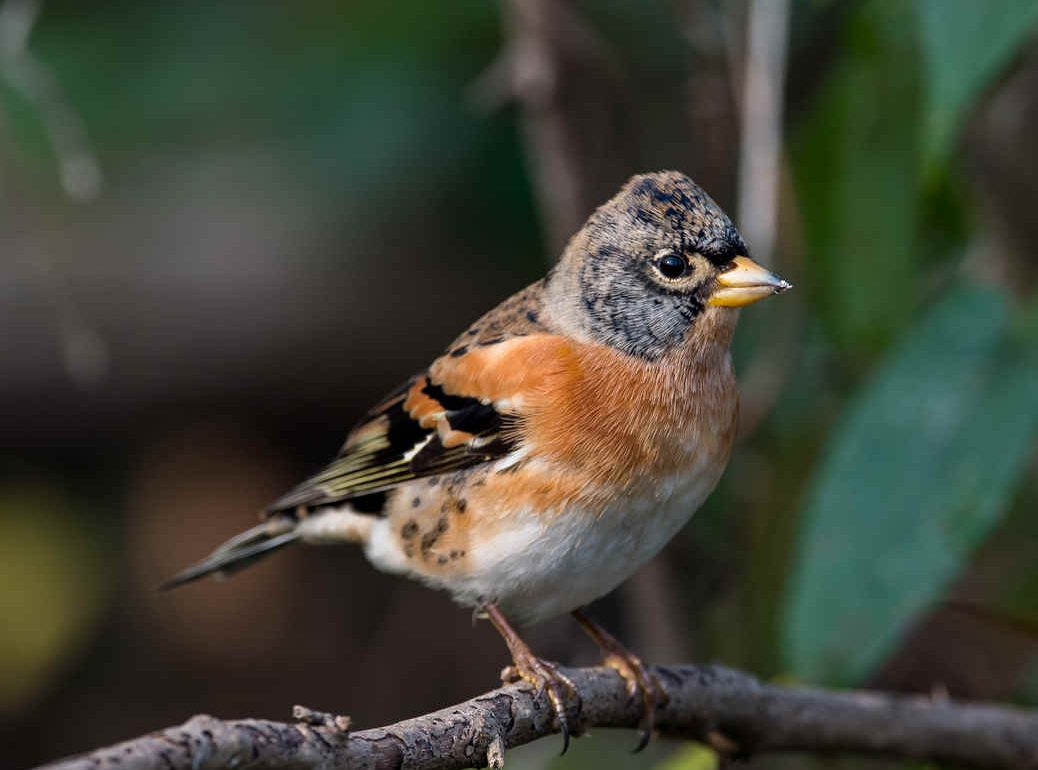
Photo: Brambling, Nanhui, Shanghai, November 2017




I love this Q&A series. The guides give interesting and insightful answers. A lot about birding is taught just in their responses.