

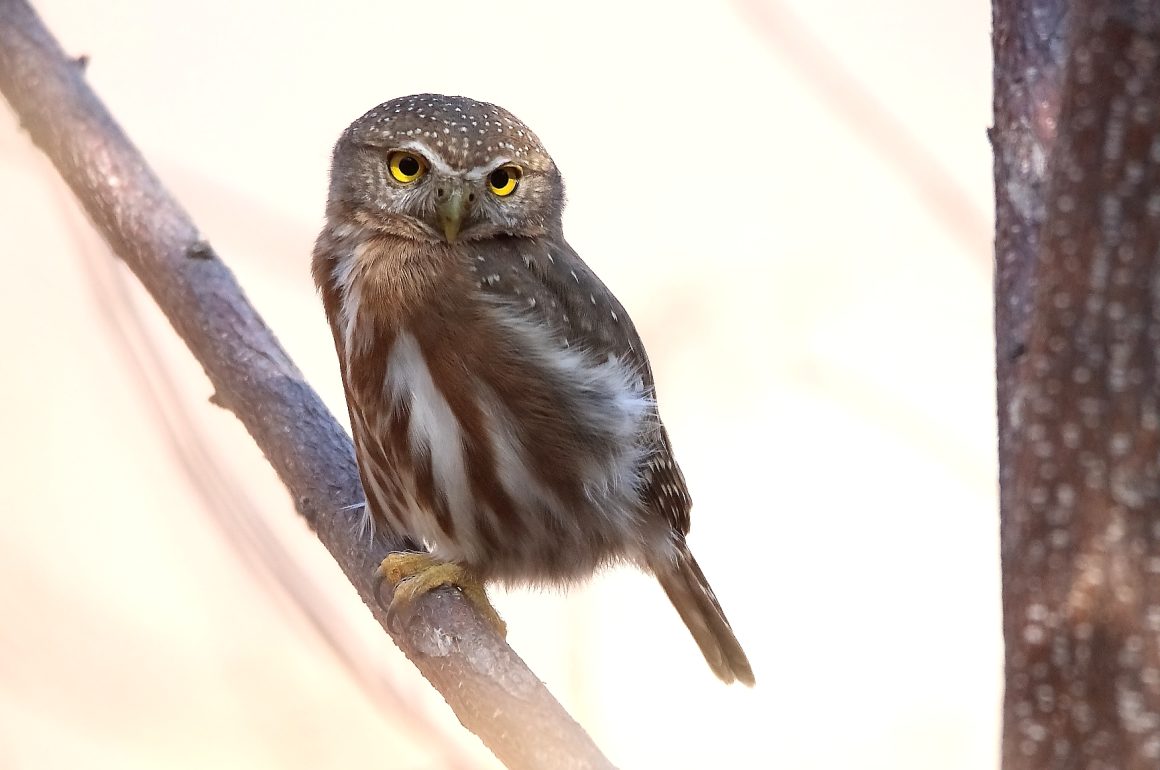
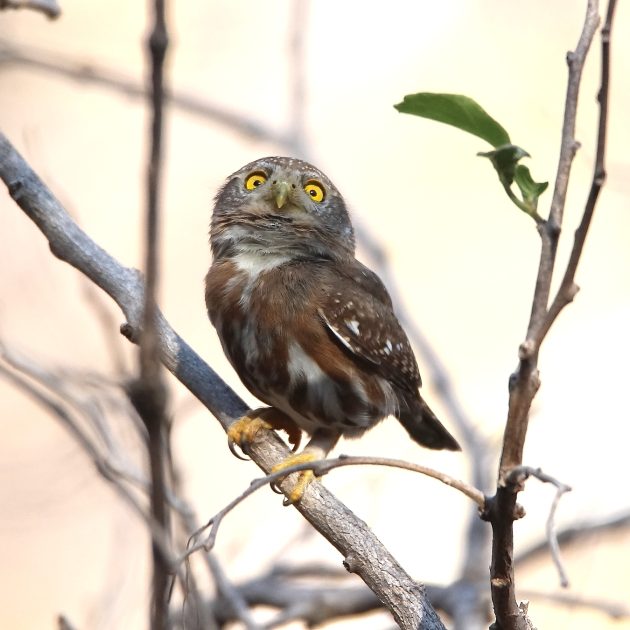
My friend Jonathan Vargas and I recently had our fourth encounter with the Colima Pygmy-Owl just above the small Michoacán town of Copuyo. As always, we were surprised to see just how small this owl is, especially compared to our other two local Glaucidium species, the Northern or Mountain Pygmy-Owl, and the much more common Ferruginous Pygmy-Owl.
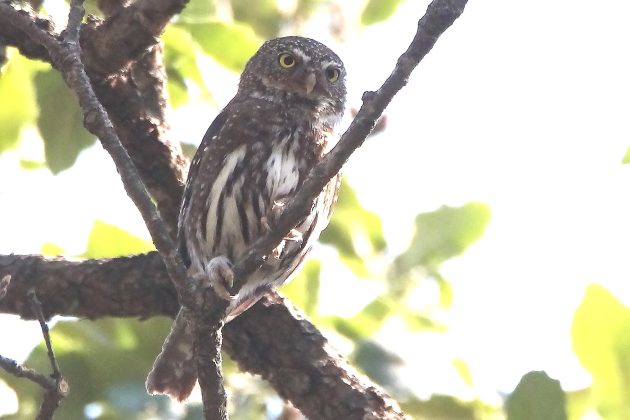
Northern Pygmy-Owl, 15-16.5 cm long, with a very long tail
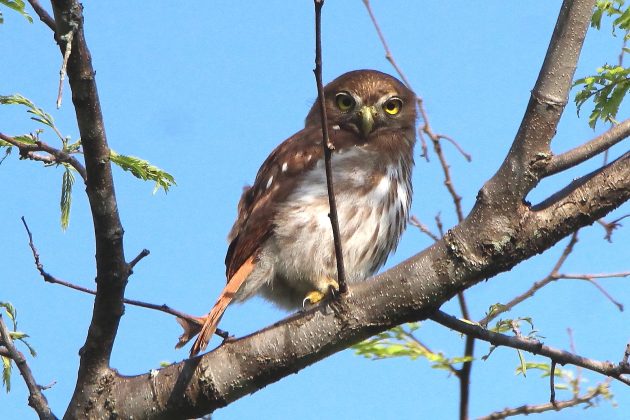
Ferruginous Pygmy-Owl, 16.5-19 cm long, with a streaked, not spotted, crown
But exactly how small is the Colima Pygmy-Owl? The Elf Owl, a species which can theoretically be seen in Michoacán but has not been registered here since 2008, is universally considered the world’s smallest owl. The nocturnal Elf Owl is between 12.5 and 14.5 cm long, and has an average weight of only 40 grams. (That’s 4.9-5.7 inches and 1.4 ounces. But I’ll stay metric from now on.) Most sources say that the next-smallest owls are Peru’s Long-whiskered Owlet and northeastern Mexico’s Tamaulipas Pygmy-Owl. The Long-whiskered Owlet is 13-14 cm long, and weighs an average of 48 gm. The Tamaulipas Pygmy-Owl is 13-16 cm long, and averages 53 gm.
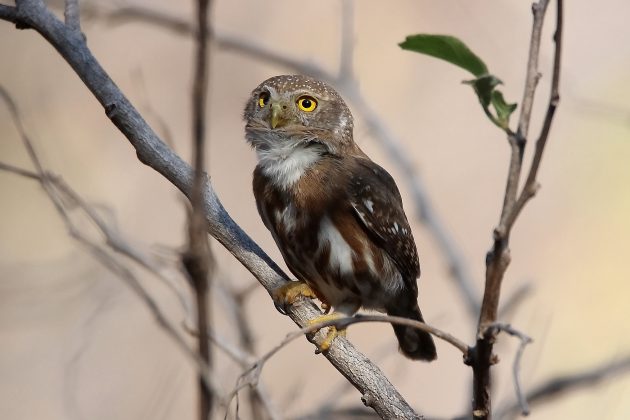
Colima Pygmy-Owl, short tail and spotted crown
Sorry, my Tamaulipas birding friends. Our resident Colima Pygmy-Owls are 13-15 cm long, and weigh only 43-48 grams. So, unless some other owls are in the running without my knowing about it, that makes the Colima Pygmy-Owl the world’s third-smallest owl. Or, by weight, arguably the world’s second-smallest owl. Take that.
Any confusion as to this world-shaking issue is probably due to each of these species being very rare. EBird has a mere 395 reports that include the Tamaulipas Glaucidium. The Owlet, which is not a Glaucidium, has been recorded only 608 times. There are currently 4478 reports for the Colima species, but that still leaves it a difficult bird to find, considering its population is spread across twelve Mexican states. So far it has only been reported 20 times in Michoacán.
There is also only one site where this species has been seen more than once in our state, and that is precisely the road above Copuyo. I have gone seven times, and the tiny owl has turned up four of those times. This last time was the second time that a second owl, presumably its mate, also showed up, although only one gave us photos. That one was extremely calm in our presence. It clearly saw us, and yet it settled in, letting us take photo after photo. Eventually, it decided it was time to give its distinctive triiiill-toot-toot-toot call. While we watched.
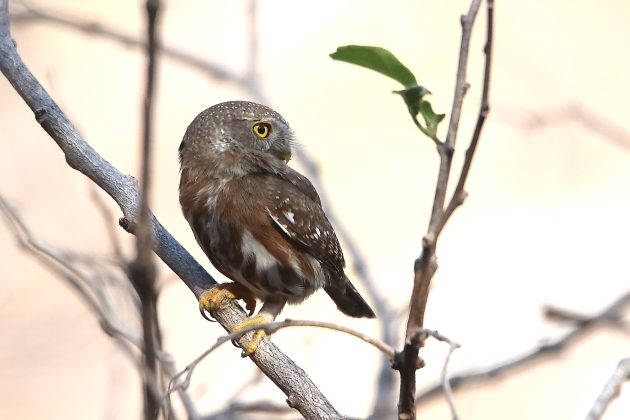
It also displayed its impressive range of neck motion, and its false eyes on the back of its head. My wife would like some of those.
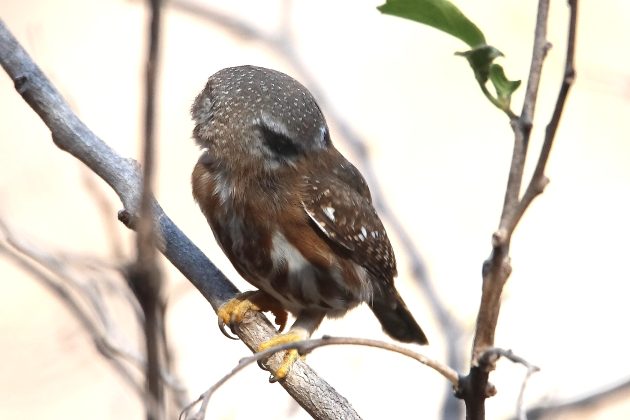
As well as its tiny size, we were both impressed with its disproportionately large feet. It seems that the owl species may shrink, but the claws remain the same. Since I also have disproportionately large feet, I find that quality very endearing.
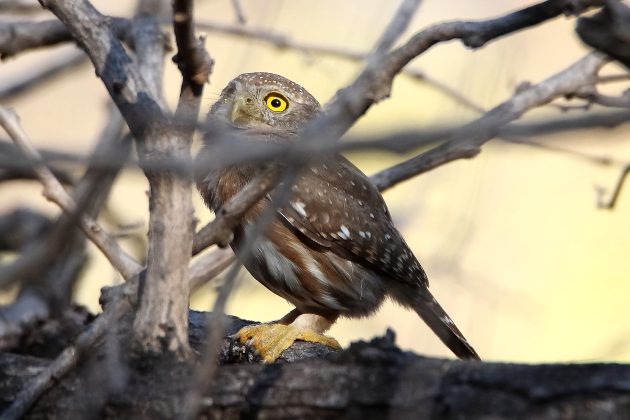
As I researched this brief post, I found it interesting to learn that the Glaucidium Pygmy-Owls can be found on all continents except Australia and Antarctica. Still, unless someone can prove otherwise… My Pygmy-Owls are smaller than your Pygmy-Owls.














Stunning bird! Shame we don’t have a Pygmy Owl in Australia as you’ve said
Love their oversized feet! Your Colima is arguably one of the best looking pygmy-owls, I must say