

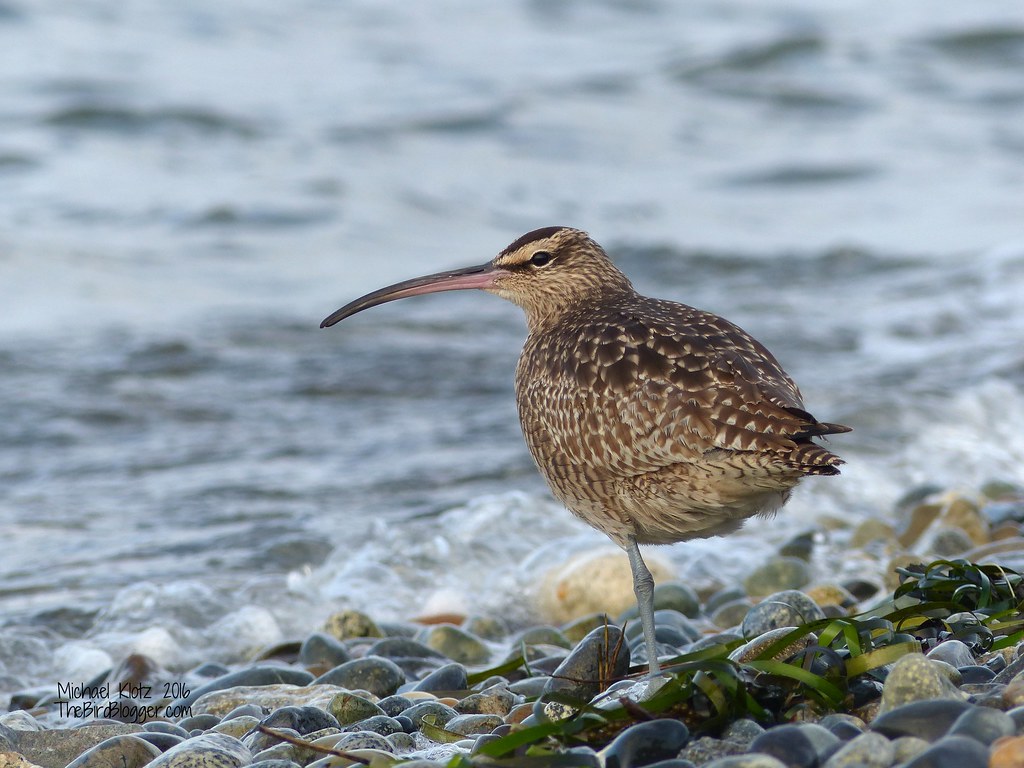
You get up early, so you can arrive at your destination by sunrise (which is before 6am these days). You drive to Colonel Sam Smith Park, which is in the west end of Toronto on Lake Ontario. You lug your food, bins, scope, camera gear, and chair to Whimbrel Point, where you join the crowd on this skinny spit of land that sticks out into the lake. All this time, you’re swatting at the midges, which swarm the point in the Spring. They get in your eyes and mouth. Thankfully, they don’t bite and are just annoying. Your reward for all this effort is to see Hudsonian Whimbrels migrating by Toronto, on their way north to the Hudson’s Bay lowlands and the Mackenzie River Delta in the Yukon.

Dunlin
The Whimbrel Watch is a project of the Toronto Ornithological Club. It runs officially from May 20 to May 28 every year. (Although, I visited this year on May 18 and there was one counter there already. Some people just can’t wait! More about my visit later in this article.) Since the early 20th century, Toronto ornithologists have noted the spring migration of these birds passing by Toronto. In such a narrow timeframe, there can be one-quarter of the entire North American population (estimated at 57,000 – 90,000) passing along the Lake Ontario shoreline. (The low number of the North American population is due to historic hunting and loss of coastal wetland habitat.) The watch organizers are in touch with ornithologists in Virginia, USA, who keep them posted on migration movements.
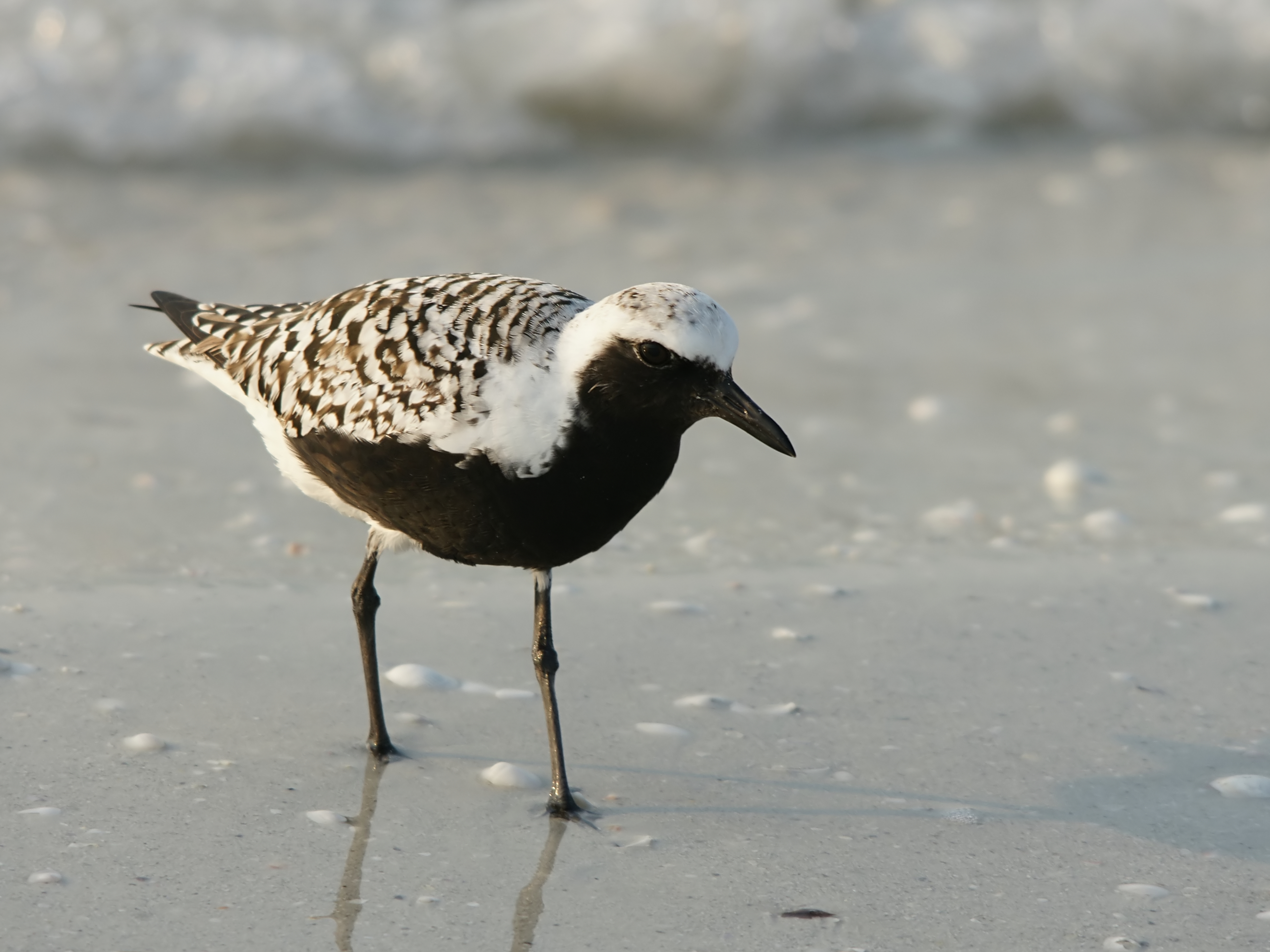
Black-bellied Plover
You need to arrive early, because the birds depart the US east coast the evening before, fly all night, and reach the north shore of Lake Ontario in the morning. You scan the lake, sorting through the feeding Double-crested Cormorants, which can make it difficult to see Hudsonian Whimbrels. Then, you hear the Hudsonian Whimbrels’ trilling calls and you see them coming. It is really exciting to see a large flock fly around the point. Sometimes, they will land on the point’s rocks and offer the photographers some fabulous picture opportunities.

Ruddy Turnstone
Other shorebirds are migrating, too. Watch the skies and check the rocks. There may be Dunlin, Black-bellied Plover, or peeps resting there. When I stopped by on May 18, there were two Least Sandpipers and a Ruddy Turnstone hanging around. I missed the two Red-necked Phalaropes’ flyover. However, I did find four Short-billed Dowitchers, which had been moving along the shoreline. They were resting and I had great looks at them. Sometimes, there are exciting guest appearances like an Arctic Tern, which was seen on one watch a few years ago.

Short-billed Dowitcher
I returned on May 24, hoping for some Hudsonian Whimbrel flights. I was lucky enough to see two flocks go by, one of 30 and the other of 12. The smaller flock came closer to the point. One of the shorebird experts told everyone to sit or crouch down, hoping that the birds would feel comfortable and settle on the nearby rocks. Unfortunately, that didn’t work and they continued flying west. It is always exciting to see and hear these big, beautiful shorebirds. Colonel Sam Smith Park is a great location for songbirds, swallows, and flycatchers, too. After all, some birds have to eat all those midges.
Note: Header picture of Whimbrel by Michael W Klotz – The Bird Blogger.com; all other photos are from Wikipedia Commons, an online source of copyright-free photos: Dunlin by MDF; Black-bellied Plover and Ruddy Turnstone by Hans Hillewaert; Short-billed Dowitcher by Rhododendrites.









Leave a Comment