

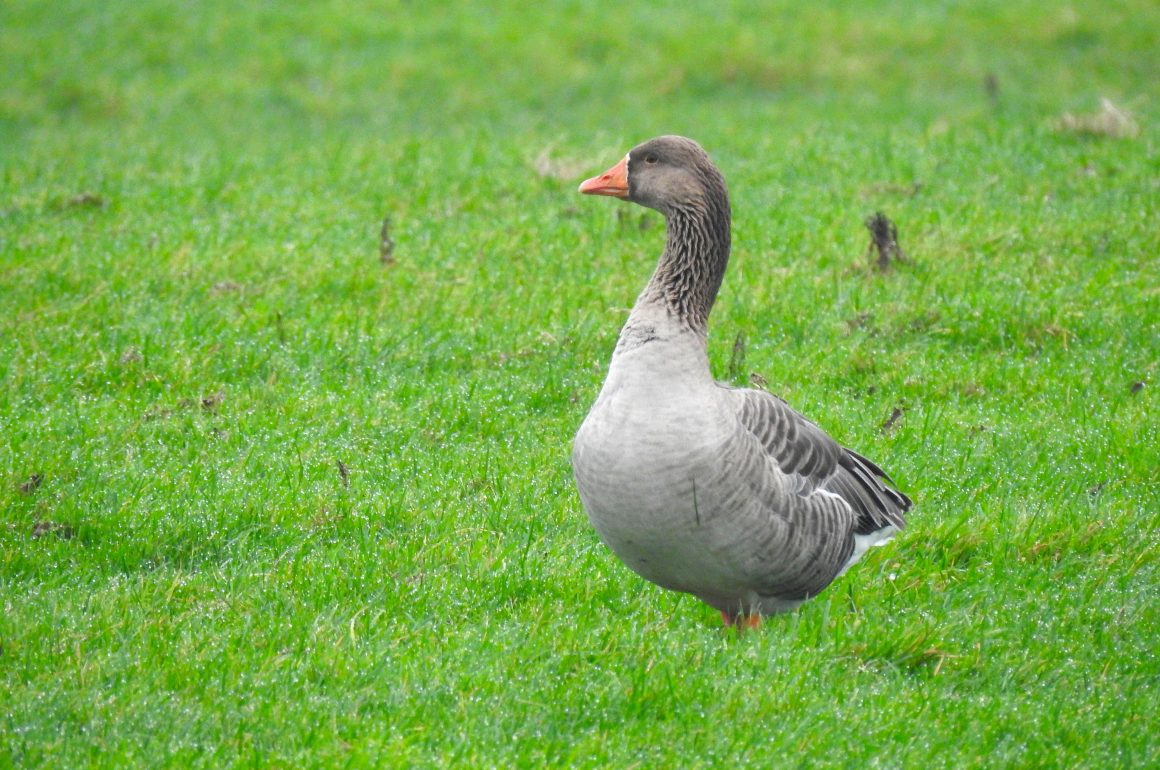
Imagine a flat landscape on a grey morning. As a matter of fact, so grey that the sky seamlessly blends into the road tarmac. It is on such a morning that I decided to go out to spot some polder birds.
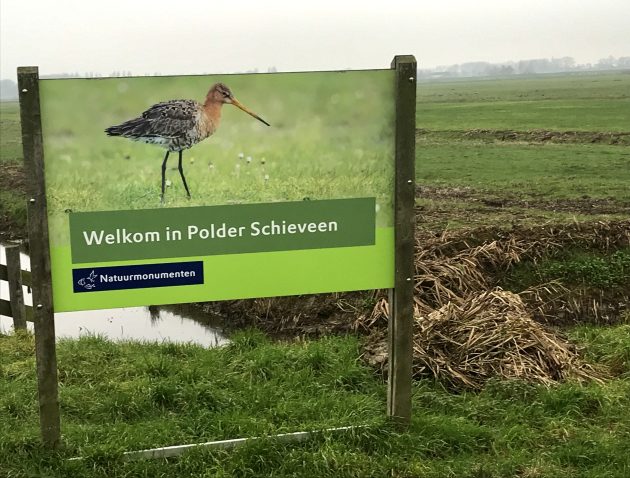
Winter birding has the distinct advantage of starting late. Sunrise at 8:45 and the Rotterdam metro allows bicycles after 9:00. No need to get up early, nice. I took the metro to the Rodenrijs stop. From here I cycled through Polder Schieveen, which is the last remnant of polder landscape within the Rotterdam city limits. There is also a footpath through the fields so you can choose to hike (4 to 5 km). Bring proper boots as the meadows are soggy. The area is closed for the breeding season from 1 March till 1 July. The surrounding dike is accessible in that period but it will be a longer walk. The area is easily accessible by metro, not only from Rotterdam but from Den Haag (The Hague) too. There’s a pancake restaurant next to the metro station and Belevenisboerderij Schieveen offers a shop and small restaurant at roughly the halfway point. It is a good day out for the family if you are willing to compromise on hardcore birding. But who am I kidding?
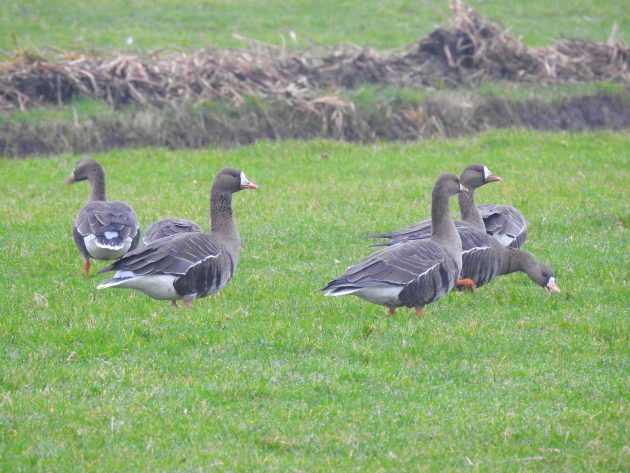
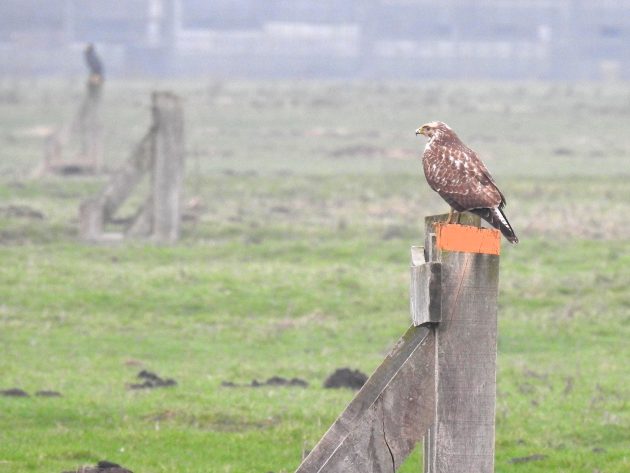
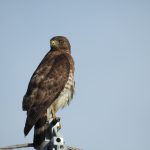
I ticked off a solid 34 species. Huge numbers of Eurasion Wigeon, Greylag Geese and Greater White-fronted Geese, and I thought I saw a Lesser White-fronted Goose too. However, it was too far away to be certain. They can show up so be vigilant. A pair of Common Buzzards were eyeing the Eurasian Coots. In summer, the latter are as anti-social as a Montana Republican, but in winter they congregate in vast numbers and feast on the protein-rich grass. To the delight of the buzzards and the occasional birder.
Big Year Rotterdam, 104 species, 96 to go.




Those remaining 96 are going to be quite a challenge with just 10 days to go. A better target for next year might be 100, as then you can be confident of success. Here in the UK I’ve exceeded my target of 200 by 14 species, but I have a much wider geographical area than you, and I also depend on cars to transport me to good birding areas.
By the way, please send some of your Whitefronted Geese across the North Sea to East Anglia. Very few have arrived so far this winter. We clearly need some cold weather to push them across to us.
The White-fronted Geese seem to be quite happy here – lots of grass. As for the target, I will be doing a review because I learnt some interesting things this year, about birds and about myself. And the year isn’t over yet…
I think Wikipedia deserves special recognition for including “polder” amongst its millions of terms. And, I thank Peter for linking it. When I saw the title, I thought it was some sort of nickname for that goose. I very much like the idea of birding by train and bike; a near impossibility in the United States. I write “near impossibility” because I guess this could be potentially possible in NYC, Chicago or Washington DC. I don’t know any of their rules about bikes on trains.
According to the internet: Bikes are allowed on NYC subways at all times. Bikes are not allowed on most NYC buses. However, S53 and S93 buses are equipped with bike racks going between Bay Ridge, Brooklyn and Staten Island and Q50 and Bx23 buses equipped with bike racks going between Flushing, Queens and Co-op City in the Bronx.