

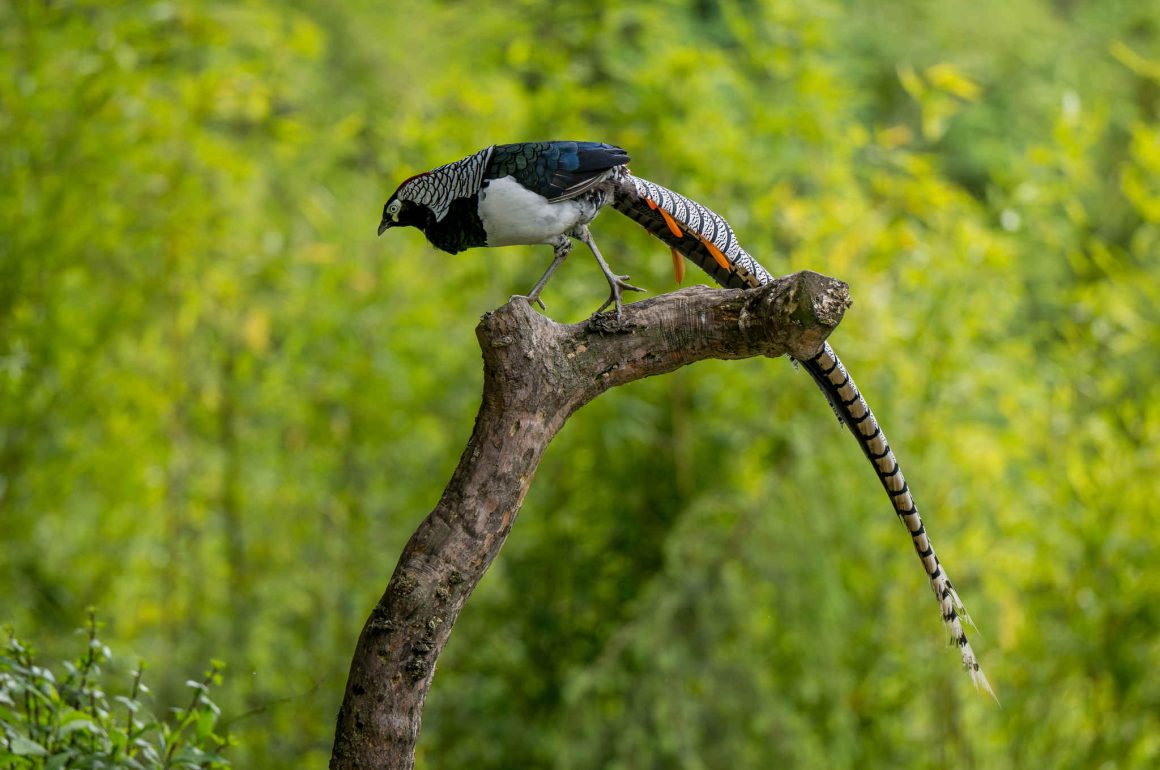
I am sure I have written about Lady Amherst’s Pheasant before. Fortunately, my long-term memory is bad (I can actually read my old blog posts as if they were written by somebody else – no recollection at all), so this does not keep me from possibly writing exactly the same things again.
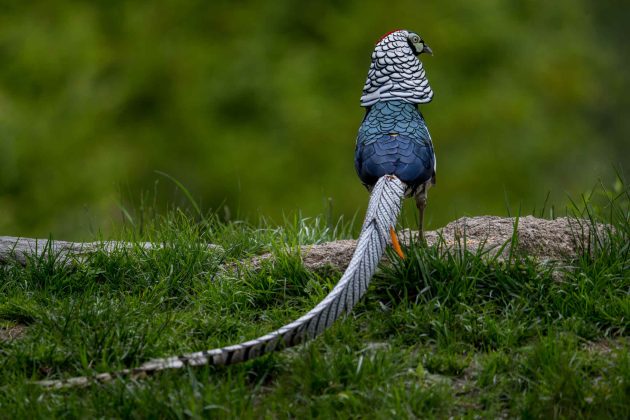
So, about the name of the species. Lady Amherst’s Pheasant (Chrysolophus amherstiae) is named after Sarah Amherst, wife of William Pitt Amherst, who was the Governor-General of India from 1823 to 1828. She was an amateur naturalist who, during her time in India, supported the documentation of animals and plants. She may also have been involved in sending the first pheasants of this species to England.
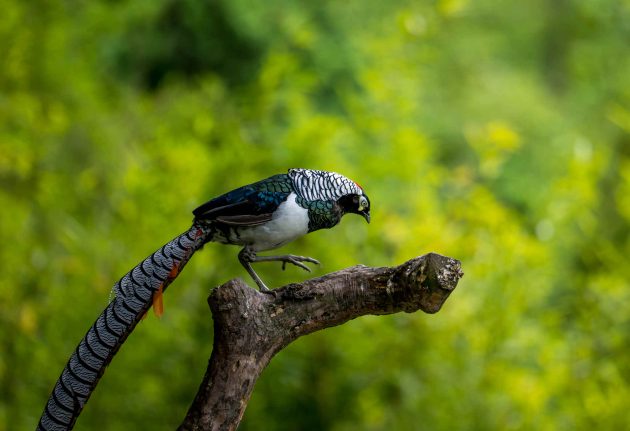
The name has caused the species no end of trouble and ridicule, however – imagine trying to come over as a strong and masculine male pheasant and then being asked for your name in a bar. Johnny Cash wrote about a similar dilemma in “A Boy Named Sue“.
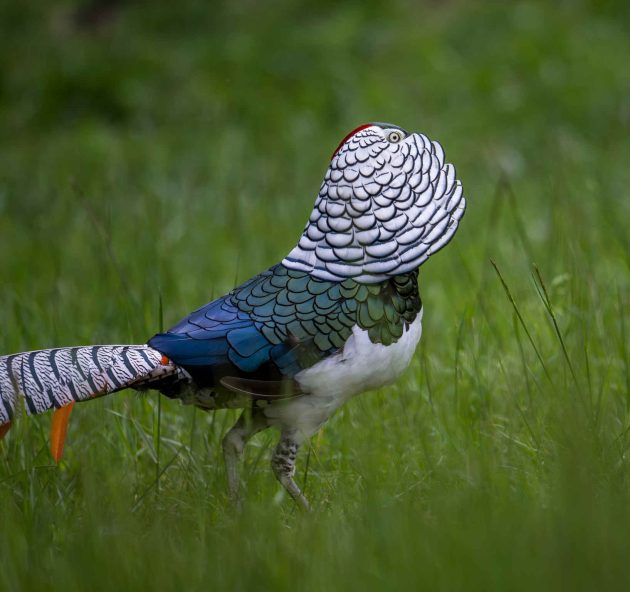
(I am a bit scared I used the same joke whenever I wrote about this pheasant before, but I am not going to check).
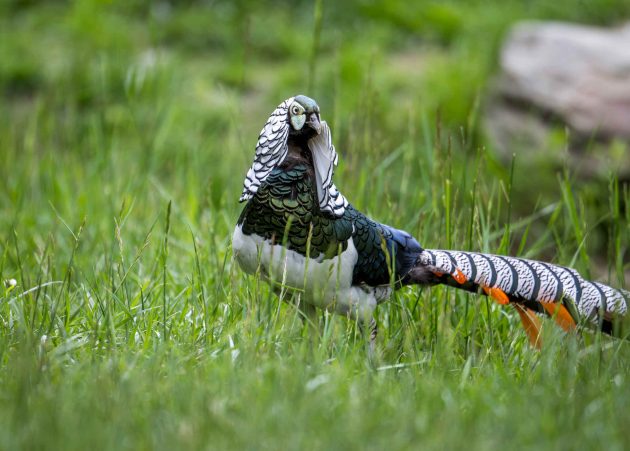
Like me, Lady Amherst’s Pheasants try to avoid contact with humans, which in scientific language sounds like this: “Lady Amherst’s Pheasants tend to avoid anthropogenic disturbance” (source).
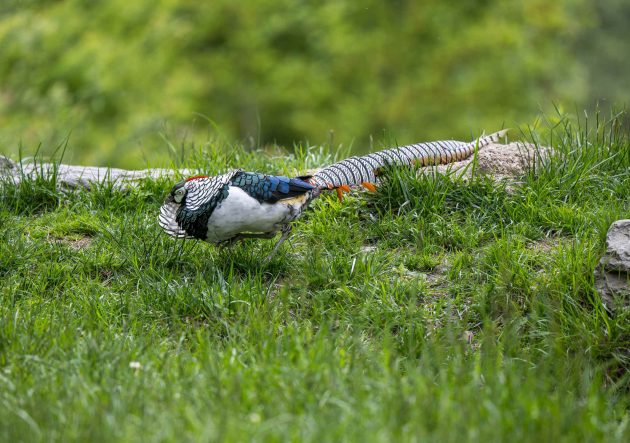
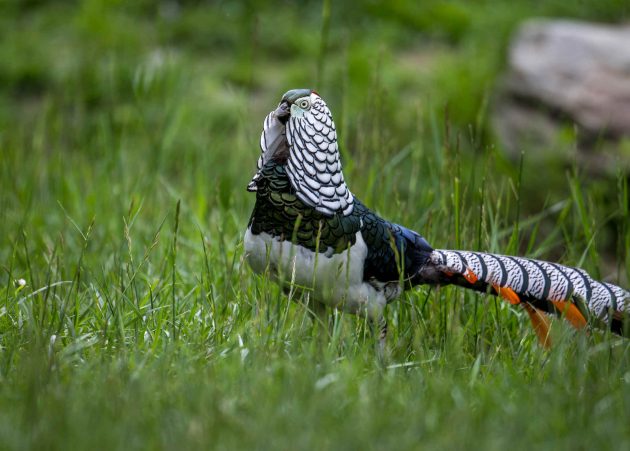
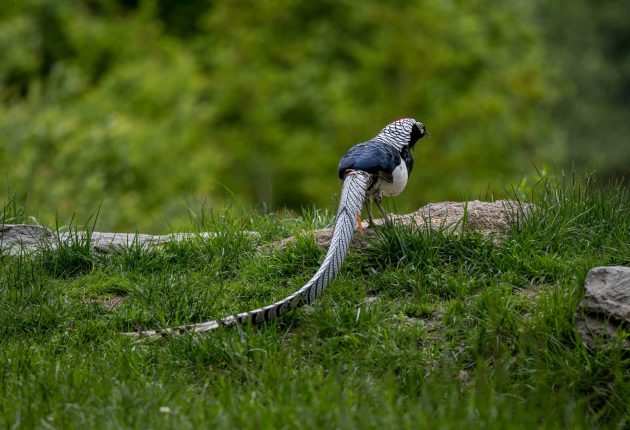
While the different sexes are typically easily distinguished, with this being an adult male …
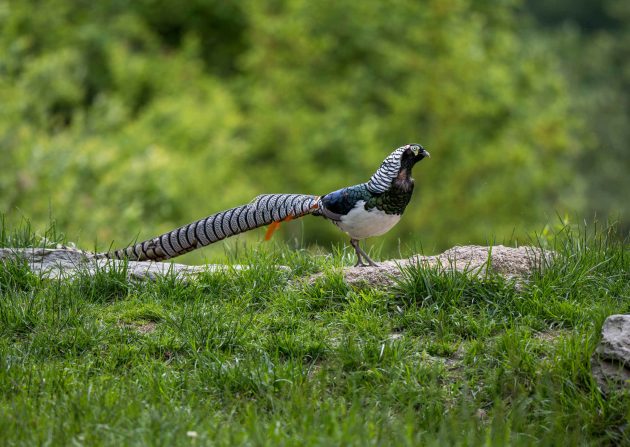
… a juvenile male …
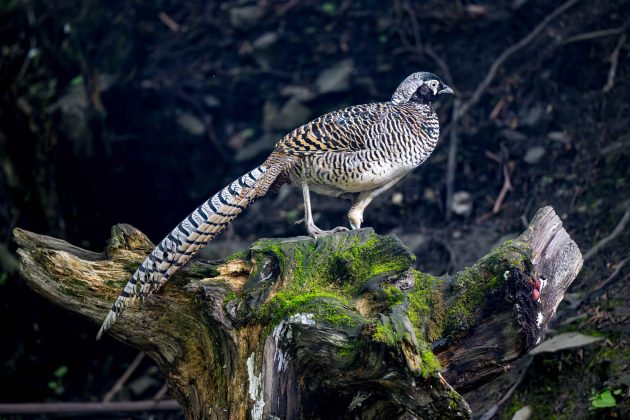
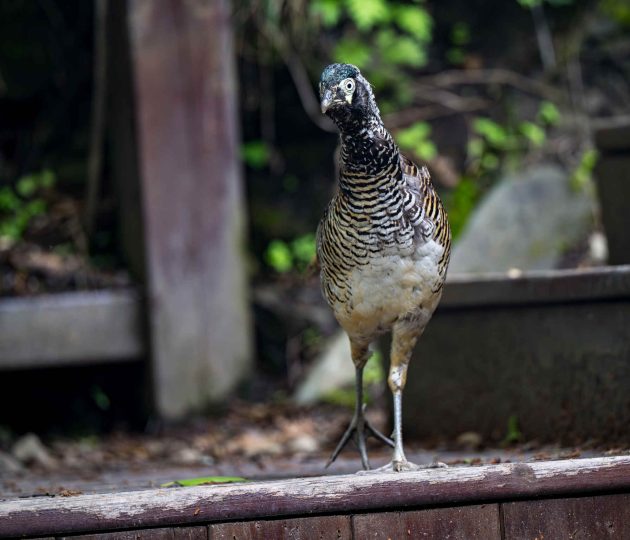
… and a female …
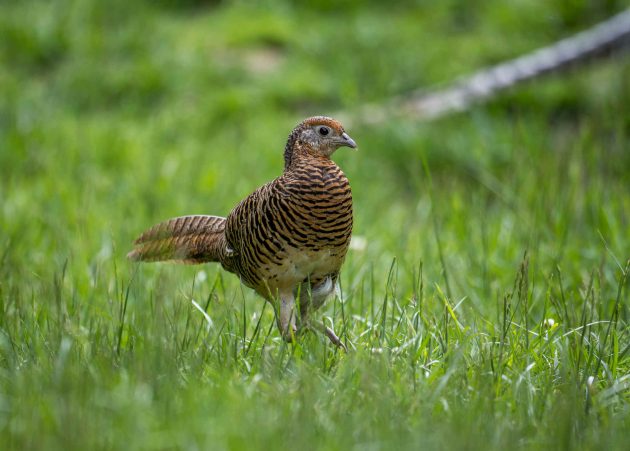
… there is an additional complication. Apparently, some older female pheasants acquire the male plumage after menopause, which makes it look like they changed their sex (spoiler alert: they did not, they just become infertile). The technical term for this is Gynandry.
If you are more interested in veterinary sciences than in ornithology, I suggest you find websites other than 10,000 Birds …
… or check out papers on “Capilliariasis in a Lady Amherst’s Pheasants” or “External Skeletal Fixation for Surgical Repair of Femur Fracture in Lady Amherst’s Pheasant“.
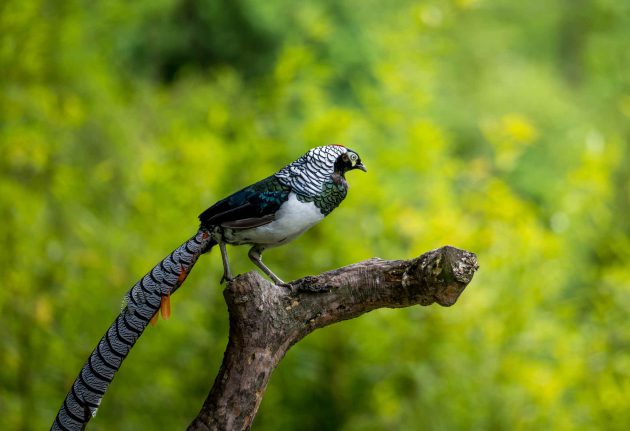
While eBird describes the male as “resplendent, with long striped tail, white belly, and black-and-white scaling on neck”, some males seem to forgo the long tail in the off-season. They say life is much more convenient without it.
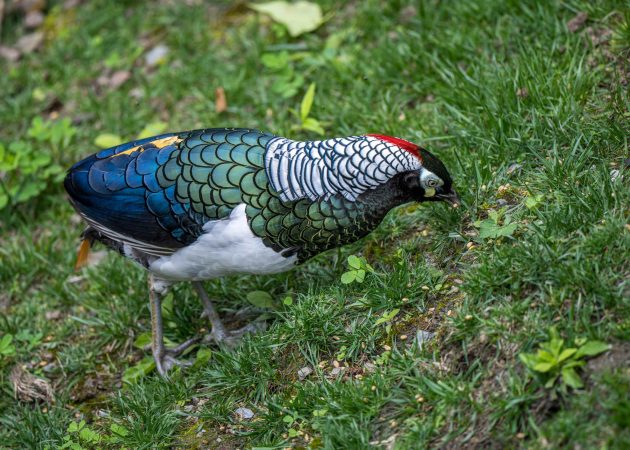
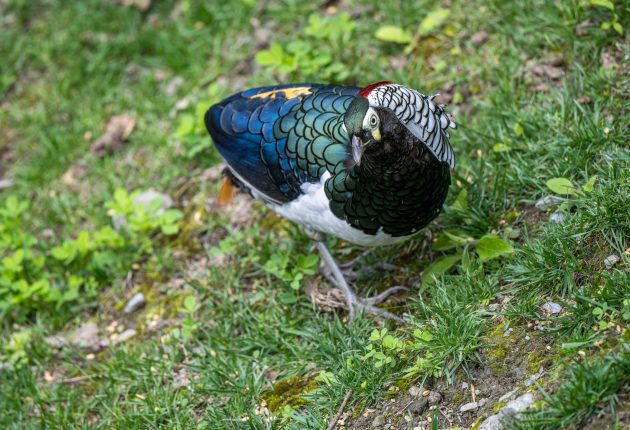
Strangely, eBird also remarks that the species “moves about quietly when feeding in dense vegetation” – what do they expect, that they bang drums?





Another bird that was on my 64-bird-long Bucket List of birds I need to see someday that was prevented from probably ever happening by the 2020 pandemic… *sigh*
I’ve just seen one in my garden in Cumbria. I’m familiar with Golden and Silver Pheasants so quite surprised to see one of these as I’ve only heard of them.
Just by sheer freak of I don’t know what, yesterday evening I saw what looked like a male wander around my garden in a tiny village in France in the Puy de Dome !
At least a friend of mine identified it as such after seeing the photo I took.
I was so surprised as was my cat who just observed it and didn’t try to pounce or hunt.