
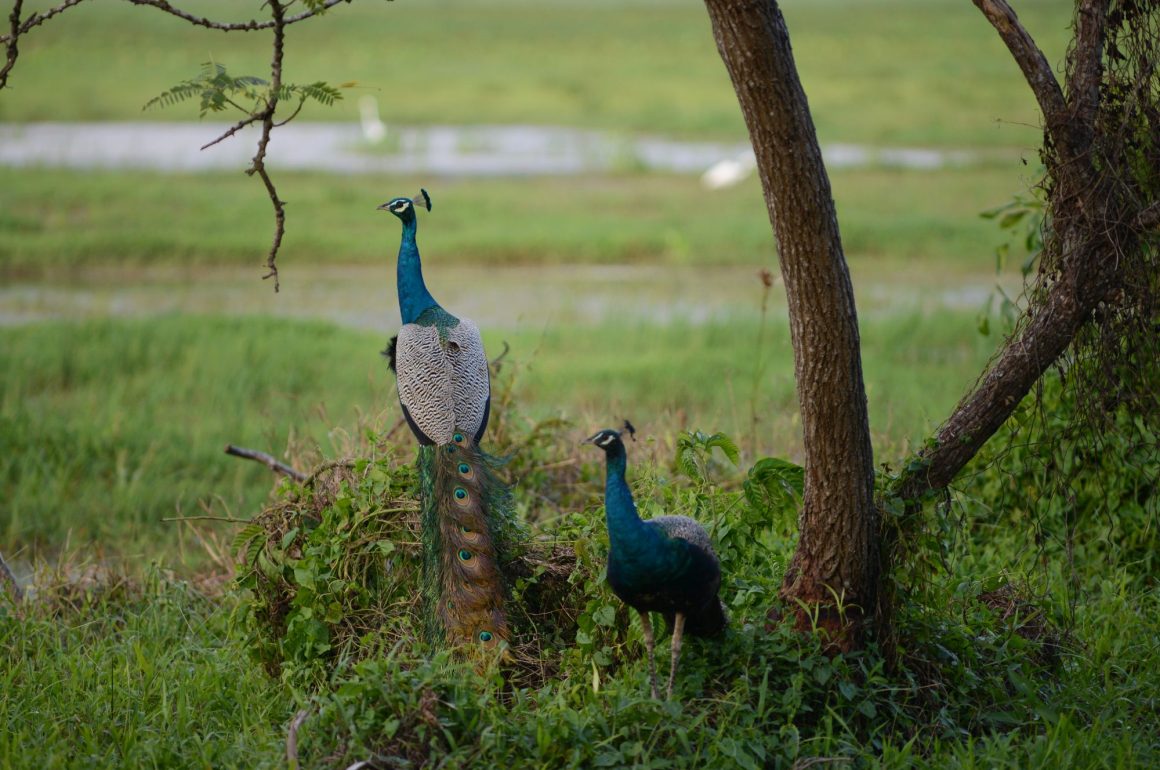
Tissamaharama, or Tissa as it is known by most, is a small town on Sri Lanka’s southwestern coast often used as a jumping-off point for excursions to Yala or Bundala National Parks. Yet the town itself deserves at least a whole day’s worth of birding as well, as a number of great birds can be found here. This includes some which you are unlikely to come across elsewhere on a trip to the island.
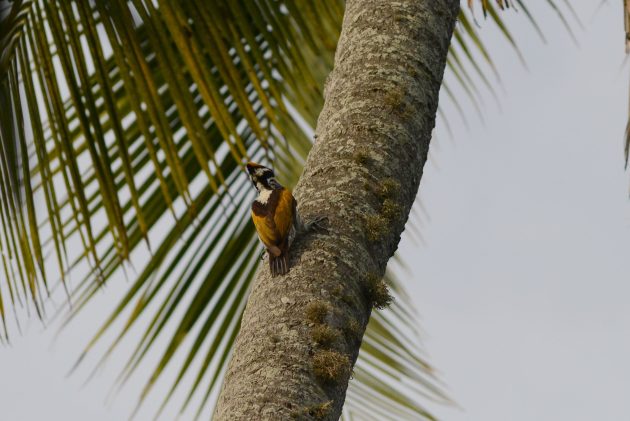
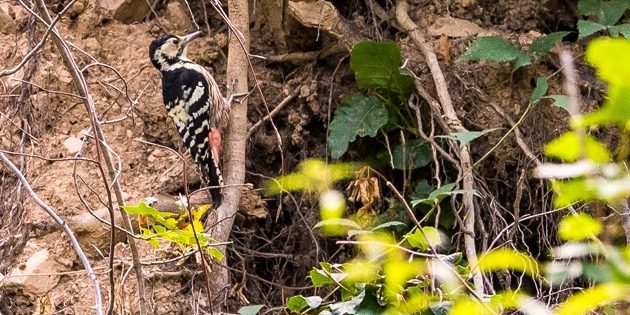
The single most desired bird in Tissa is the White-naped Woodpecker. There is a stakeout for this bird that is used by all the tour companies but I could not determine where it was. However, half by chance I was approached by an elderly man who asked me if I wanted to see woodpeckers and sure enough I had a pair in my bins a few minutes later. I didn’t obtain good views as they appeared to be unusually skittish, but this bird is impressive either way, the long neck giving it some similarity to a dinosaur.
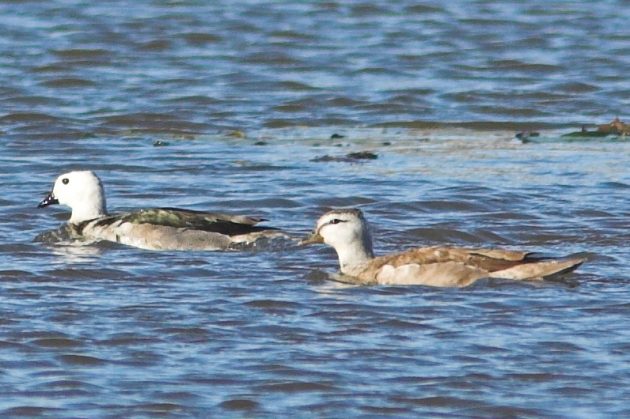
The woodpecker is one of the few birds in Tissa that lives on dry ground as the town is largely surrounded by wetlands. These produce beautiful settings in places, especially where huge trees emerge from the water with their branches dropping from the weight of thousands of Indian Flying Foxes roosting. These wetlands attract a great number of birds as well, one of my favourites being Cotton Pygmy-Goose. This small beast is pretty hard to find, but just like the African Pygmy-Goose – one of my favourite birds in southern Africa – when you do, they are really fun to watch.
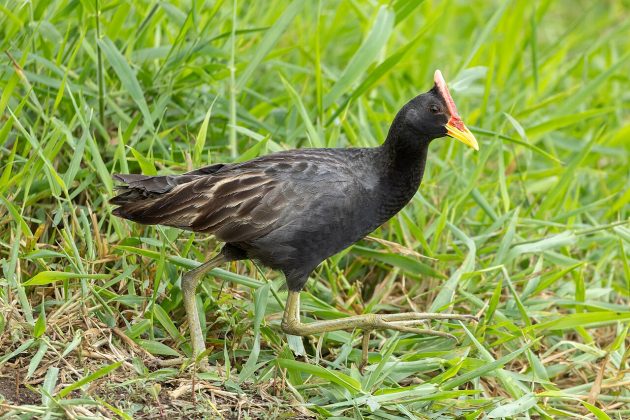
Another great bird here is Watercock. The bright spikey shield on the male’s bill (clearly trying to compete with the Knob-billed Ducks which are also occasionally around) is a real show-stopper. The birds can be exceedingly hard to see but their calls are often heard from the dense tangles. The only male I ever saw was flying over the reedbeds, its red shield glowing in the evening sun.
Tissa is a fun place to explore given the pretty scenery and high bird activity. Since the wetlands are all surrounded by semi-urban or at least densely populated rural areas, most places are also easy to reach. This offers lots of opportunities to explore and find some interesting birds.





Leave a Comment