

When shorebird season arrives, one group you should keep your eyes open for, no matter where on Earth you call home (unless for some inexplicable reason you live in Antarctica) are plovers.
Plovers are relatively small shorebirds, compact but gracefully tapered, somewhat reminiscent of teardrops with bird legs. Sixty-six members of the Family Charadriidae are distributed worldwide, from equatorial regions to the arctic, from sandy beaches to open prairies. As one might expect of shorebirds, plovers are often found near water, be it salt, fresh, or brackish. However, the impressive diversity of this family coupled with the fact that many are migratory ensure that a plover might turn up just about anywhere.
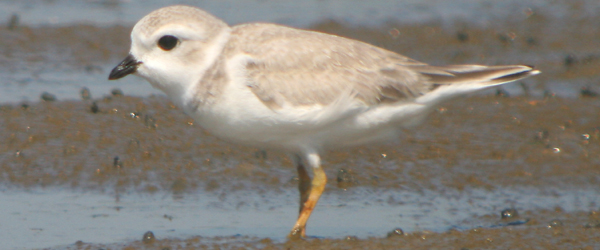
Juvenile Piping Plover (Charadrius melodus) by Corey Finger
Plovers can usually be distinguished from other types of shorebirds by their short, thick bills, though large eyes and short necks also differentiate many of them from their kin in Order Charadriiformes. Further field marks tend to be distributed by genus. Though there are about ten accepted genera of plover, give or take, most cluster in one of three tribes:
Charadrius or Ringed Plovers
Charadrius species, the largest genus, are known as the ringed plovers because most of them are marked by breast bands. While most ringed plovers, like Wilson’s and Semipalmated in North America, bear a single band be it full or faint, partial or complete, others display two, like the Killdeer, or even three.
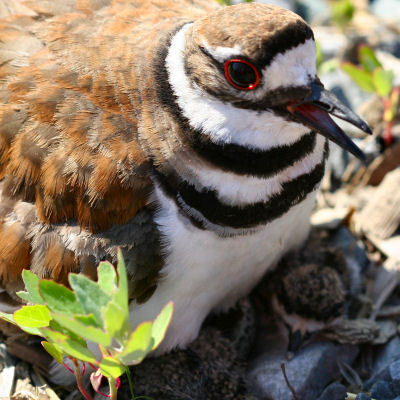
Killdeer with hatchlings by Corey Finger (See more Killfawns… baby Killdeer!)
Lapwings
Vanellus plovers are called lapwings. These birds, typical everywhere but North America, usually bear distinctive black markings on their wings and tails, but are more readily recognized by fetching crests, wattles, and/or spurs.
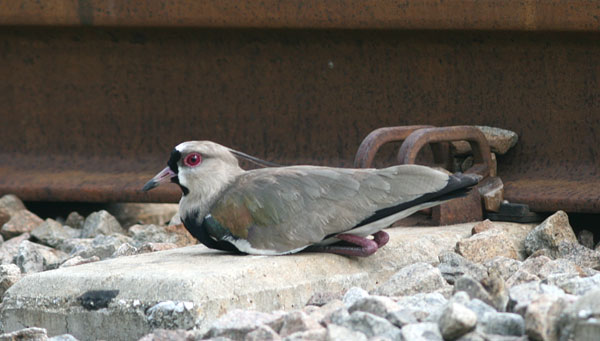
Southern Lapwing by Mike Bergin
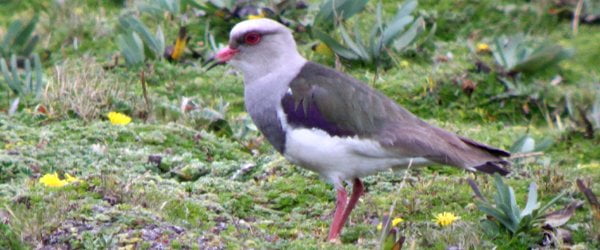
Andean Lapwing (V. resplendens) by Corey Finger
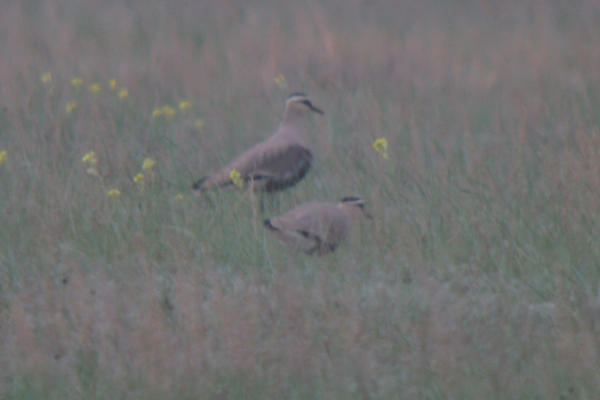
Critically endangered Sociable Lapwings (V. gregarius) by Corey Finger
Pluvialis or Golden Plovers
Pluvialis plovers represent the various golden plovers. While most of these birds acquire a lustrous tawny coat in breeding plumage, even more striking is their dark, dramatic mien as they turn black through their face and breast down through the belly.

Black-bellied Plover in New York by Corey Finger
Dotterels and oddball plovers
Most plovers outside of these genera are called dotterels, thought the distinctive Wrybill and mystifying Magellanic Plover also make up their own groups.
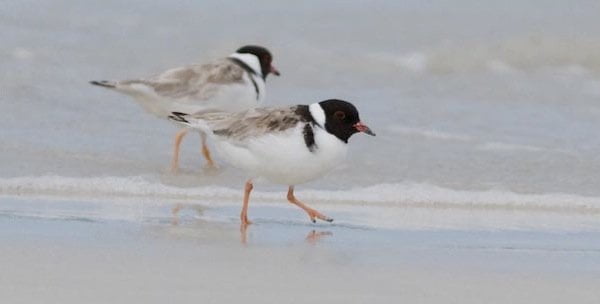
Hooded Dotterel by Mike Freiberg
Now that you know what a plover is, learn about the raging controversy surrounding plover pronunciation.

Masked Lapwing (V. miles) by Redgannet





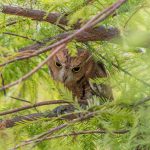
I am a biology teacher at a high school in upstate South Carolina, and I am known by most to care greatly about animals of all types. I also do some wildlife rehabilitation on the side. So I wasn’t surprised when our track coach came to me and asked me what I could do about a bird with a nest and eggs on the track!
She had no idea what kind of bird it was, so I went ready for just about anything. I wasn’t sure I would be able to successfully relocate the nest, but if she was on the track, she was in danger from the athletes that would be on the track that night.
When I got to the track, I was relieved to see that she wasn’t actually ON the track. The bird is a plover, and she’s nestled down in the dessicated branches of a scragly bush. Amongst the sticks, she had gathered little pebbles and the like to lay her eggs in. Thankfully, she is far enough away from the track that she won’t be disturbed by the runners, and she isn’t in a place that athletes would just hang around. Unless you know she is there, it isn’t obvious that there is anything interesting in the area.
I plan on keeping an eye on her and those that are in charge of the track know to leave her be. She’s a fiesty little mama; she called for back up when we got too close, and was ready to defend her eggs! The coach told me that she had already flown at the students that realized she was there yesterday!
Thanks for the information and all the educational material your site provides. My Biology 2 class will be studying birds soon, and this is a great resource.
Keep up the good work,
Jessica Moore
Hi I don’t have a web site, but do see a lot of what ssome people have told me are plovers. I live in N Reading, MA and work as Park Maint(part time) for the town. I pick up the tons of litter people leave behind. There are plovers who nest and live in the park and have nested in the grass that we don’t mow. They swoop and dart and are beautiful, their cry is mournful and sharp, yes I think that is it. This park is app 40+ acres with fields and woods combined. It gets a lot of use by humans as well as people, hawks, fox, deer, turkey and more.
Could these really be plovers? I see them here and yet they are beach birds according to what I have found on the net. Yet the above note from Jessica Moore sounds like she is further away from the ocean than I am. Can you help
Richard
Hi Richard, the bird you describe is almost certainly a Killdeer, which is indeed a type of plover. Killdeer love grassy fields as well as asphalt roofs and gravel ditches.
hi iam lacey and i we have a mother plover & dad plover & 2 baby plovers and every time me and my family go at the backyard they try to attake us and when do the baby lern to fly
lacey perger THANKS
hello what are baby plovers