

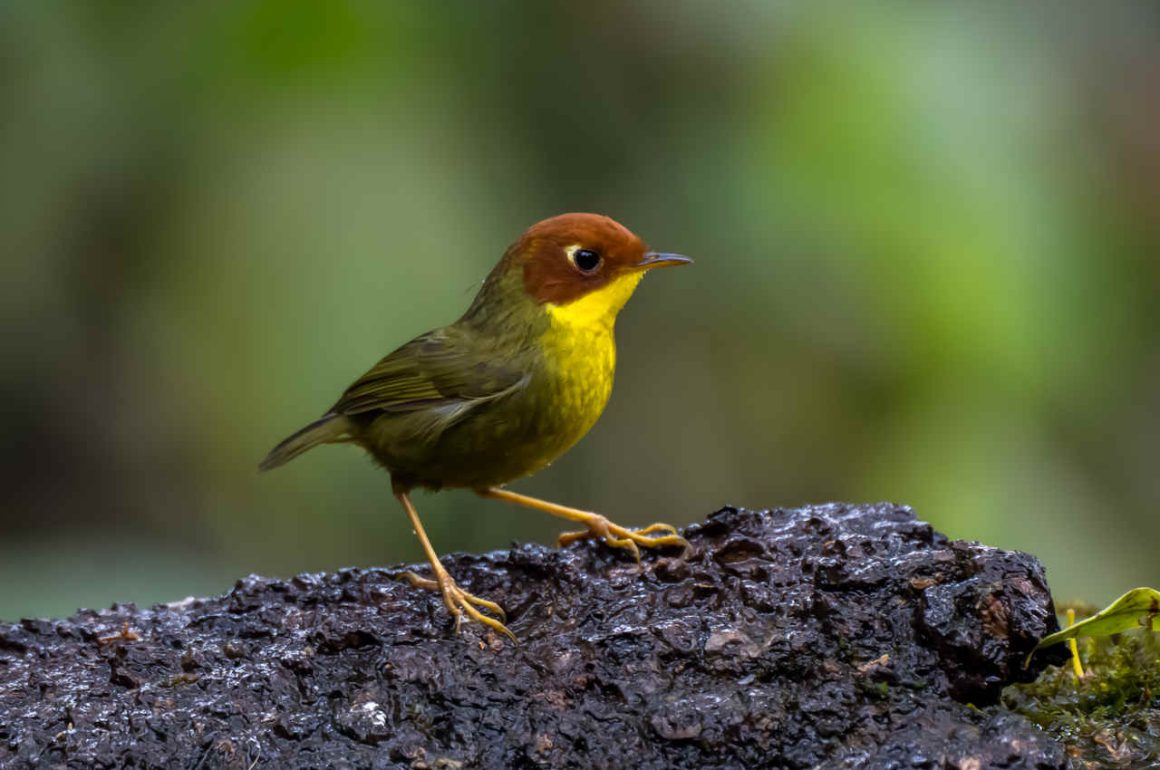
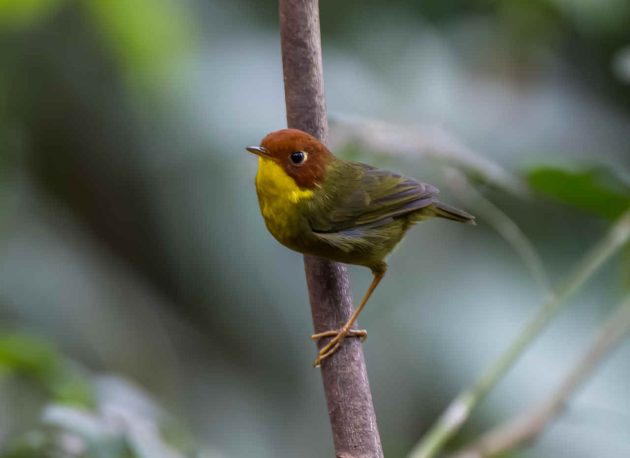
For those who like their bird names to be messy, the Chestnut-headed Tesia is a good choice. Its scientific name is Cettia castaneocoronata rather than the expected Tesia castaneocoronata. So, what, why, and warum?
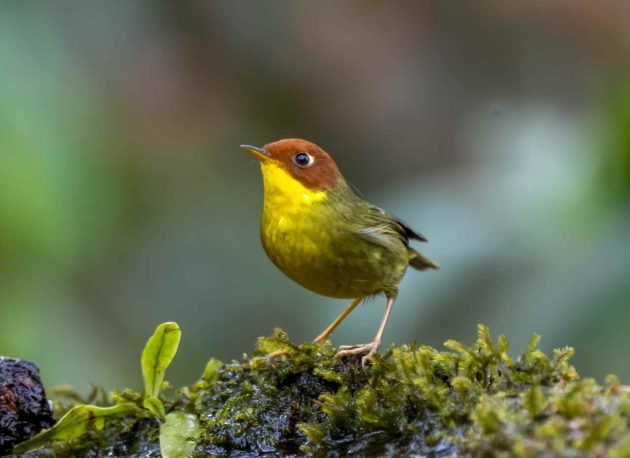
The Chestnut-headed Tesia was historically placed in the genus Tesia, along with other tiny, short-tailed babblers of the Himalayan and Southeast Asian undergrowth. Tesias are generally small, skulking ground warblers.
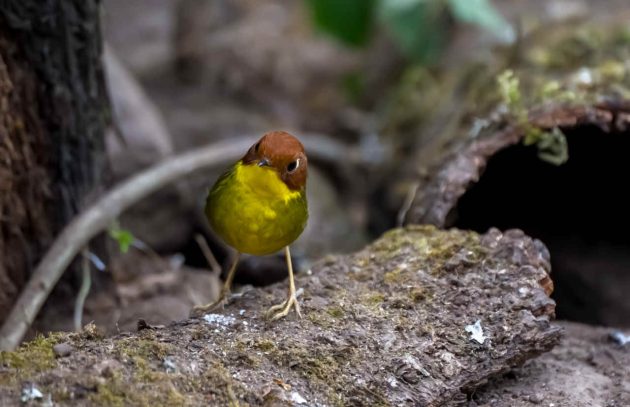
Then, DNA analysis showed that the species is actually closer to the bush warblers in the genus Cettia. But the common name Tesia stuck. And I guess the Chestnut-headed Tesia does not mind much.
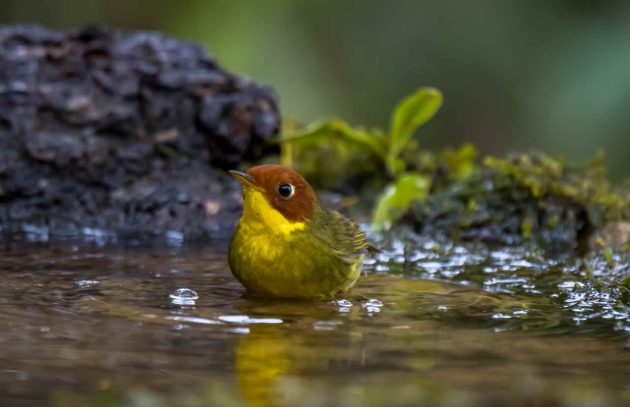
Nor does eBird, warmly describing the species as an “adorably round and tailless small ground-dweller”. The HBW adds that it “rarely flies”.
The Slaty-bellied Tesia has a similar shape and size but is a proper Tesia species.
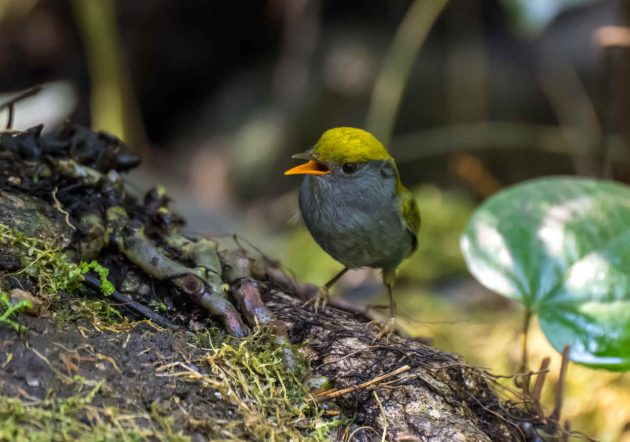
eBird likes this species as well, calling it a “charming tiny bird, brightly-colored but difficult to see”.
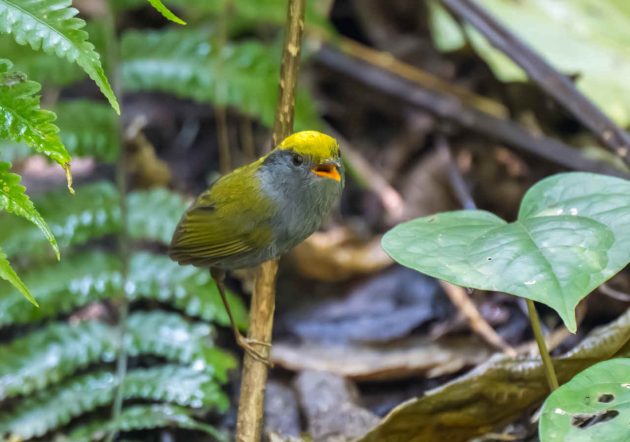
The HBW adds a somewhat contradictory sounding “Active but extremely skulking, although often inquisitive and seemingly not shy.”
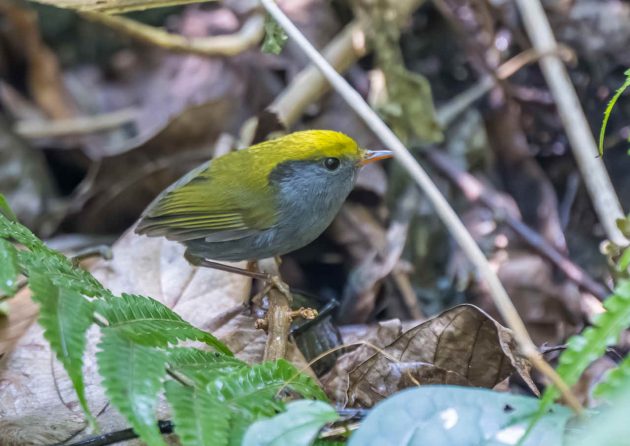
To me, it looks exactly the same as the Gray-bellied Tesia, a fact that eBird first seems to admit, only to retract a moment later: “The very similar Gray-bellied Tesia has a paler belly, a distinct yellowish eyebrow, and a darker greenish crown” (I am now immediately suspicious if several minor distinctions such as “paler” or “darker” are needed to visually separate species).
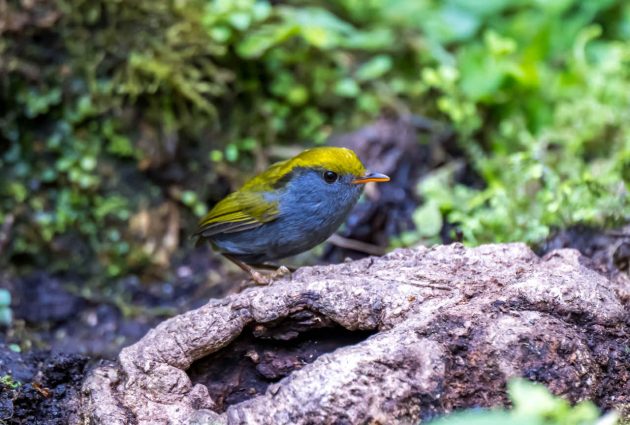
Both species were seen at Baihualing, Yunnan, China, in March 2026.





Leave a Comment