

When you flip through most bird guides, it sometimes seems like there are two basic categories of birds: passerines and non-passerines (sometimes the two categories are even split into two separate volumes). But in the avian tree of life, only one branch — the order Passeriformes — accounts for by far the greatest number of species. With roughly 6,500 species, passerines make up about 60% of all living bird species worldwide, yet they represent just one out of the roughly 40 recognized orders of birds. And abundance estimates suggest that passerines account for some 56% of all individual birds alive today.
Then, what makes passerines so successful? Basically, several traits make them particularly good at exploiting a larger variety of resources and at adapting to change.
Small Size, Fast Life
Most passerines are small. Small body size has evolutionary advantages. Small birds require less food, can exploit smaller ecological niches, and tend to reproduce faster than large birds. Short generation times mean evolution can proceed more quickly: populations adapt faster, and new species can arise more readily.
Ecological Flexibility
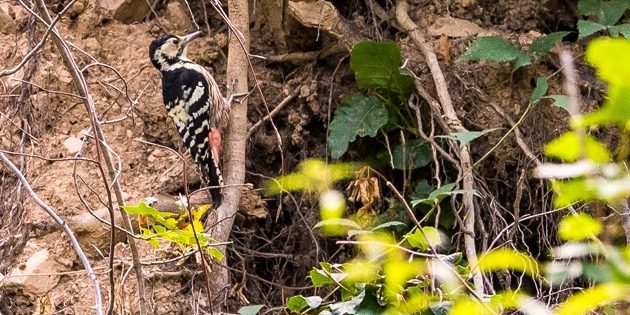
Many non-passerine groups are specialists. Albatrosses need oceans, woodpeckers need trees, and flamingos need specific wetlands. Passerines, by contrast, are often ecological generalists. Their bill shapes diversify easily, allowing rapid shifts between insects, seeds, fruit, nectar, or mixed diets. This flexibility makes passerines resilient to change, whether due to climate shifts millions of years ago or urbanization today.
Song Learning
Many passerines (especially songbirds) learn their vocalizations rather than inheriting them entirely genetically. This capacity for vocal learning enables complex communication and flexible social behavior. It also promotes reproductive isolation, because song differences help populations recognize their own kind. When populations become separated, differences in song can accelerate the formation of new species. In other words, passerines may speciate more easily than many other bird groups.
Adaptive Behavior
Passerines tend to be more behaviorally innovative than non-passerines. Many readily adjust nesting sites, feeding strategies, and migration patterns. And they colonize disturbed habitats quickly. While this adaptability doesn’t cause success on its own, it increases survival during environmental changes.
Perching
The classic passerine foot (three toes forward, one back) is optimized for perching. Perching allows efficient use of branches, shrubs, and grasses, where food resources are abundant but patchy. While other families, such as parrots, also perch, they do so in a different, more climbing-oriented way. Compared to parrots, the passerine foot is lighter, requires less muscular effort, and therefore is perfectly suited to thin branches rather than climbing.
None of these traits alone explains passerine dominance. Together, however, they describe a bird designed less for perfection than for possibility. So, if evolution had a marketing department, passerines wouldn’t advertise strength or beauty. Their slogan would be simpler: Works almost everywhere.
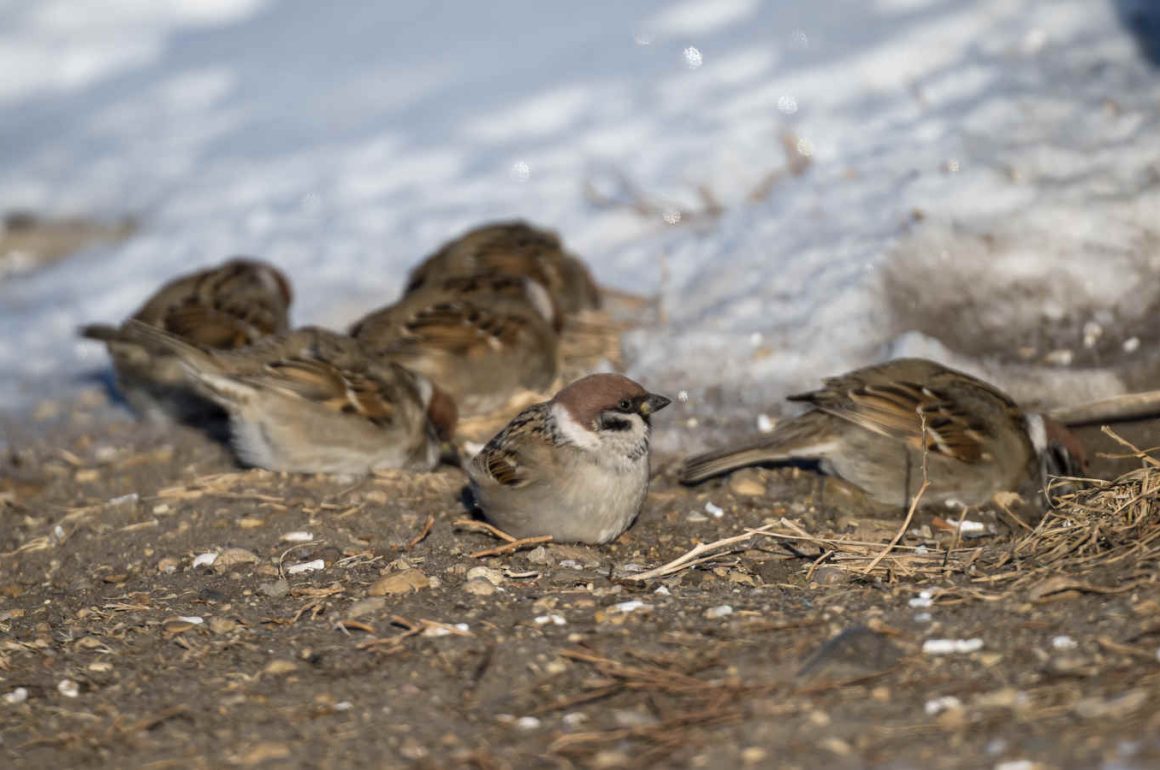
Photo: Eurasian Tree Sparrow, Hadatu, Inner Mongolia, December 2024









Leave a Comment