
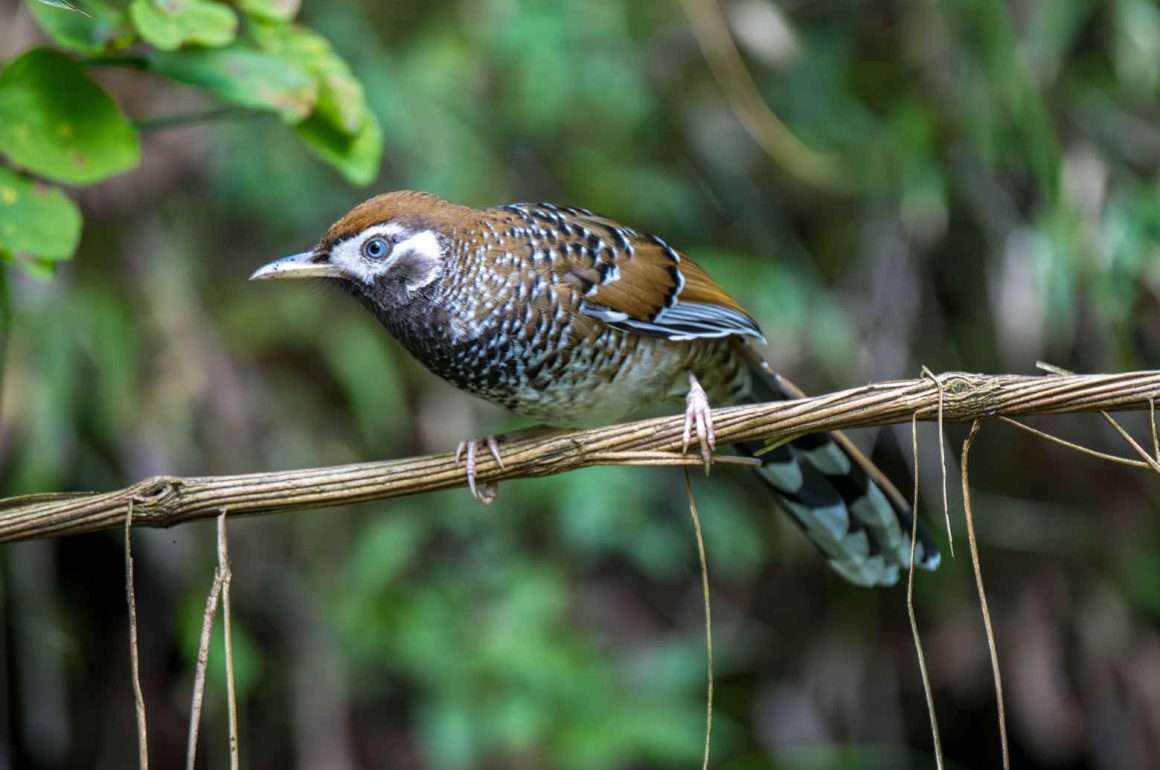
Laojunshan is a mountainous region in the northwest part of Yunnan with an elevation from 2,100 to 4,500 meters. It is a biodiversity hotspot and one of the few regions where the very ugly and rightfully endangered Yunnan snub-nosed monkey can be found. Of course, I did not go there for mammals (could have seen those in Shanghai) but rather for laughingthrushes and fulvettas.
As a foreigner living in China, I am used to being laughed at. So, I am kind of used to how laughingthrushes react to people. I still think the appearance of these birds makes it worthwhile.
Elliot’s Laughingthrush is an old favorite, and fortunately, a fairly common sight in some Chinese provinces.
Strangely, while this is an easy species to get good photos of, the one used in the HBW looks like it has been shot in a photobooth using a dead or at least comatose bird (which somehow still resulted in an unfocused shot – I don’t understand it either).
Being the negative person I am, I searched for something negative to say about Mr. Elliot – but even ChatGPT can only say that his only flaw was being rich. Which is much better than what one can say about most rich people.
While Elliot’s is a bit too common in China to justify a trip, three other laughingthrushes I saw do. One, the Black-faced Laughingthrush, is the subject of a separate post (I do that whenever I feel the photos I get of a species are too precious to waste in a post featuring multiple species, thrifty person that I am).
Still, that leaves two. The scientific name of the Moustached Laughingthrush, Lanthocincla cineracea, sounds a bit like a skin disease, but merely indicates that the species is ash-grey. Which seems both an understatement and wrong, if it is possible to be both at the same time.
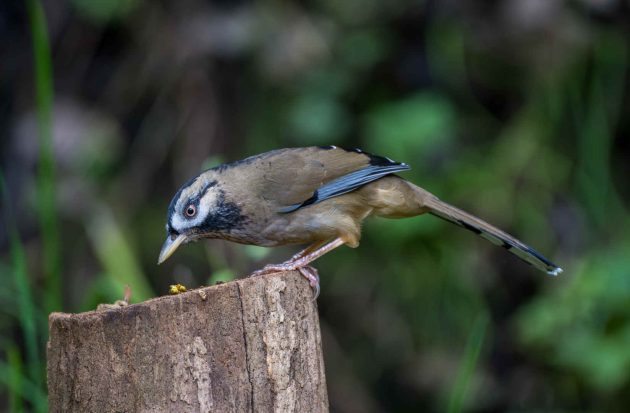
While its numbers are declining, it is still listed as Least Concern.
The species is a cooperative breeder, and it seems to help – the size of the nestlings is correlated with the size of the breeding group. More feeders, more food, fatter chicks, to reduce it to a T-shirt-compatible slogan.
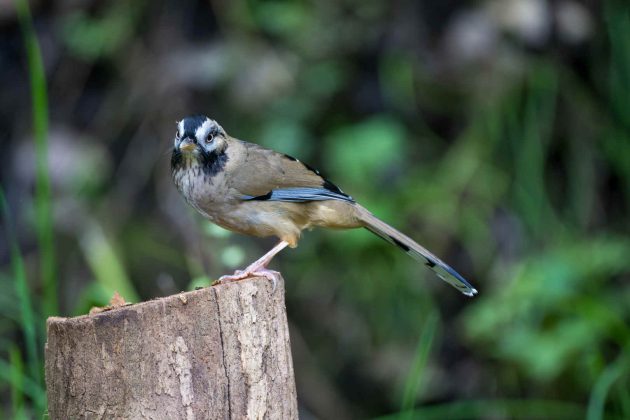
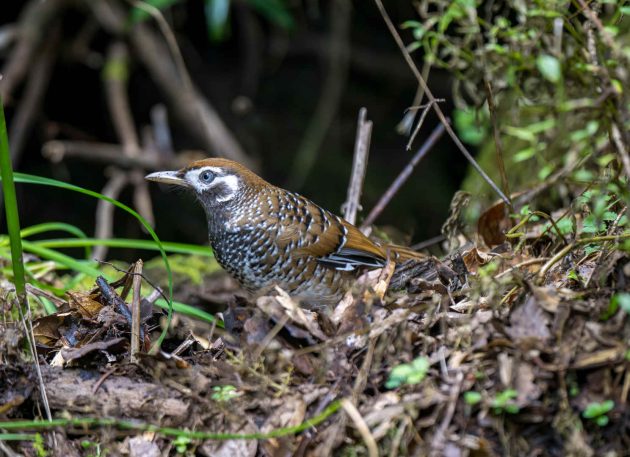
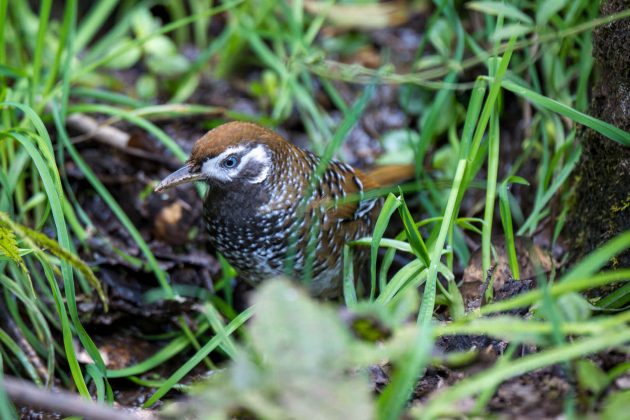
The other one, more interesting to me, as I had not seen it before, was the White-speckled Laughingthrush, a.k.a. Biet’s Laughingthrush.
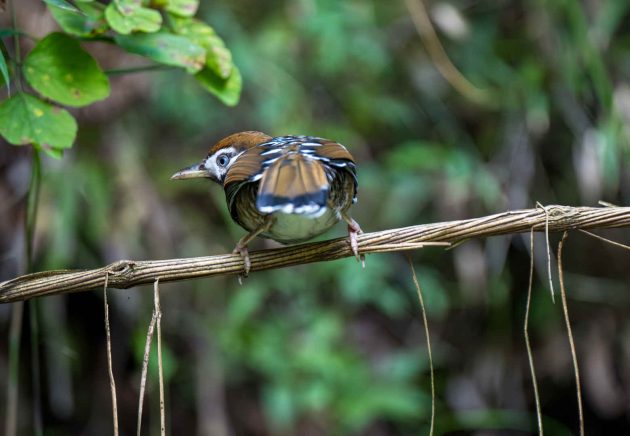
It is listed as Vulnerable, and a glance at its distribution map (just a small speck in parts of Yunnan) explains why. Its number is estimated at 2500–10,000 individuals and is decreasing (HBW). Climate change further threatens to reduce its suitable habitat (source).
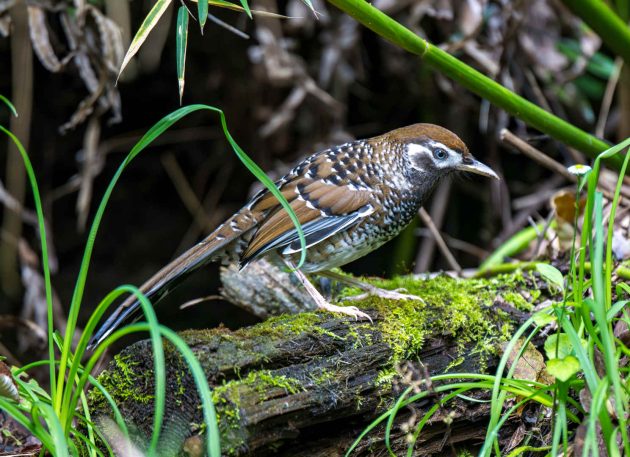
For some reason, it is named after a French missionary in China, Monsignor Félix Biet (1838-1901) – also in the scientific name Ianthocincla bieti.
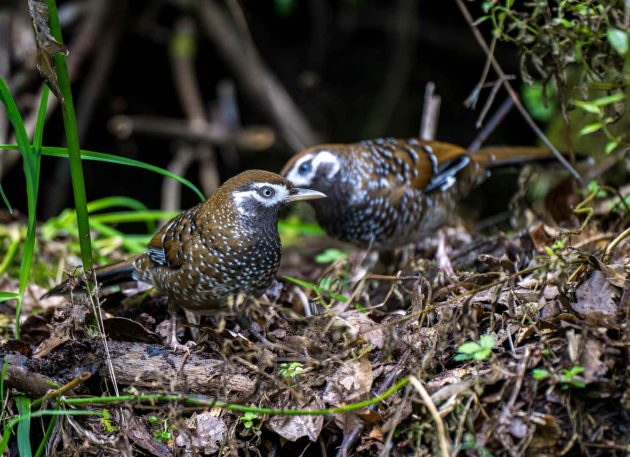
As a bishop, he was rather critical of the practice of Buddhist monasteries to act as trading houses, with a bit of compulsion added to their strategy to sell tea:
“With little respect for the law of supply and demand, the monastery is in effect able to impose the sale of its products on its clients, even against their will. When it has a stock of tea to place, it divides it among rich families in accordance with their wealth and obliges them to take delivery, either in cash or on credit. It is an obligatory purchase – but not free of charge (source).“
While this may well be true, it also has to be kept in mind that Mr. Biet was a competitor in the fight for the spirit of the locals …
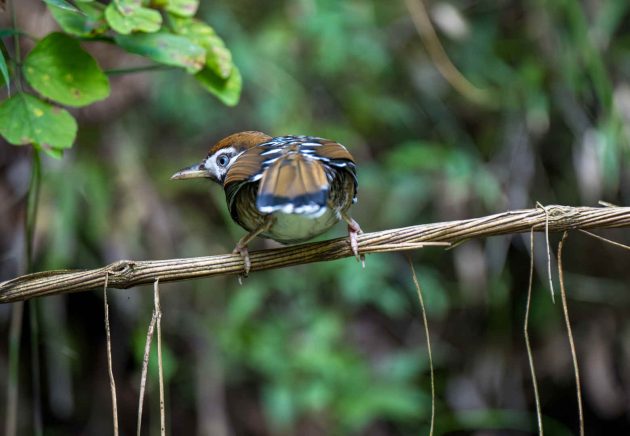
In any case, Mr. Biet apparently was quite interested in the study of plants and animals and provided his colleagues in Paris with samples from the Tibetan area. Thus Biet’s Laughinghtrush.
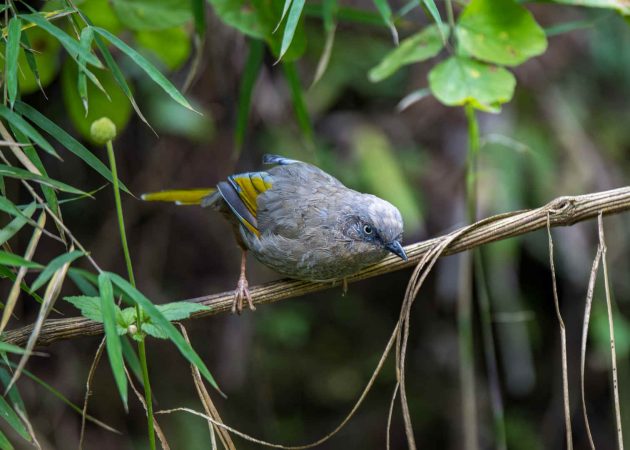
The other interesting family at Laojunshan is that of the fulvettas. To me, they look a bit like miniature versions of laughingthrushes – but that comparison does not work so well anymore, now that it has become clear that the two are not particularly closely related.
Which is a bit of a shame for this post. Don’t you agree that, particularly, the White-browed Fulvetta looks like a small laughingthrush, complete with that disastrous box-office failure, the movie “Honey, I shrunk the laughingthrushes”?
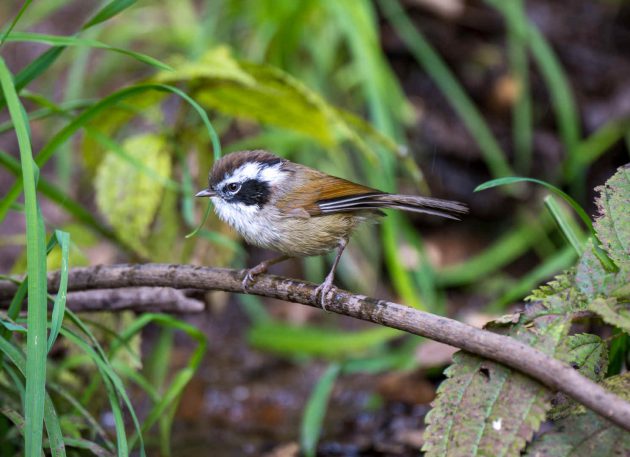
As this species does not seem to frequently live on university campuses, I am afraid the information on it is very limited.
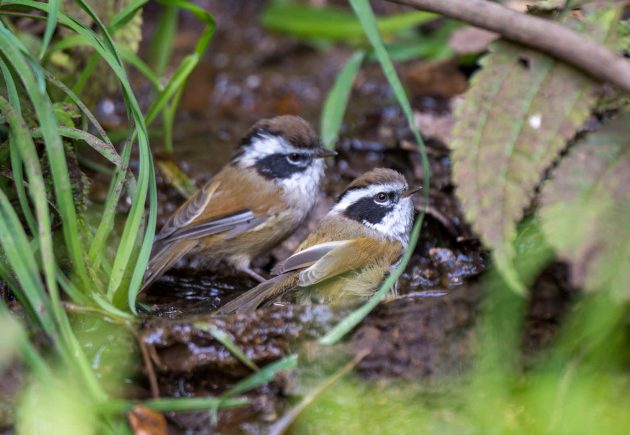
And the scientific name Fulvetta vinipectus (vinipectus refers to the supposed vine color of the breast) does not give me anything interesting to write about either.
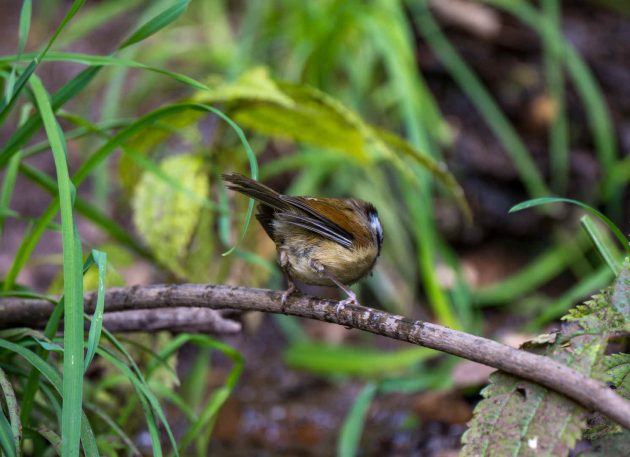
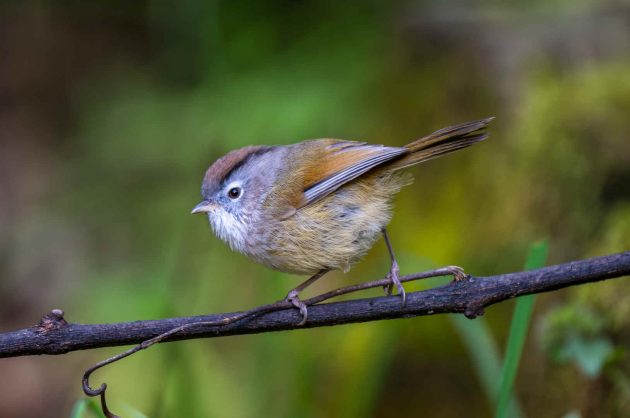
The Spectacled Fulvetta also looks a bit like a miniature laughingthrush, I think.
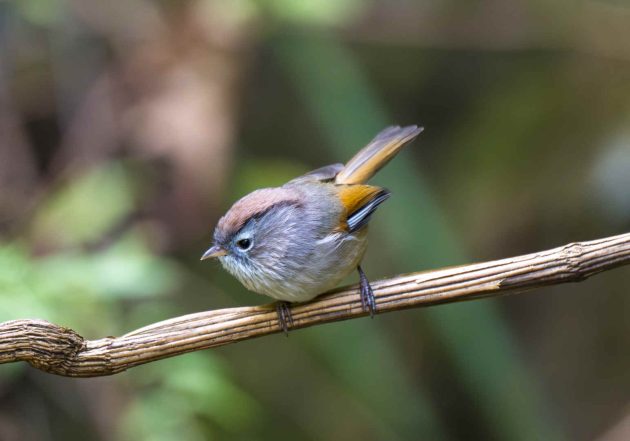
On this species, there is a paper describing its breeding behavior. However, if you read the abstract of that paper, you will understand why I find it hard to extract anything worth sharing here:
“There were 16 nests found in total, which were located mainly in the dense shrubs at a height of 0.99 ± 0.40 m (n = 15). Of the 11 active nests, clutch size averaged 2.73 ± 0.45 (n = 11). Focal observations were made on nests; the incubation lasted for 13.67 ± 0.47 days (n = 3) with a notably high nest attendance, i.e., eggs were incubated 84.23% of the observation time. Nestlings fledged at 13.00 ± 0.71 days (n = 4), and parents feeding frequency increased as the nestlings grew. Overall, the cumulative hatching and fledgling rates were 71.43% and 35.71%, resulting in a nesting success rate of 45.45%.”
I mean, yes, I guess somebody has to collect this kind of information, but where is the story for you, dear reader? I prefer to stick to talking about scientific bird names commemorating slave traders any day.
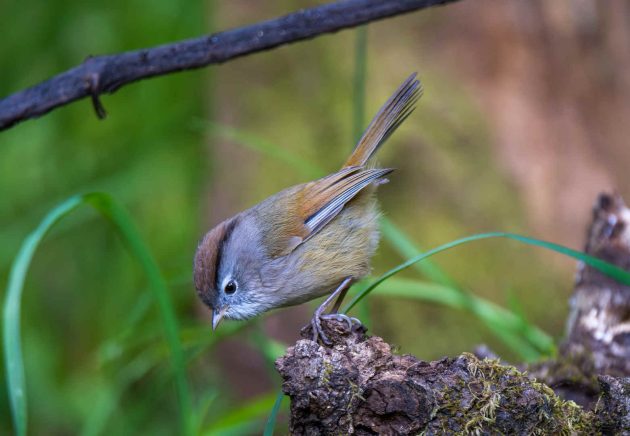
The last fulvetta is the one that looks the least interesting, which makes it look quite a bit like a miniature version of the White-browed Laughingthrush: The Rusty-capped Fulvetta.
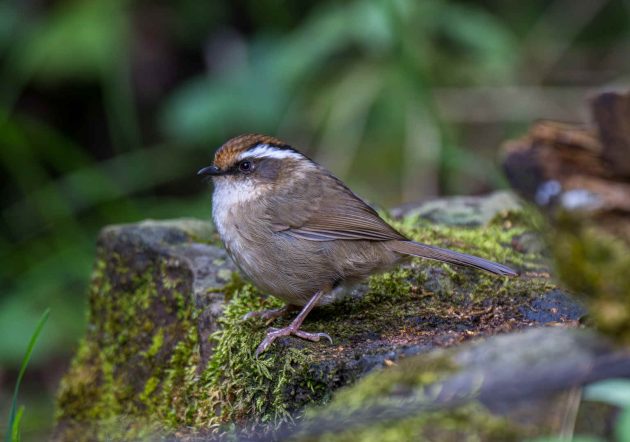
Even the scientific name seems to indicate some doubt about the excitement this species might create among birders: Schoeniparus dubius (ok, you try to come up with halfway decent, non-embarrassing jokes day after day while writing about birds).
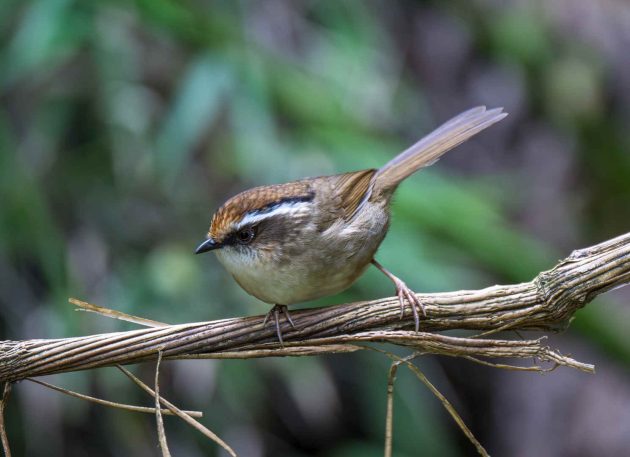
Two bonus species not fitting into the above real-size and miniature laughingthrushes:
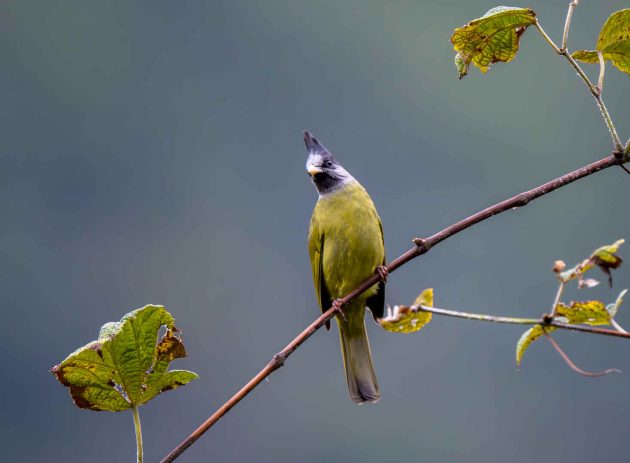
The Crested Finchbill (cue Elvis joke here, or cut and paste it from some of my earlier posts) …
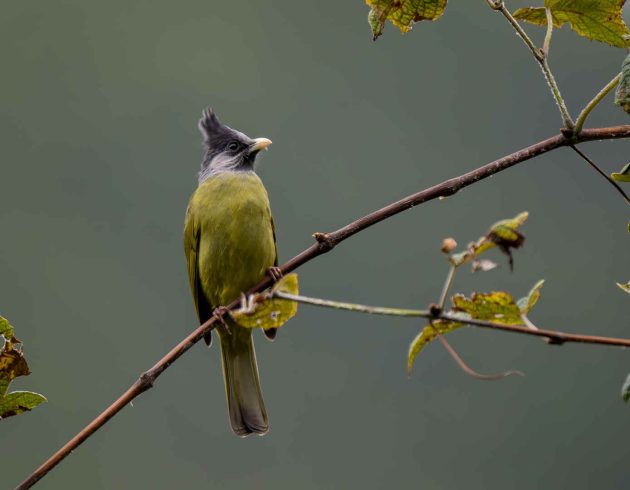
… and Brown Parrotbill with the somewhat uninspiring scientific name Paradoxornis unicolor.
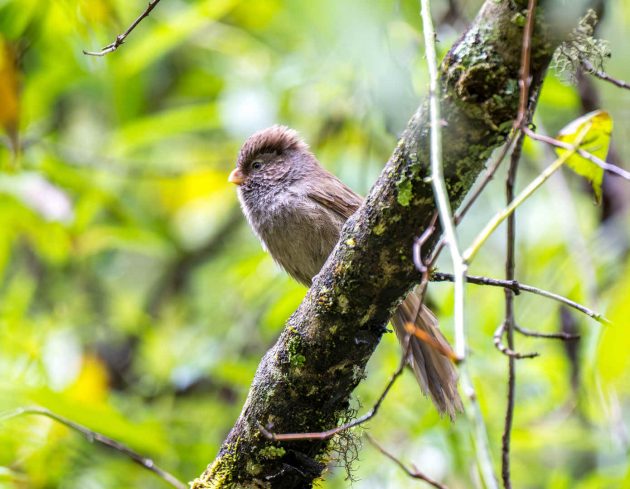
The HBW makes the species sound rather whimpish: “Flight slow, weak, and fluttering.” But at least it flies rather than using a wheelchair.




Leave a Comment