

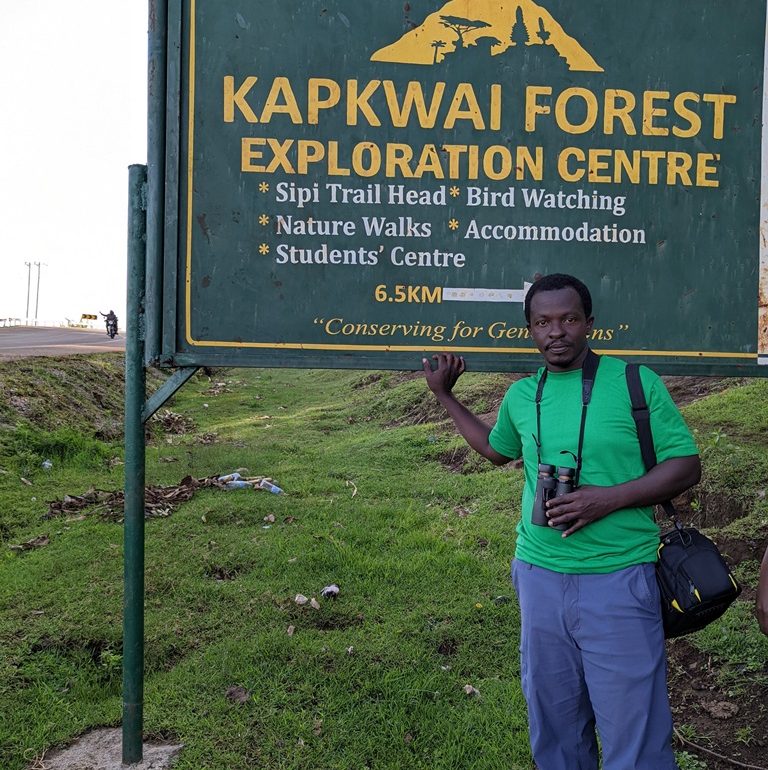
What is your favorite bird species?
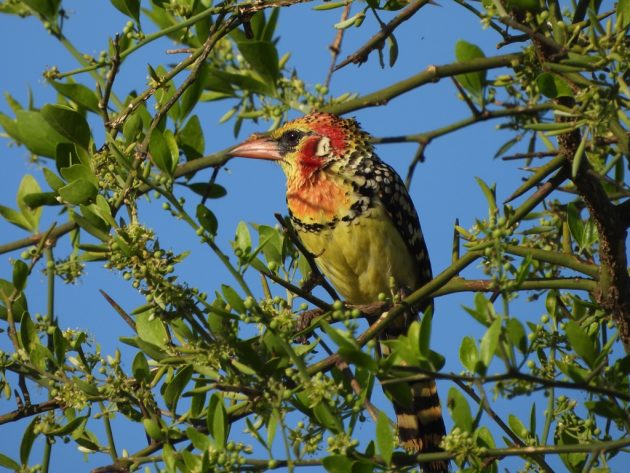
This is always a difficult question for me because I take a keen interest in every bird, from the tiny warblers and waxbills to the massive hornbills. Every new season, place, habitat, and time gives me a new favorite bird. Right now, I am in love with the Red-and-yellow Barbet.
Red-and-yellow Barbet
What is your name, and where do you live?
My name is Sande David, and I live in Entebbe, Uganda, on the shore of Lake Victoria — Africa’s biggest lake, whose many wetlands host plenty of birds.
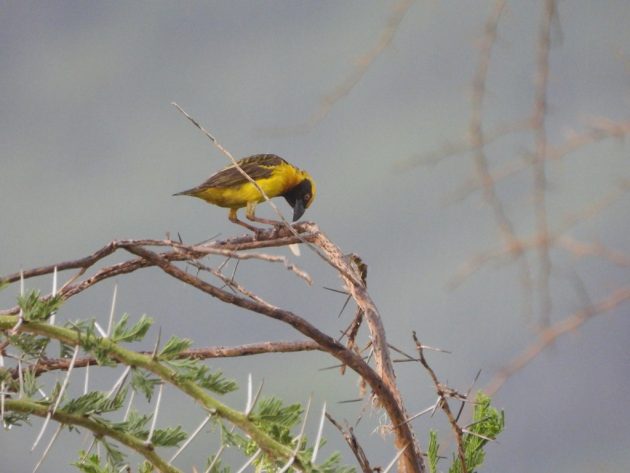
Foxy’s Weaver
What are the main regions or locations you cover as a bird guide?
Uganda and Rwanda have been my birding places for years, but I have started going into neighboring Kenya and Tanzania, and hopefully, I will soon go to the Democratic Republic of the Congo.
How long have you been a bird guide?
I have been birding since 2013.
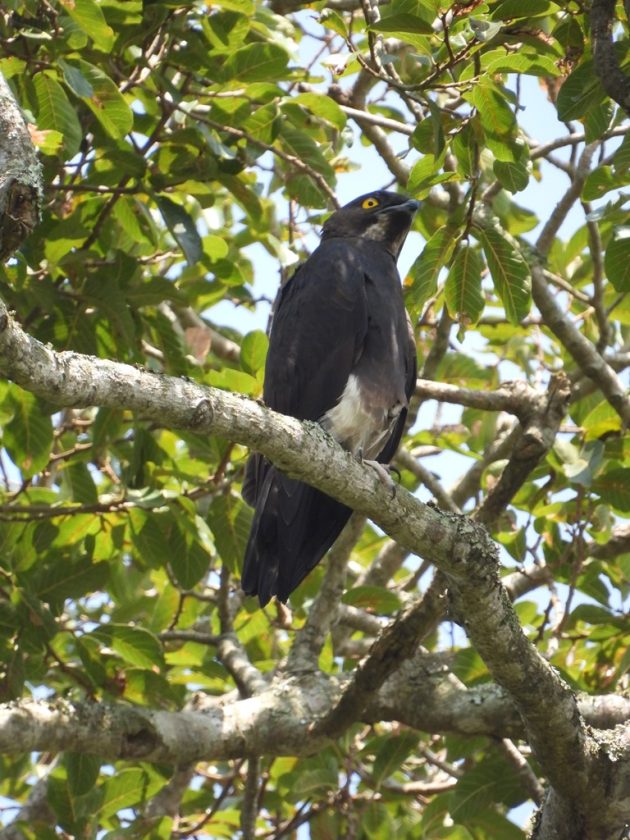
Bat Hawk
How did you get into bird guiding?
More than a decade ago, I was invited on an excursion with a local bird guides club (Uganda Bird Guides Club), picked up the passion right away, and the rest is history!
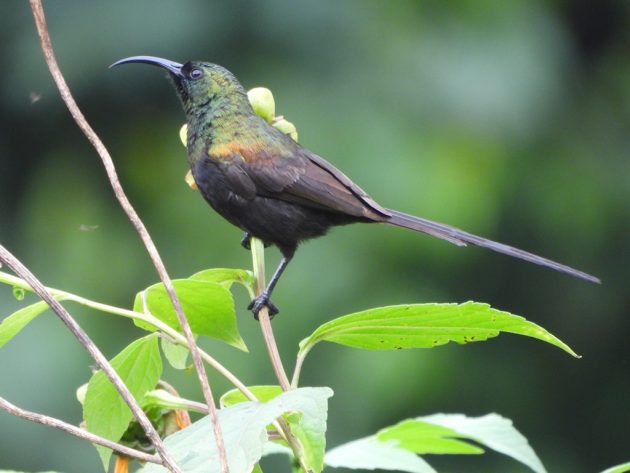
Bronze Sunbird
What are the aspects of being a bird guide that you like best? Which aspects do you dislike most?
What I like best:
- Traveling to lesser-known places to find birds that I don’t see often and potentially tick off a lifer!
- Finding more than just birds on the trail, e.g., reptiles, rare plants, and other wildlife.
- Meeting different birders from different parts of the world and learning about the birds of their areas, especially migrants from the wintering Palearctic region that we receive in different plumages.
- Learning new things from much more experienced birders.
What I dislike most:
- Finding people abusing birds and their habitats.
- Encountering people who do not know about birdwatching, become suspicious of us birders, and show some hostility.
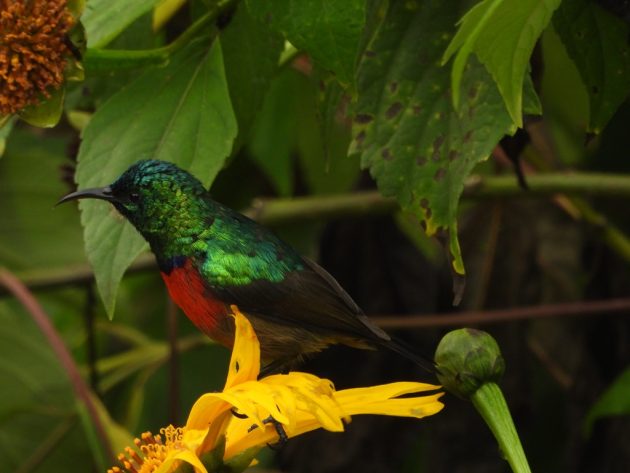
Northern Double-collared Sunbird
What are the top 5–10 birds in your region that are the most interesting for visiting birders?
- Shoebill
- Foxy’s Weaver
- Karamoja Apalis
- Papyrus Gonolek
- Green-breasted Pitta
- African Green Broadbill
- Rwenzori Turaco
- Martial Eagle
- Red-and-yellow Barbet
- African Finfoot.
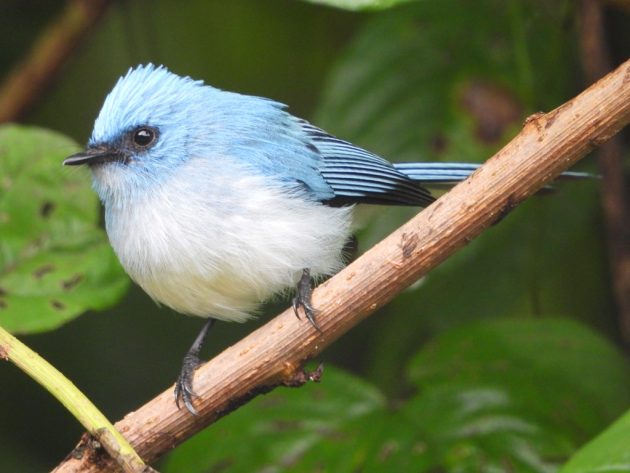
African Blue Flycatcher
Can you outline at least one typical birdwatching trip in your area? Please briefly describe the locations, the key birds, and the approximate duration of such a trip.
You need about 18 days to cover the popular tourism circuit going through the north–west–south, and up to 30 days to include the incredible eastern–northeastern route.
The following 15-day trip only covers the western and southern regions, which are endowed with dense forests and lush savannah along the Albertine region, home to many special and range-restricted species. It is ideal if you have birded in neighboring East African countries and are adding Uganda to the itinerary, or want to have it as your next destination.
Expect to tick off more than 300 bird species.
Day 1: Arrival in Uganda and birding in the Botanical Gardens
Today you will arrive in Uganda, landing at Entebbe International Airport. After checking into your hotel and a brief rest, you will go out birding in the Botanical Gardens in the afternoon.
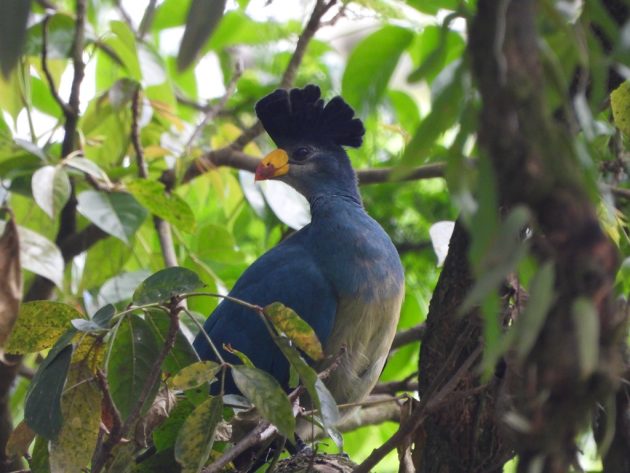
This is the best spot to see the Orange Weaver. At dusk, you may catch the Bat Hawk hunting bats on the wing! You may also spot the Great Blue Turaco, a favorite for many birders.
The Botanical Gardens, located on the shore of Lake Victoria, offer a good introduction to local birds, including forest, grassland, and water species.
Day 2: Travel to Kibale National Park and afternoon birding in Bigodi Wetlands
After an early breakfast, set off at 7 a.m. and travel to Kibale National Park, home to chimpanzees and many other primates.
Arrive and spend the afternoon birding in the Bigodi Wetlands, located at the edge of Kibale Forest. Some of the birds you may spot include Yellow-billed Barbet, Black Bishop, and White-breasted Nigrita.
Day 3: Morning chimpanzee tracking and afternoon birding in Kibale Forest National Park
Start with morning chimpanzee tracking in Kibale Forest. The adventure takes you into chimp territory, where you spend one hour observing a community of chimps up close.
After the chimp adventure, start birding in Kibale Forest, ticking off some forest specials.
Day 4: Full-day birding in Kibale National Park, looking for the Pitta
Set off early into Kibale Forest with mission number one: finding the Green-breasted Pitta, the special bird of Kibale Forest. It takes a bit of luck to tick it off! Continue birding for the rest of the day, looking for forest specials such as Masked Apalis, Blue-shouldered Robin-Chat, Narina and Bar-tailed Trogon, and Red-tailed Ant-Thrush.
End the day in Fort Portal town for the overnight stay.
Day 5: Birding in Semuliki and transfer to Queen Elizabeth Park
Leave Fort Portal at 6 a.m. and head to Semuliki National Park, where you will spend the day birding on the Kirumia Trail.
Semuliki, located on the border with the Democratic Republic of the Congo, is special because it extends Central African species into East Africa, providing sightings you cannot get elsewhere in the region. Some highlights to expect include African Piculet, White-thighed Hornbill, Hartlaub’s Duck, and White-crested Hornbill.
Later, drive to Queen Elizabeth National Park for the overnight stay.
Day 6: Morning drive in the savannah and afternoon boat trip (private)
Spend the day birding in Queen Elizabeth National Park, starting with a morning drive in the savannah to pick up species such as Collared Pratincole, Yellow-throated Longclaw, Spur-winged Lapwing, Blue-naped Mousebird, and Black Coucal.
After lunch, take a boat trip on the Kazinga Channel, which has lots of waterfowl along the banks, including African Skimmer, African Spoonbill, Goliath Heron, Great White Pelican, and Great Cormorant.
Day 7: Transfer to Ishasha sector
Bird as you transfer to the Ishasha sector of Queen Elizabeth National Park. You’ll pick up birds along the way, such as Blue Malkoha, Verreaux’s Eagle-Owl, and Black-crowned Tchagra.
Day 8: Morning birding in Ishasha and transfer to Bwindi Impenetrable National Park
Do a morning game drive for a few hours of birding and game watching (this area is known for its tree-climbing lions) before driving to Bwindi Impenetrable National Park (Buhoma sector).
Day 10: Morning gorilla tracking and afternoon birding
Start with gorilla tracking in Bwindi Impenetrable National Park (Buhoma sector).
Thereafter, begin your birding experience in Bwindi Forest, ticking off Albertine Rift endemics and many forest specials.
Day 11: Birding in Bwindi (Buhoma)
Spend a full day birding in Bwindi Forest in the Buhoma sector. Expect a number of Albertine Rift endemics and many forest specials, such as Northern Double-collared Sunbird, Bronze Sunbird, Collared Sunbird, Emerald Cuckoo, Lühder’s Bushshrike, Bocage’s Bushshrike, Many-colored Bushshrike, and African Blue Flycatcher.
Day 12: Birding “The Neck” of the forest on the way to Bwindi’s Ruhija sector
Leave the Buhoma sector heading to the Ruhija sector, birding through a stretch of forest known as “The Neck,” which is quite productive.
Day 13: Birding in the Mubwindi Swamp
Trek to Mubwindi Swamp to look for the African Green Broadbill, the number one Albertine Rift endemic. After successfully ticking it off, spend the rest of the day birding the forest for more specials, including Chinspot Batis, Black Cuckooshrike, and Mountain Greenbul.
Day 14: Early transfer to Lake Mburo and afternoon savannah birding and boat trip
After breakfast, drive to Lake Mburo National Park — the smallest of the savannah parks but a great birding destination. It’s also a convenient stop on the way back to Entebbe.
Enjoy an afternoon game drive to tick off several species, followed by a boat trip on Lake Mburo to look for the African Finfoot and other waterfowl.
After sunset, take a night drive to look for nocturnal species — one special sighting here is the Fiery-necked Nightjar.
Day 15: Morning birding and transfer back to Entebbe for evening flight
Spend a few hours birding in the morning before checking out and driving to Entebbe for your evening flight home.
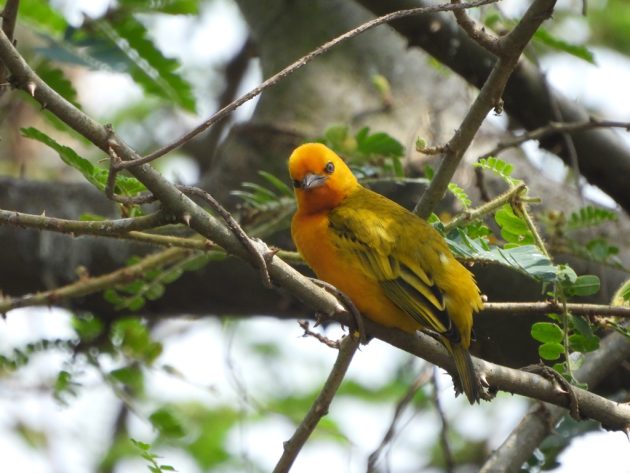
Orange Weaver
What other suggestions can you give to birders interested in your area?
All year round is great for birding, but I normally recommend coming during the migration season when wintering birds from the Palearctic region arrive, starting from late September and leaving by late May. If you are looking for a big checklist, this is the best time, especially around December. Note that March to May is the wet season, so plan accordingly.
Pack a pair of binoculars, sunscreen, insect repellent, and rain gear (poncho, long pants, waterproof outdoor shoes).
Great Blue Turaco
If any readers of 10,000 Birds are interested in birding with you, how can they best contact you?
Sande David, Nature Trails East Africa
Website: https://www.eastafricantrails.com/
Email: info@eastafricantrails.com




Leave a Comment