


What is your favorite bird species?
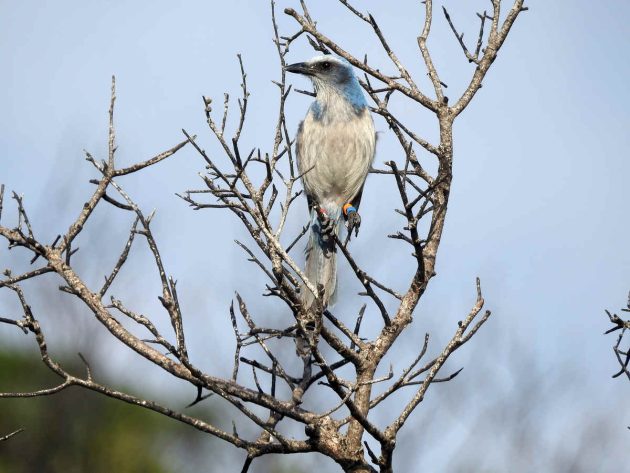
Tough choice, but if I go by the local specialties, I think the Loggerhead Shrike and my mascot, the Florida Scrub-Jay, are up there. Both species have a lot of character and personality that make it easy to just take a break and enjoy them.
Florida Scrub-Jay
What is your name, and where do you live?
My name is Luis Gonzalez from Scrub-Jay Birding, and I live in Miami, Florida
What are the main regions or locations you cover as a bird guide?
All of South Florida. I mostly do day trips on weekends, but longer tours can be arranged with prior planning.
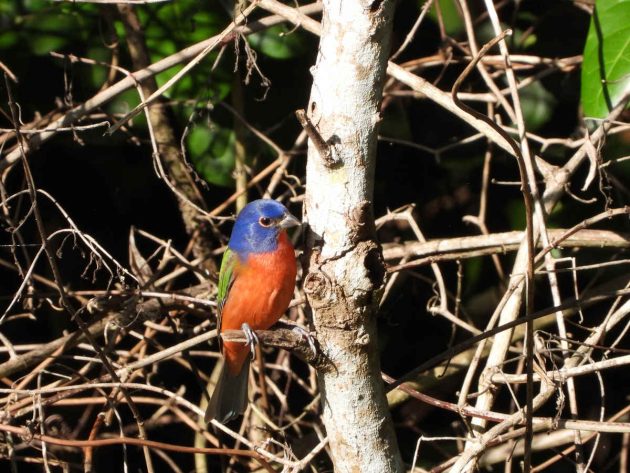
Painted Bunting
How long have you been a bird guide?
About 5 years at this point, but still learning and finding new ways to get people to their dream targets
How did you get into bird guiding?
During the COVID years, a couple from out of state was doing a campervan Big Year in the Lower 48 States. They met me during a walk from my local Audubon chapter, and asked if I could guide them the next day. In hindsight, I was out of my element, didn’t even know the best route to help them find their targets! Thankfully, they were happy, and it sparked an interest in showing folks around to find their target species.
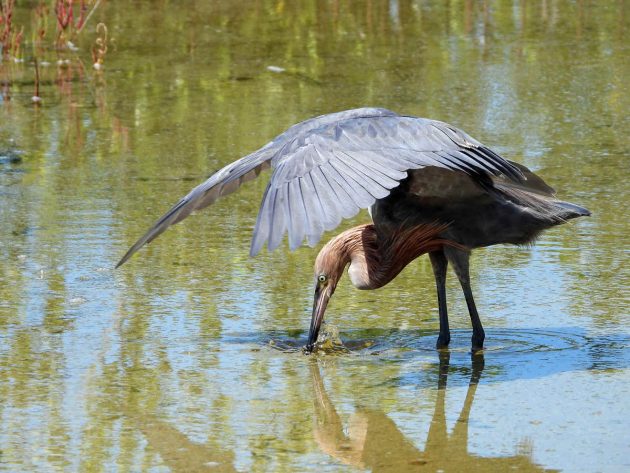
Reddish Egret
What are the aspects of being a bird guide that you like best? Which aspects do you dislike most?
What I like best is probably the smile on someone’s face when we get to encounter a moment or species they were really hoping to see. Along with the surprises that nature gives us, sometimes a simple walk on a local marsh for waterbirds becomes a highlight because we find 2 River Otters mating on the lawn, while other times, it is having someone ask for a tough target, and after multiple attempts, the bird comes and lands right above our heads to make our effort worth it.
The disliked aspect is a bit more difficult to find, but if pushed to ask, I guess dealing with Miami traffic in attempts to find the many exotic species lots of birders ask me to find for them.
What are the top 5-10 birds in your region that are the most interesting for visiting birders?
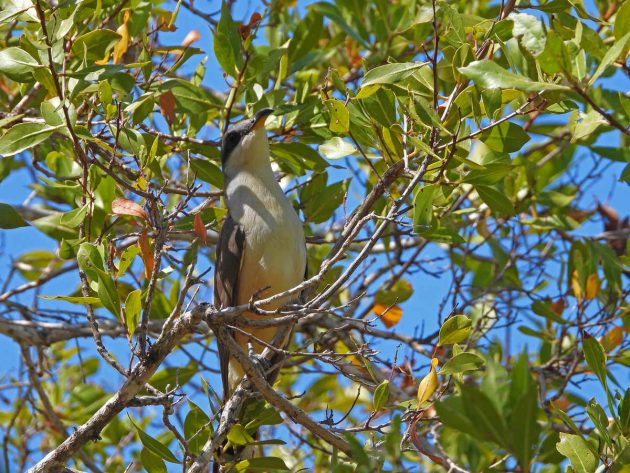
Changes depending on the season and what you are looking for, but some standouts include residents like Florida Scrub-Jay, (Florida) Snail Kite, Roseate Spoonbill, and Red-cockaded Woodpecker, exotics like Spot-breasted Oriole and Blue-and-yellow Macaw, and migrants like Mangrove Cuckoo and Swallow-tailed Kite in the summer, and Scissor-tailed Flycatcher and Piping Plover in the winter.
Mangrove Cuckoo
Can you outline at least one typical birdwatching trip in your area? Please briefly describe the locations, the key birds, and the approximate duration of such a trip
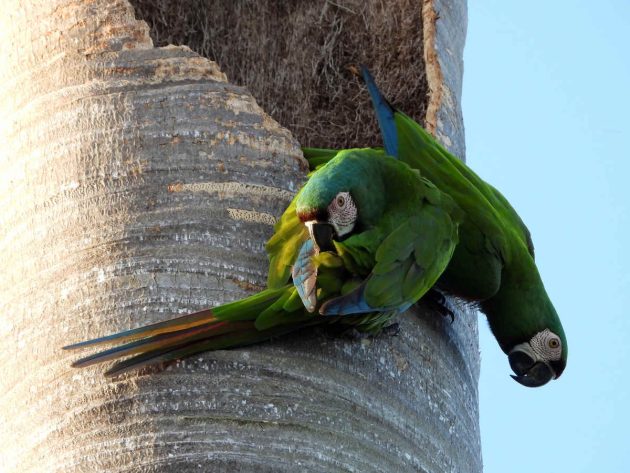
Miami Exotics: This tour is centered exclusively within Miami and provides a chance to see many of the non-native species of birds that have become established in the city over the years. It can be done as a half or full day, and it includes target species like: Muscovy Duck, Egyptian Goose, Indian Peafowl, Gray-headed Swamphen, Monk, Mitred, Red-masked, White-eyed and Yellow-chevroned Parakeet, Orange-winged Amazon, Blue-and-yellow and Chestnut-fronted Macaw, Red-whiskered Bulbul, Common Myna, Spot-breasted Oriole, and Scaly-breasted Munia.
Chestnut-fronted Macaw
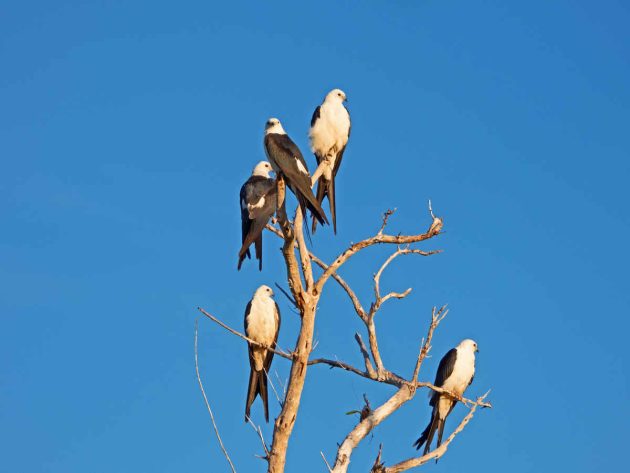
Everglades National Park: This tour takes you to the biggest hotspots of the largest wilderness East of the Mississippi River. Depending on the time of the year, bird activity and variety change drastically, but many of the targets that make birders flock to the region can be seen year-round. It can be done as half or full day and it includes target species like: White-crowned Pigeon, Purple Gallinule, Wood Stork, Roseate Spoonbill, White-tailed Kite, Swallow-tailed Kite (March to August), Bald Eagle, Short-tailed Hawk (October to March), Barred Owl, Tropical and Western Kingbird (October to April), Scissor-tailed Flycatcher (October to April), Loggerhead Shrike, Brown-headed Nuthatch, Seaside (Cape Sable) Sparrow (April to June), Bronzed and Shiny Cowbird (April to June).
Swallow-tailed Kite
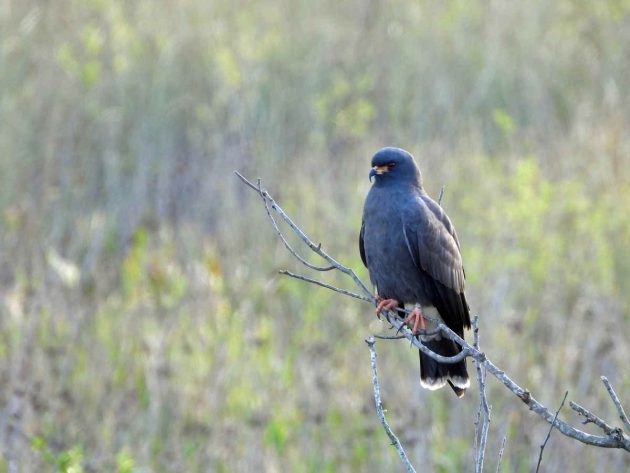
Central Florida Specialties: This is the tour with the longest drive time for anyone based in South Florida for their trip, but it gives the best chance to see many targets not found readily within Miami or the Everglades. Due to the driving distances, it is only possible as a full-day trip, but it includes target species like Fulvous and Black-bellied Whistling Duck, Wood Duck, Limpkin, Purple Gallinule, Sandhill Crane (Florida subspecies), Snail Kite, Crested Caracara, Red-cockaded, Hairy and Red-headed Woodpecker, Florida Scrub-Jay, Brown-headed Nuthatch, Eastern Bluebird, and Bachman’s Sparrow.
Snail Kite
What other suggestions can you give to birders interested in your area?
Bug repellent is optional during the winter months, but mandatory for the summer months. A hat and sunscreen are a must if you are sensitive to the sun.
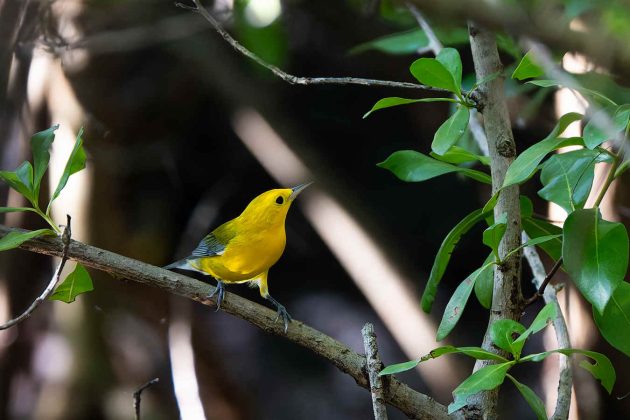
Birding in Florida changes by the season, with the wintertime being the most popular season due to the comfortable weather, little humidity, few biting insects, and many wintering species. However, if your goal is to see the summer breeding species like Antillean Nighthawk, Mangrove Cuckoo, Black-whiskered Vireo, Shiny Cowbird, and Swallow-tailed Kite, visiting between April and June provides the best chance to see them alongside other difficult resident species that become bolder with breeding, like Bachman’s Sparrow and Roseate Tern. Even fall migration is an amazing experience, with late August being the time for shorebirds like Upland and Pectoral Sandpiper, while later in the season, we can see up to 15 New World Warbler species in a city park, with sought-after migrants like Swainson’s, Black-throated Blue, and Prothonotary Warbler being regularly seen. Overall, birding in Florida is possible year-round; it just depends on what you are looking to see on your next trip.
Prothonotary Warbler
If any readers of 10,000 Birds are interested in birding with you, how can they best contact you?
I am readily available for contact through my website at: www.scrubjaybirding.com/contact
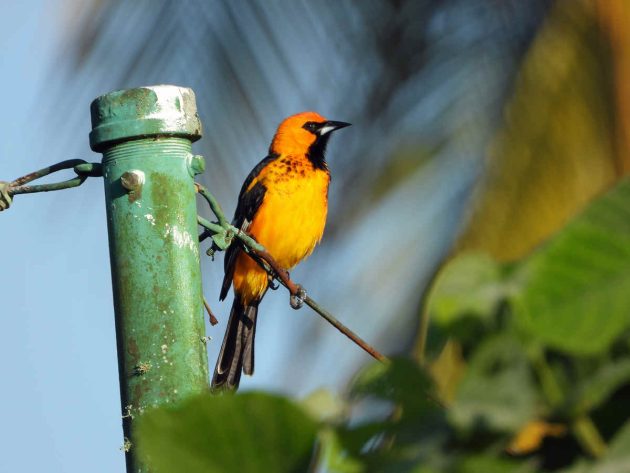
Spot-breasted Oriole
Is there anything else you would like to share with the readers of 10,000 Birds?
A planned tour that is currently on my website is to the incredible nation of Ecuador. This tour is made so that you don’t have to take more than a week off from your daily duties while exploring the East Slope of the Andes to see incredible species like Andean Condor, Torrent Duck, and ‘San Isidro’ Owl. The last day to sign up for this tour is August 15, 2026.
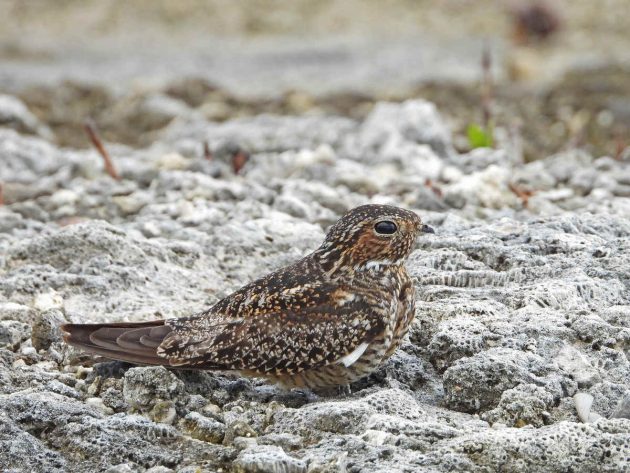
Antillean Nighthawk





Leave a Comment