
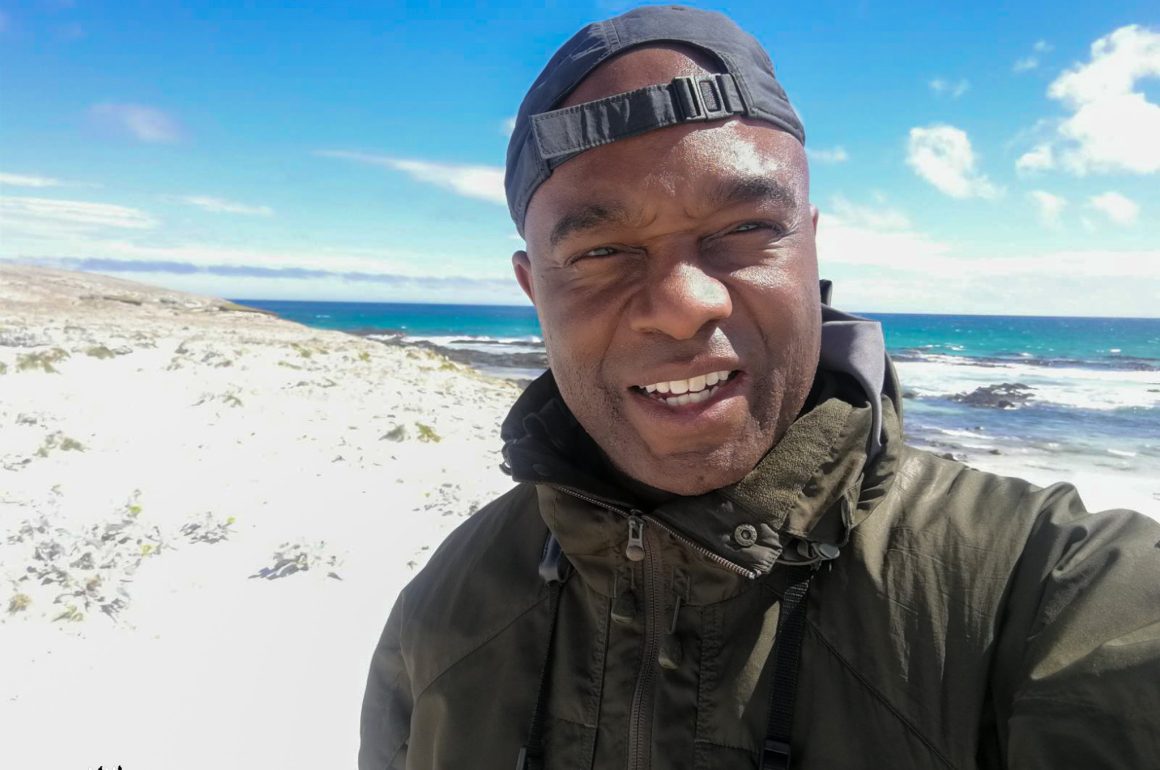
David Lindo is The Urban Birder – broadcaster, writer, speaker, tour leader and educator. His mission is to engage city folk around the world with the environment through the medium of birds.
He is the author of The Urban Birder, Tales from Concrete Jungles, #Urban Birding, How To Be An Urban Birder, The Extraordinary World of Birds and FLY: A Family Guide to Birds and How to Spot Them.
In 2020, David was shortlisted for the Professional Publishers Association (PPA) Columnist of the Year Award and in 2024 his book FLY was shortlisted for the Wainwright Prize for Childrens Nature Writing.
In 2021, he was on the judging panel of the prestigious Wildlife Photographer of the Year and is a judge on both the Bird Photographer of the Year and The British Wildlife Photography Awards.
He has regular columns in many of the top wildlife magazines including Nature’s Home (the RSPB’s membership magazine with over 1 million circulation), Bird Watching Magazine (UK), BBC Wildlife Magazine and Bird Watchers Digest (USA). Plus, he has written countless articles on urban birds, urban conservation and wildlife in general for countless books, publications, magazines and plus the forewords and cover notes to many books. He is a regular television and radio presenter and has been featured on the BBC, ITV, Channel 4 in the UK as well as other TV and radio channels around the world including CBS in the United States. David was recently named as the 7th most influential person in wildlife by BBC Wildlife Magazine. We had the pleasure of interviewing him.
You wrote The Urban Birder but nowadays you are guiding birding tours in Extremadura. Does that mean you have abandoned the urban birder concept?
Not at all. Living in Extremadura hasn’t changed that in the slightest. I live in Cáceres, which is very much a city – about 120,000 people – right in the centre near the old town. I hear nightlife, police sirens, people coming home late. That’s urban life. Urban birding has always been about connecting people who live in cities with nature through birds. That ethos doesn’t stop just because I travel or guide elsewhere. I take the urban attitude with me wherever I go. For me, cities and countryside are not opposites – cities are essentially countryside with buildings on top.
How do you move between these different worlds?
I don’t really see them as different worlds. There’s a blurred line between urban and rural. You can be standing in the middle of a city and still be in fragmented habitats – reedbeds, wetlands, scrub – seeing the same species you’d see in the middle of nowhere, sometimes even at higher densities. What I bring with me is an attitude: curiosity, observation, and a refusal to dismiss places just because they’re urban. That works everywhere, whether I’m birding in London, Extremadura, or somewhere far more remote.
What are you: a birdwatcher, a birder, a lister or a twitcher?
I’m primarily a birder. I don’t really twitch, except in Extremadura where I treat the entire region as one massive patch. I’m much more interested in being a finder than a twitcher. I like anomalies. I like asking questions. Why does that wagtail look odd? Why is that Dunlin so small? Too often people accept things without questioning them. I enjoy that process of discovery.
Let’s face it – your career spans several decades now. You’re middle-aged, have a grey beard and probably own one or more floppy hats. The quintessential birder in Europe?
No, I don’t think so. Straight away, my love of urban environments sets me apart. Even today, walking down my mum’s street in London and seeing a Little Egret and a Red Kite overhead completely blows my mind. I see those birds regularly elsewhere, but context matters. Every bird is amazing to me. I don’t really think in terms of “just” or “only” birds. I’m not driven by twitching, except maybe in Extremadura where all rules go out of the window. When I lead tours, it’s not about lists – it’s about enjoyment, understanding, and knowing what you’ve seen and where you’ve seen it.
Have you seen changes in the demographics of birding?
Yes, very much so. Germany still feels predominantly older and male, but even there I’ve seen younger and more female audiences, especially during book events and walks. In Iberia, birders tend to be younger and more diverse, often coming from scientific or biological backgrounds. In the UK there are far more women birding now, though twitching remains largely male. North America is particularly interesting – there are probably more female birders than men, though many are retirement age. I’m also a Black birder, which still makes me very unusual in Europe. I feel like an ambassador – not just for urban birding, but for people of colour – showing that this world is open to everyone. Since the pandemic, birding has grown hugely. That’s positive, but I’ve also noticed that some people are entering birding without learning the fundamentals. Social media has given people platforms, but not always knowledge, and misinformation frustrates me because it’s a missed opportunity to educate.
What birds have captured your imagination most since, or before, The Urban Birder?
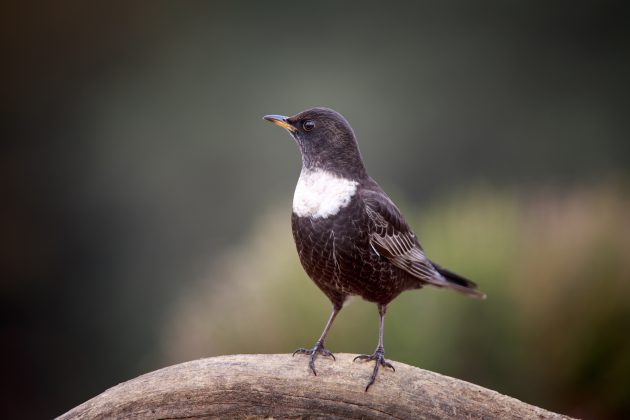
That’s a difficult question because it’s rarely about a single bird. Even today, seeing a Red Kite over my childhood home in London was extraordinary. That said, my favourite bird has always been the Ring Ouzel. It’s been my favourite since I was five or six years old. Seeing hundreds of them in the mountains of Andalucía once was overwhelming – I told the group to leave me there. More than individual species, though, it’s the experience that excites me: stepping outside, seeing birds, and feeling like you’ve been let into a secret world. That sense of discovery, especially in urban areas people dismiss, is what keeps capturing my imagination.
You’ve published more books and done many things since that first rather excellent book. What are you most proud of?
All of it, really – it all represents who I am. But there are some things that stand out. One is leading the Vote for Britain’s National Bird campaign in 2014–15, which I ran almost entirely myself. Another is my In Conservation With interview series, which started during lockdown and has now featured over 220 people from across the nature world. What I’m most proud of is acting as a bridge. I introduce people to this world and let them decide where they want to go next. Urban birding was a Trojan horse – a way of saying you don’t need expertise, equipment, or knowledge. Just look around and be aware.
You organise urban birding trips all over Europe. Which city do you want to go next?
I don’t have a wish list. I used to, but I’ve learned to be careful what you wish for.I go anywhere with an open mind. If someone invites me to a city – anywhere – I’ll go. I see every new place as a challenge and an opportunity to discover birds where people don’t usually look.
I honestly don’t know what my next bird will be, and that’s exactly how I like it. Whether it’s a sparrow, a wagtail, or something unexpected, the excitement comes from not knowing what’s around the corner. That sense of possibility is what keeps birding alive for me.
Ring Ouzel: Paco Gómez, CC BY-SA 2.0 https://creativecommons.org/licenses/by-sa/2.0, via Wikimedia Commons



This was a super interesting read – really captured the magic of birding in the city.