

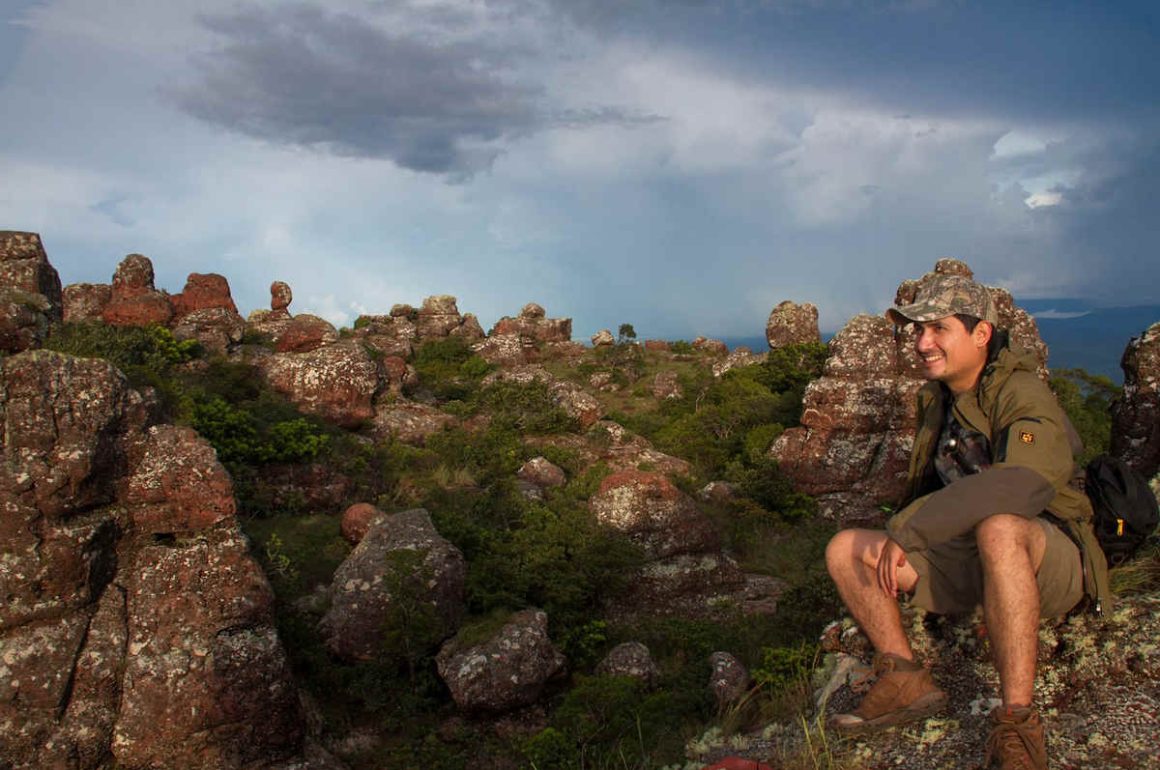
What is your favorite bird species?
I love falcons, Forest Falcons in general, and love the migration of the Peregrine.
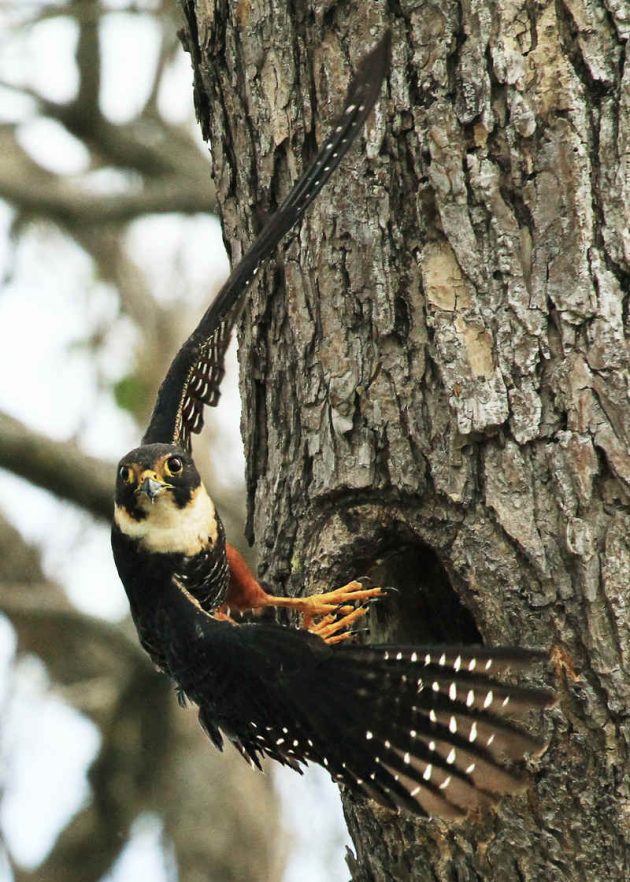
Bat Falcon
What is your name, and where do you live?
Hugo Santa Cruz, I live in Santa Cruz, Bolivia.
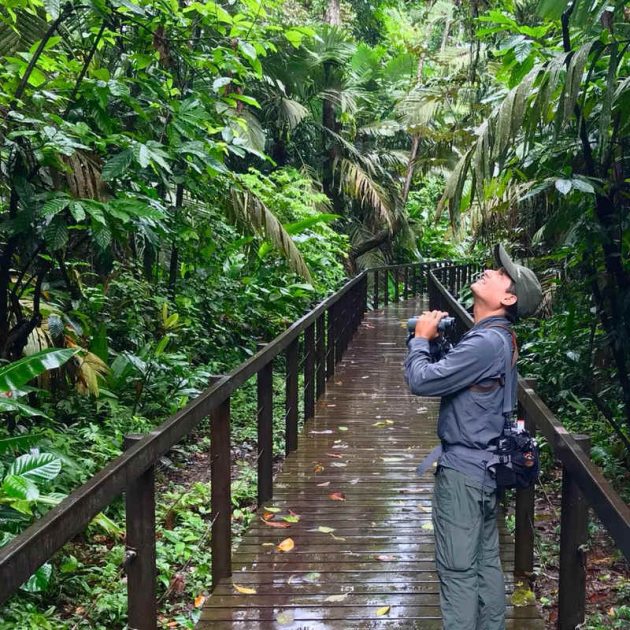
What are the main regions or locations you cover as a bird guide?
I cover all the ecoregions of Bolivia. I also have experience guiding birders in Costa Rica & Panama.
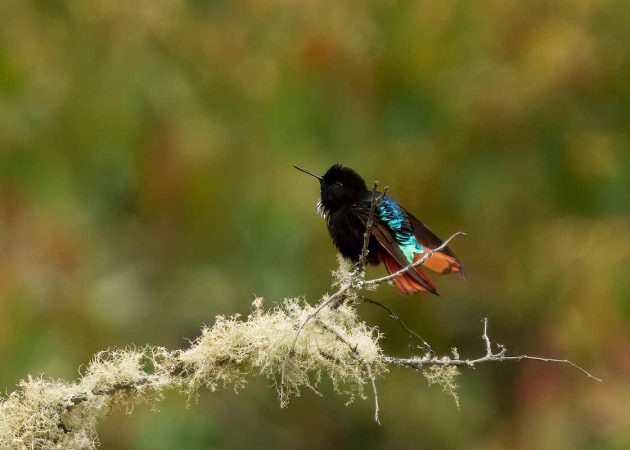
Black-hooded Sunbeam
How long have you been a bird guide?
8 years
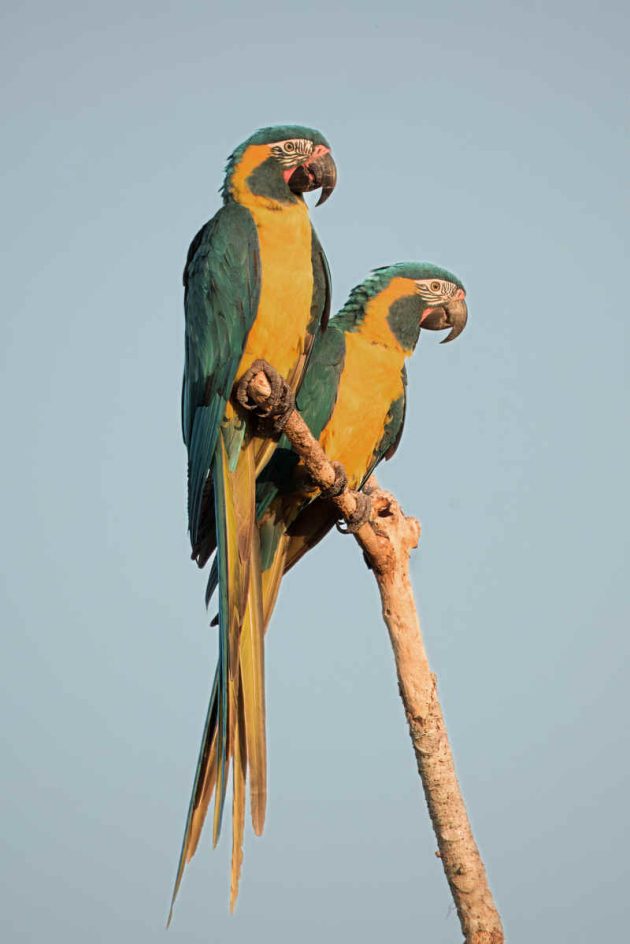
Blue-throated Macaw
How did you get into bird guiding?
I have been a naturalist guide for more than 20 years. I studied Ecotourism and Protected Areas Management and have been very fortunate to be continuously involved in nature reserves and conservation, both as a guide and as a consultant. Birding is my passion, and it’s my favorite activity in nature.
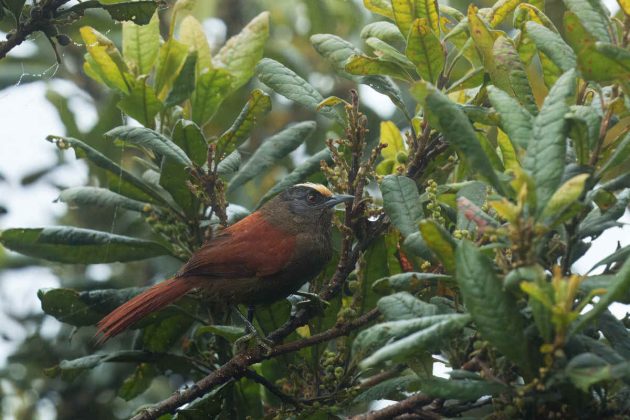
Light-crowned Spinetail
What are the aspects of being a bird guide that you like best? Which aspects do you dislike most?
I love being in the field, listening to bird songs, and often discovering new things—not only new species, but also behaviors that always surprise me.
I dislike roads being blocked by strikes or parties on highways, haha. I don’t like using social media, so I’m terrible at promoting myself.
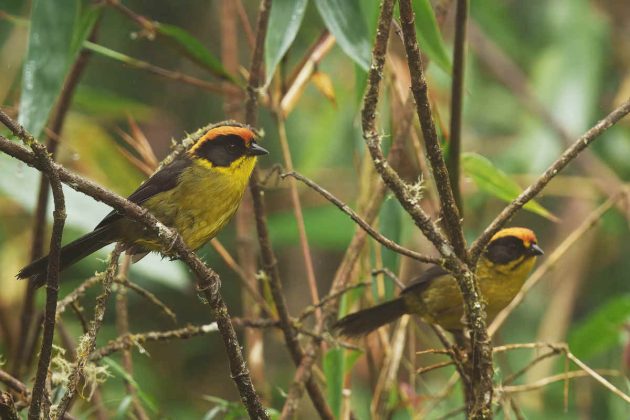
Bolivian Brushfinch
What are the top 5-10 birds in your region that are the most interesting for visiting birders?
Red-fronted Macaw (Endemic), Blue-throated Macaw (E), Black-hooded Sunbeam (E), Cochabamba Mountain Finch (E), Bolivian Brushfinch (E), Black-throated Thistletail (E), Titicaca Grebe (Near E), Berlepsch’s Canastero (E), Bolivian Antpitta (E), and Unicolored Thrush (E).
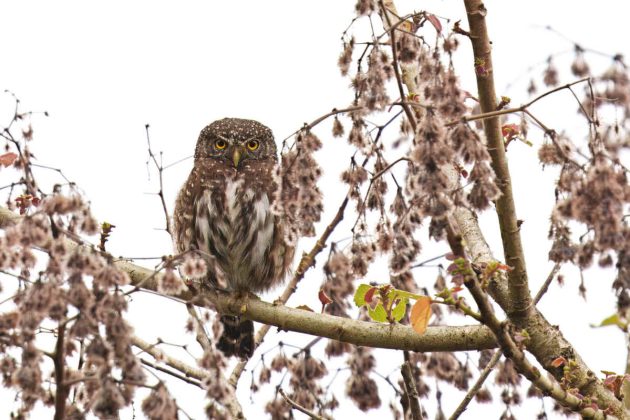
Yungas Pygmy-Owl
Can you outline at least one typical birdwatching trip in your area? Please briefly describe the locations, the key birds, and the approximate duration of such a trip
One of my most popular trips runs from the lowlands around Santa Cruz to La Paz in the Andes and lasts between 14 and 18 days.
We begin in the Chiquitania and Chaco ecoregions of Santa Cruz, visiting two local nature reserves. Target species here include Red-legged Seriema, Bolivian Slaty-Antshrike (NE), White-bellied Nothura, Red-winged Tinamou, Chotoy Spinetail, and Chestnut-fronted Macaw.
We then gradually ascend into the Andes, reaching the rainforest and cloud forest at the transition between the Northern and Southern Yungas, in the Amboró National Park. We stay for a couple of nights in one of the most beautiful landscapes of the entire journey. The forest is pristine and holds excellent species such as Black-streaked Puffbird, Bolivian Recurvebill (E), Military Macaw, Bolivian Tapaculo (NE), Slaty Gnateater (NE), Yungas Manakin (NE), Ochre-cheeked Spinetail, and Black-capped Antwren.
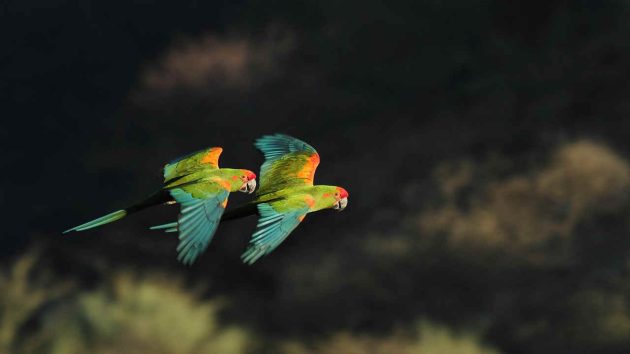
After exploring the Yungas, we move into the Inter-Andean Dry Valleys, crossing the Chaco Serrano. We stay at the Red-fronted Macaw Reserve, where we enjoy outstanding views of this iconic species, along with others such as Bolivian Blackbird (E), Monk Parakeet (Cliff), Spot-backed Puffbird (Chaco), Sooty-fronted Spinetail, and Black-and-chestnut Warbling Finch (NE).
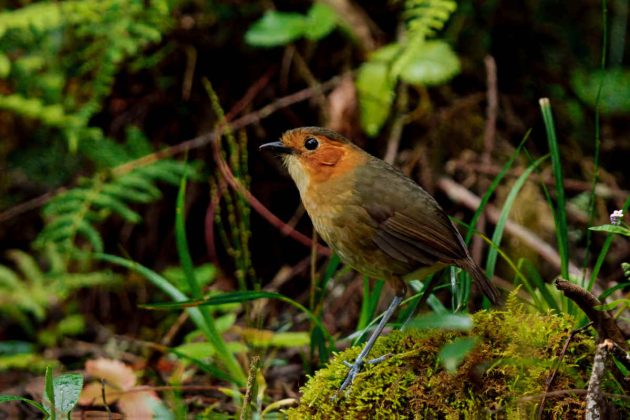
We then return to the Yungas, following the Tropical Andes. We visit several key hotspots in rainforest and cloud forest, staying at different lodges while searching for the many regional specialties, including Slaty Tanager (NE), Black-hooded Sunbeam (E), Blue-and-black Tanager, Barred Fruiteater, Versicolored Barbet, Blue-banded Toucanet (NE), Rufous-faced Antpitta (NE), Black-winged Parrot (NE), and Hooded Mountain-Toucan (NE).
The next days are spent in Cochabamba, where we explore the Inter-Andean Dry Valleys and the high Andes of the Puna. Tunari National Park features Polylepis forests and high plains, where it is possible to find high-altitude species such as Maquis Canastero (NE), Giant Conebill, Cochabamba Mountain Finch (E), Cordilleran Canastero, Darwin’s Nothura, Puna, Ochre-naped and Taczanowski’s Ground-Tyrants, Slender-billed Miner, Boulder Finch (NE), and Olive-crowned Crescentchest.
We then fly to La Paz and bird the Inter-Andean Dry Valleys in search of Berlepsch’s Canastero (E), before visiting Lake Titicaca. Here we take a boat excursion to look for the near-endemic Titicaca Grebe (NE).
Titicaca Grebe
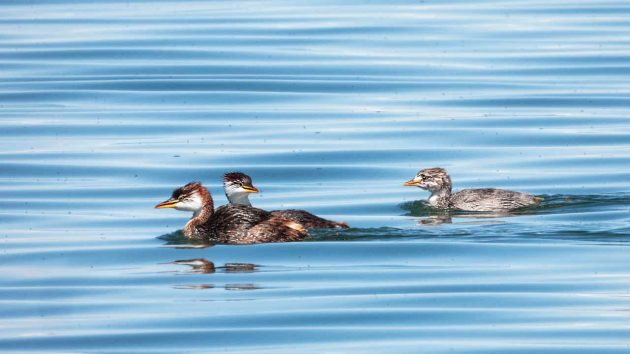
Finally, we return once more to the Yungas, with the chance to find Scimitar-winged Piha (NE), Andean Guan, Golden-collared Tanager, Diademed Tapaculo, Black-throated Thistletail (E), Gray-bellied Flowerpiercer (E), Bolivian Brushfinch (E), Solitary Eagle, and Light-crowned Spinetail (NE).
After more than two weeks of birding, we celebrate the journey with a farewell dinner in La Paz, sharing the highlights of the trip.
This tour can be adapted for hardcore birders seeking a large species list, or for more relaxed birders who prefer to combine birding with culture, including visits to archaeological sites, markets, museums, and tastings of Bolivia’s outstanding cuisine. I specialize in tailor-made tours and can be very flexible to match each client’s preferences.
Red-fronted Macaw
What other suggestions can you give to birders interested in your area?
Bolivia has 12 different ecoregions, so you should expect a wide range of weather conditions. Please bring clothing suitable for warm and cold temperatures, as well as rain and wind.
Do not expect typical tourist facilities along the route, such as shopping areas or cafés. We explore remote regions in search of the best birding sites, which are not always comfortable. To maximize our time in the field, we often have lunch outdoors while birding.
This is a general description of our trips. However, if you prefer greater comfort, we also offer special packages focused on birding from well-located lodges. All tours can be conducted at your own pace, and I specialize in tailor-made itineraries designed to suit your specific preferences.
Rufous-faced Antpitta
If any readers of 10,000 Birds are interested in birding with you, how can they best contact you?
By email: info@boliviabirdingexpeditions.com or santacruzhugo@gmail.com
Or WhatsApp +59173988190
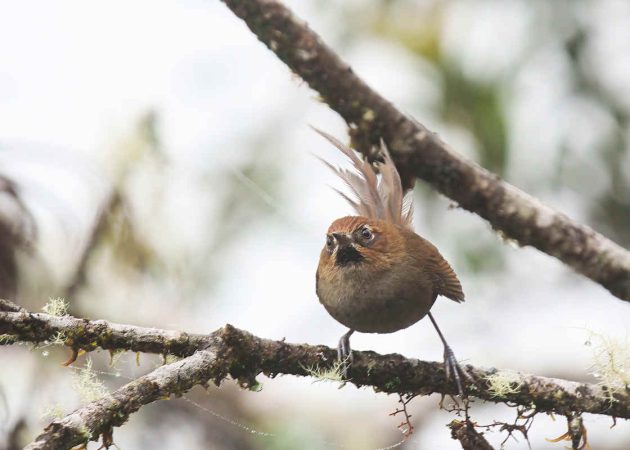
Black-throated Thistletail
Is there anything else you would like to share with the readers of 10,000 Birds?
Bolivia is a true gem for birding that is only now opening up to the world. It ranks among the six most bird-diverse countries on the planet and shares borders and ecosystems with five neighboring countries. There is still so much to discover in this remarkable country, and I invite you to experience its extraordinary natural richness firsthand.
You can visit my website: www.boliviabirdingexpeditions.com




Leave a Comment