

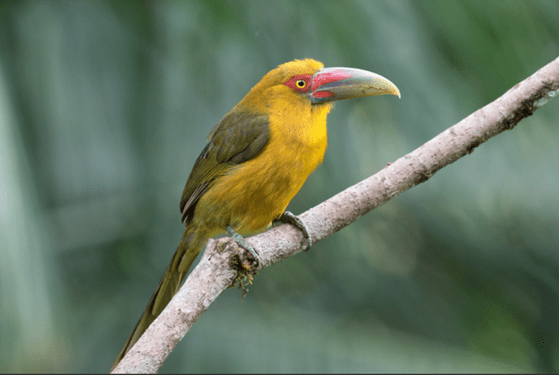
Which bird species do you think is the biggest attraction to visitors of your lodge (please only name one species)?
The most wanted bird here is definitely the outstanding Saffron Toucanet! Everybody loves toucans, right? So this one wears a golden plumage, with some red on the beak, face, and rump to give it the perfect contrast. Such a jewel can be found only in the SE Atlantic Forest. An uncommon species that moves in groups in humid forests. They live in the canopies and, therefore, can be tricky to spot. This lodge is no doubt the best place to look for it. This toucanet has a very appropriate name in Brazil, which means “Banana Toucanet”.
Saffron Toucanet (Photo: Michel Gutierrez)
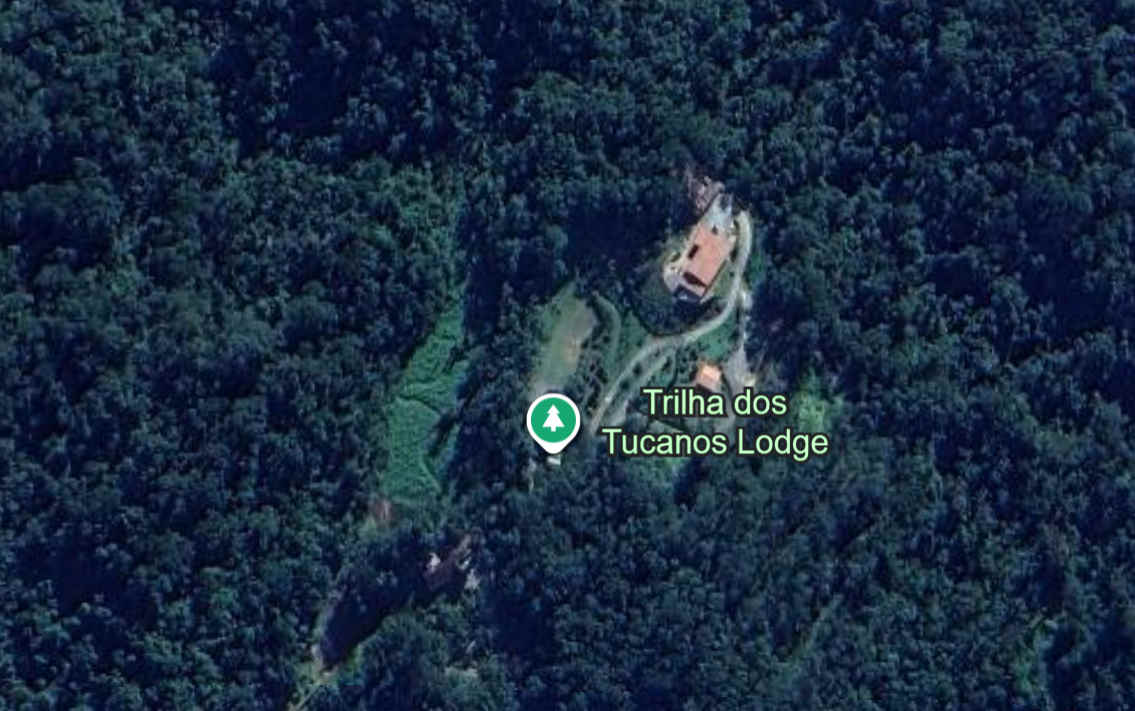
What is the name of your lodge, and since when has your lodge been operating?
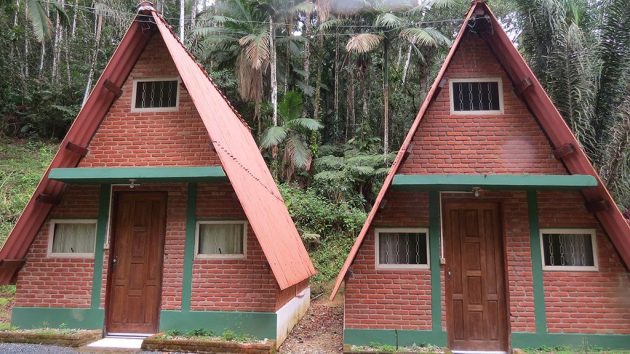
This lodge is called Trilha dos Tucanos, located only 3 hours from São Paulo. Inserted in a very preserved area of humid Atlantic Forest at 700 meters. This lodge is considered one of the best lodges for Atlantic Forest endemic birds and photography. It has a big list on eBird. Prepare to be overwhelmed by a huge biodiversity!
Trilha dos Tucanos has been receiving bird watchers and photographers from all over the world since 2014.
How best to travel to your lodge?
To get to Trilha dos Tucanos, you must fly to GRU International Airport in São Paulo. Then you shall drive for around 3 hours to Tapiraí city. At the end, you shall turn right onto a dirt road for another 10 minutes. And after turning right two more times, you will arrive.
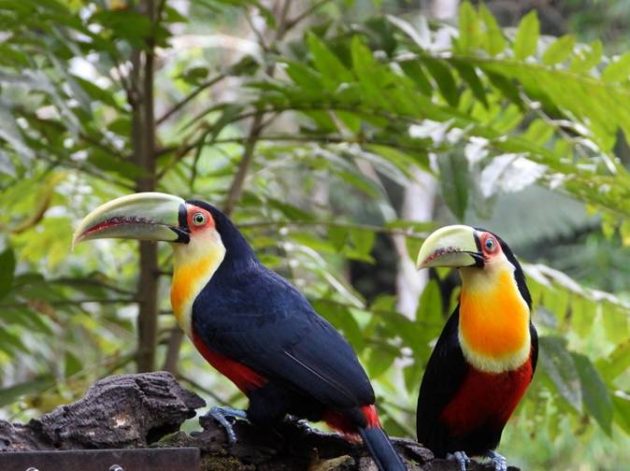
Red-breasted Toucan (Photo: René Santos)
What kind of services – except for accommodation and food – does your lodge offer to visiting birders? (e.g., guided tours, photography blinds, bird feeders, etc.)
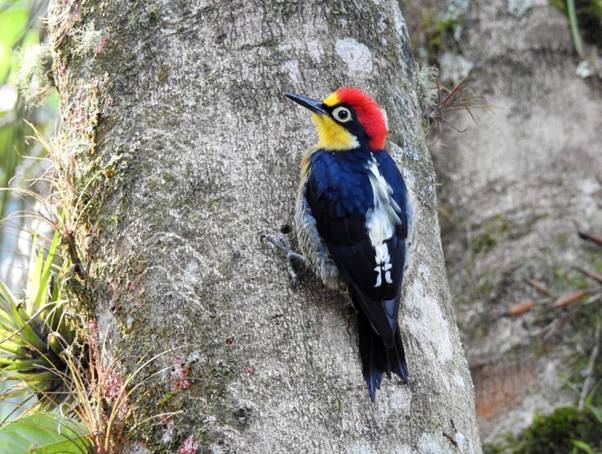
Trilha dos Tucanos has some of the best feeders in Brazil. The fruit tables have toucans, toucanets, many species of tanagers, and even woodpeckers come to eat the sweet bananas. The hummingbird feeders are specially situated on 3 private areas with the bottles hung in the best positions for photography, with flowering plants all around. Natural branches are also provided and installed in the best position to serve as perches and to give the perfect opportunities for awesome photos. The flash setups for photographers can be provided (at an extra cost) for a couple of hours per day only to not stress the hummers.
There is a forest hide for the ones in search of good views of difficult birds such as tinamous, antthrushes, and doves. Pacas are nocturnal rodents, and they also hang around this spot.
Famous now at Trilha dos Tucanos is the “Insect Light,” which is nothing but a feeder for forest insectivorous birds. Difficult species to see in the forest are easily seen close by, such as woodcreepers, Riverbank Warblers, Rufous-capped Spinetails, flycatchers, Fire-eyes, Attilas, Antshrikes, and even Tanagers come to eat insects on the white sheet. This attraction works only in the first couple of hours of dawn.
Forest trails are not many and do not go very far. Nevertheless, they can provide awesome sightings of great endemic species. The access road is always a good option to bird around.
They offer day use with lunch for people not staying the night. The lodge also provides potable water in a fountain.
Yellow-fronted Woodpecker (Photo: René Santos)
What makes your lodge special?
Trilha dos Tucanos is a true birding playground! There are so many birds around that it can be overwhelming for people who have never been in the tropics. And the majority of the birds you see there are the good endemic ones! No kiskadees, egrets, or herons. Lists of 100 species of birds are not rare there.
For photography, it is really incredible! Bring lots of memory cards and prepare to be exhausted from pushing the shutter button.
The food is homemade, therefore, awesome!
· What are the 10 – 20 most interesting birds that your lodge offers good chances to see?
- Saffron Toucanet
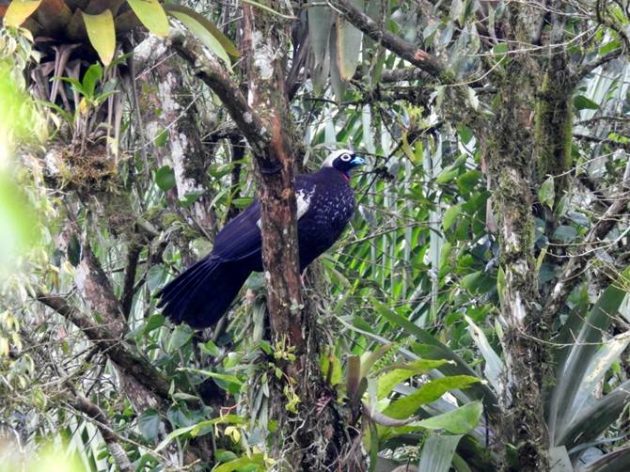
- Black-fronted Piping-guan
- Red-breasted Toucan
- Spot-billed Toucanet
- Blond-crested Woodpecker
- Yellow-fronted Woodpecker
- Helmeted Woodpecker
- Green-headed Tanager
- Azure-shouldered Tanager
- Golden-chevroned Tanager
- Brown Tanager
- Surucua Trogon
- Rufous-capped Motmot
- Giant Antshrike
- White-bearded Antshrike
- Eared-pygmy Tyrant
- Outstalets Tyrannulet
- White-breasted Tapaculo
- Least Pygmy-owl
- Slaty Bristlefront
Black-fronted Piping-guan, endangered (Photo: René Santos)
What is the best time to visit your lodge, and why?
The high season for birding in the area is from May to December. But the best months are from June to October. The most outstanding months (especially for photography) are June, July, and August, when it is winter and there are less fruits, flowers and therefore insects in the forest, and the feeders get super busy. From mid December till April the lodge is closed.
Is your lodge involved in conservation efforts? If yes, please describe them.
Trilha dos Tucanos protects an important tract of untouched Atlantic Forest. Many saplings of native fruit trees have been planted where there used to be an eucalyptus plantation. It is a natural reserve that protects many rare and endemic species of flora and fauna of one of the most threatened biomes in Brazil. The people there have only one objective: receiving bird watchers and nature lovers from all over the world and giving them amazing experiences in the natural world.
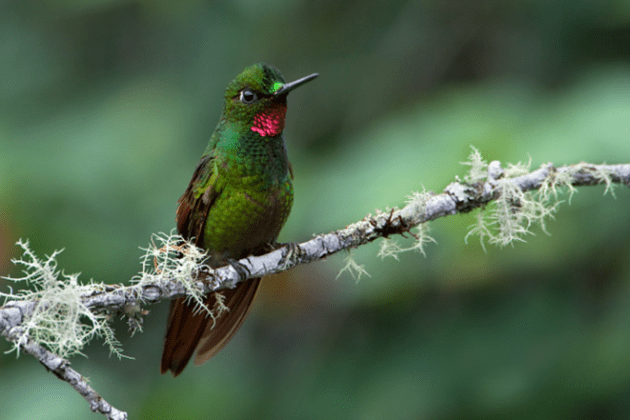
Brazilian Ruby (Photo: Octavio Campos Salles)
What other suggestions can you give to birders interested in visiting your lodge?
- If you are planning your trip to Trilha dos Tucanos in June, July, and August, you should reserve with them in advance (one year) as the place can get very busy with Brazilian photographers and birders from all over the world.
- For hummingbird flash set-ups and to visit the insect light and forest hide, you must reserve in advance.
- Always bring insect repellent, wear long pants, hats, and closed shoes. A water bottle and a rain jacket or a small umbrella in case you are going to walk around the trails and access road. Watch your step!
- Bring an outlet adapter to be able to charge your camera’s batteries.
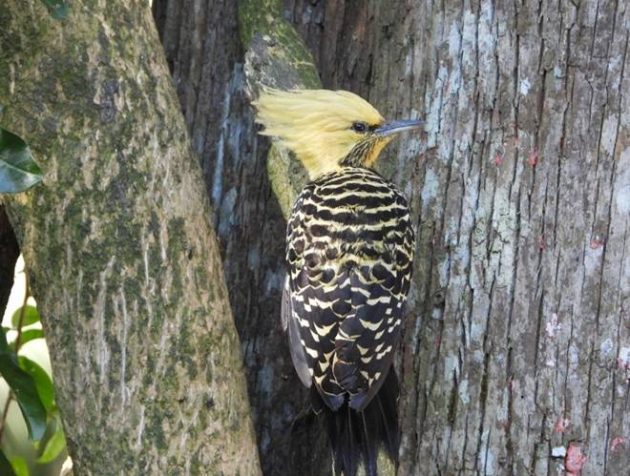
Blond-crested Woodpecker, female (Photo: René Santos)
Do you have activities for non-birders? If so, please describe.
Basically, the only activities for non-birders are hiking on the beautiful, preserved trails and meditation. You might see some nice mammals there, such as the Brazilian Tapir, Paca, Raccoon, Tyra, Coati, and Capuchin Monkeys.
If any reader of 10,000 Birds is interested in staying at your lodge, how can they best contact you?
I do trips to Trilha dos Tucanos regularly every year. For birding tours with me as a guide, write to renearara@gmail.com. Or check for more info: www.youtube.com/@CalypturaExpeditions
Trilha dos Tucanos website: TRILHA DOS TUCANOS LODGE – BIRDWATCHING IN THE ATLANTIC FOREST – Birdwatching in the Atlantic Forest – Lodging and Day Use
Email: trilhadostucanos@hotmail.com (Bia, the manager, does speak English).
Is there anything else you would like to share with the readers of 10,000 Birds?
Remember, bird watching is conservation! When you visit natural areas, private or not, you are creating value for them and therefore preventing their destruction. Please visit Trilha dos Tucanos!





Leave a Comment