

What is your favorite bird species?
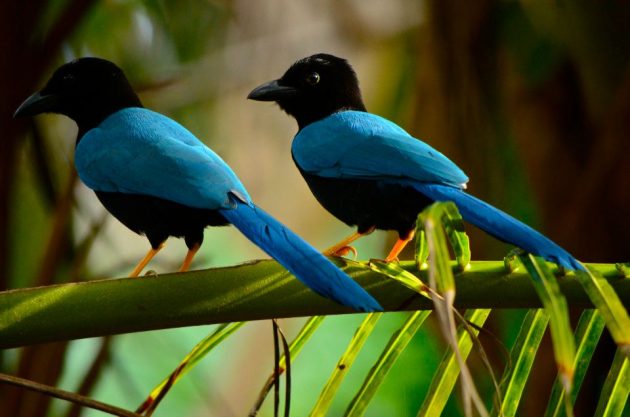
I’ve always been fascinated by the corvid family because of their complex social behavior and the many similarities they share with us humans. They’re also among the birds that often allow you to observe them closely, making it easier to appreciate their personalities and interactions. They are an incredibly diverse group of birds, and many of them are truly beautiful. It has crossed my mind that seeing every jay in the world should become my next birding goal! Here in the Yucatán Peninsula, my favorite is the Yucatán Jay. They’re beautiful, noisy, curious, and very entertaining to watch. As one of the peninsula’s iconic endemic birds, they perfectly capture the unique character of this region; I never get tired of seeing them, whether I’m birding on my own or with guests.
What is your name, and where do you live?
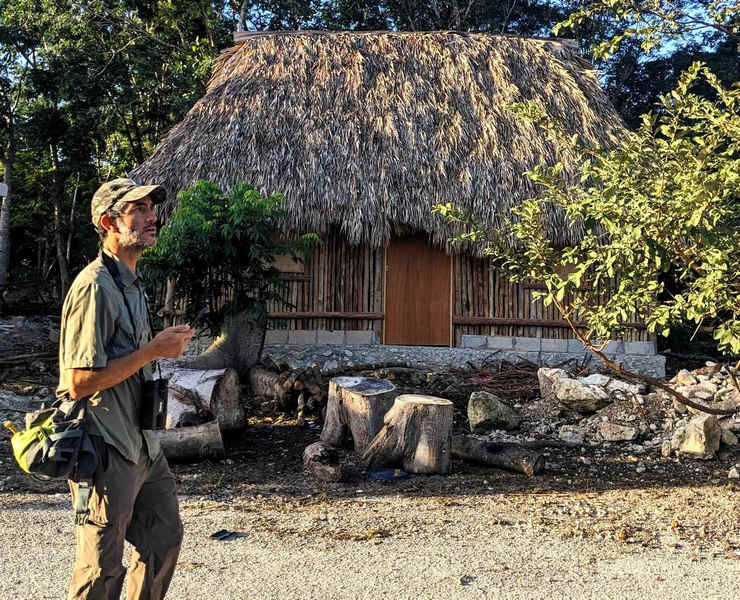
My name is Miguel Amar, and I’ve been living in the small village of Muyil, on the edge of the Sian Ka’an Biosphere Reserve in Quintana Roo, Mexico, since 2012. Living here allows me to explore a remarkable variety of habitats just minutes from home, from tropical jungle and freshwater wetlands to mangroves and coastal lagoons.
What are the main regions or locations you cover as a bird guide?
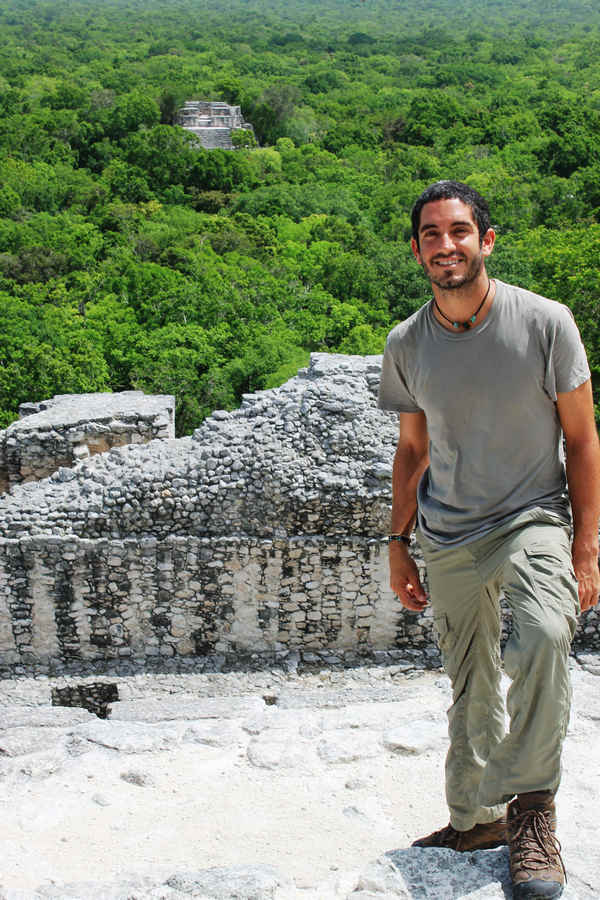
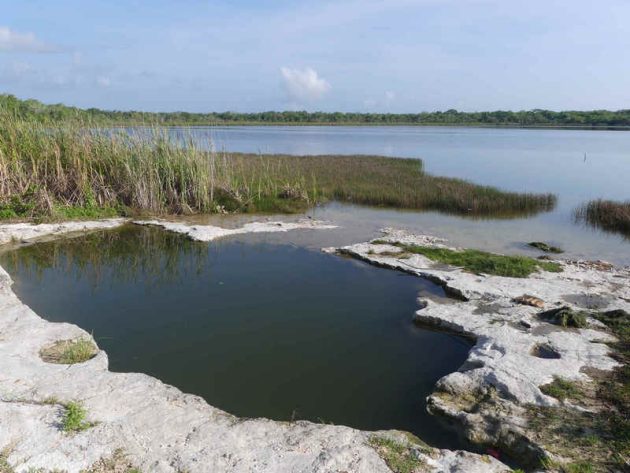
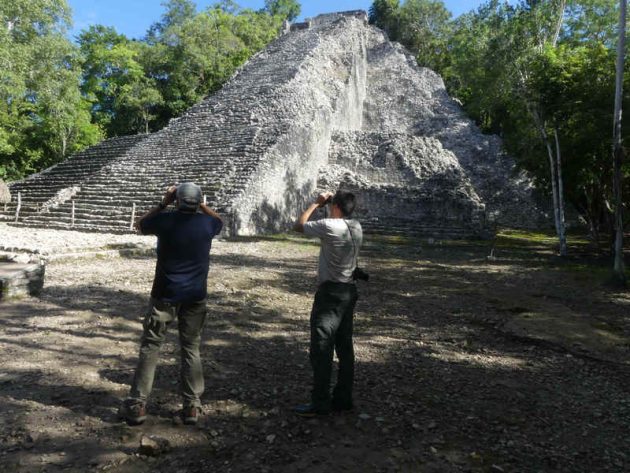
I mainly guide throughout the Yucatán Peninsula, with a particular focus on Quintana Roo, Yucatán, and eastern Campeche. The region offers an incredible diversity of habitats within relatively short distances, including tropical jungles, mangroves, freshwater wetlands, coastal lagoons, dry forests, and islands such as Cozumel. Some of my favorite places to guide are: Sian Ka’an Biosphere Reserve, Cobá, Río Lagartos, Calakmul, and Cozumel, each offering a unique birding experience and special birds.
Lake Coba
Through Amar Aves, we also offer birding tours in other regions of Mexico, including Oaxaca, Chiapas, and Veracruz. When I guide outside my home state (Quintana Roo), I enjoy working alongside expert local bird guides. Their intimate knowledge of their home regions is invaluable, and I believe it’s important to recognize and support the people who dedicate their lives not only to guiding but also to conserving the birds and habitats that make these places so special. I also enjoy learning from them. Every guide has something unique to teach, and local guides are some of the best ambassadors for the places we visit. I believe our guests benefit greatly from that shared knowledge and experience.
How long have you been a bird guide?
I’ve been guiding birding tours for about 15 years and working as a nature and cultural guide for over 20 years. My background as a general guide has shaped the way I lead birding trips today. While birds are always at the heart of my tours, I also enjoy helping visitors understand the habitats they live in, the history of the region, and the rich Maya culture that has coexisted with these landscapes for centuries. I believe birding is one of the best ways to truly connect with a place, and I love sharing that perspective with my guests.
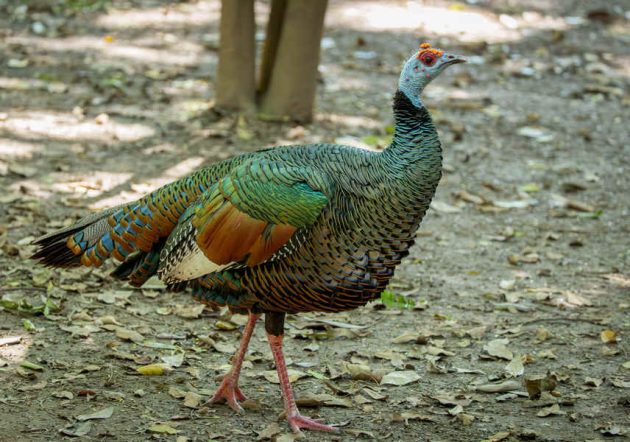
Ocellated Turkey (photo: Rob Arnold)
How did you get into bird guiding?
While working as a general nature guide, visitors would often ask about the wildlife we could encounter. I often found myself looking for wildlife for them to see and mostly pointing out birds without really knowing much about them, and I realized there was a whole world I needed to learn more about.
A few years later, I started working at an ecological center in the Sian Ka’an Biosphere Reserve, leading kayaking and nature tours. The owner of the center was a birder from Massachusetts who shared his field guides and introduced our team of four guides to birdwatching.
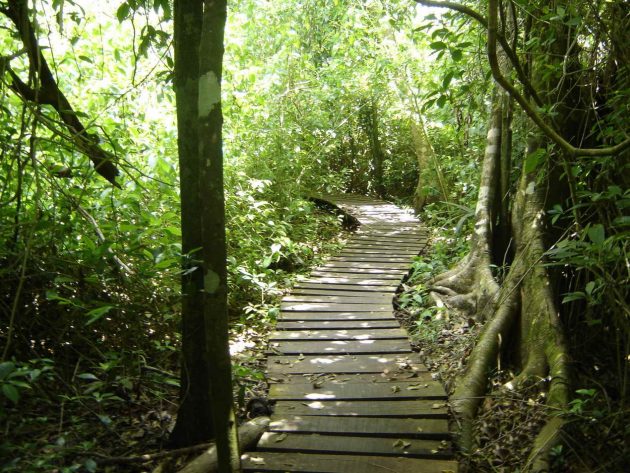
Sian Ka’an Muyil Boardwalk
Before long, my fellow guides and I had turned birding into a friendly competition. We were always comparing lists, hoping to find a new species or something a little rarer than the others had seen during our kayaking and other nature tours. More importantly, we started exploring new places together, looking for birds, drinking coffee in the middle of nature, flipping through our field guides, and discovering this new world together.
Those days made me realize that birdwatching is about much more than birds. It’s about sharing a passion with friends, or even with someone you’ve just met. It’s about curiosity, and the joy of exploring the natural world. Gradually, this passion became my profession, and since the pandemic (when more people became more interested in nature and birds), I´ve been able to dedicate myself fully to birding.
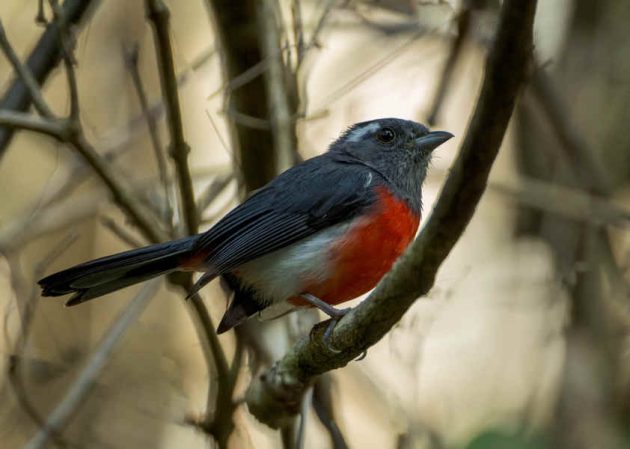
Gray-throated Chat (photo: Rob Arnold)
What are the aspects of being a bird guide that you like best? Which aspects do you dislike most?
The part I enjoy most is helping people connect with a place through its birds. Every species tells a story about the habitat where it lives, and birdwatching naturally leads to conversations about ecology, conservation, history, and local culture. I love seeing the excitement on people’s faces when they find a bird they’ve been hoping to see, but I enjoy just as much introducing beginners to the incredible diversity of birds they never knew existed.
What I enjoy least has little to do with birding itself. It’s seeing natural habitats disappear or become fragmented, and knowing that some of the places I’ve visited for years continue to face increasing pressure from development. It reminds me how important conservation is, and why sharing these places with visitors can also help people appreciate and protect them.
At the end of every tour, I always thank my guests for their interest in birds and the natural world. By choosing to experience a destination through nature, they’re helping give value to the habitats, wildlife, and local communities that make these places worth protecting and visiting.
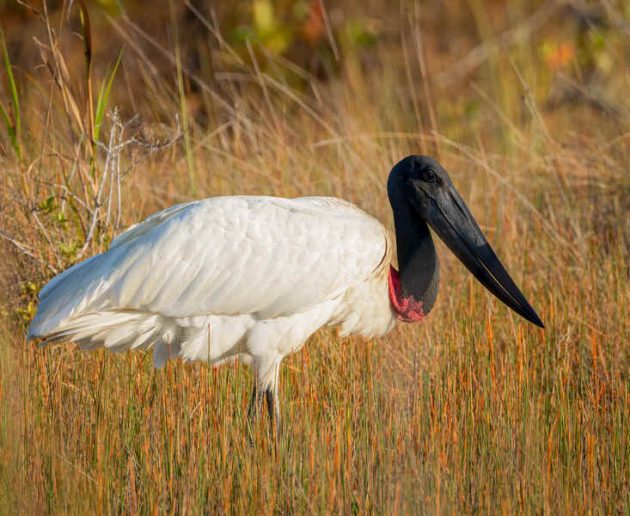
Jabiru (photo: Rob Arnold)
What are the top 5-10 birds in your region that are the most interesting for visiting birders?
- Ocellated Turkey (Meleagris ocellata) – One of the world’s most spectacular cracids and a true icon of the Maya forests.
- American Flamingo (Phoenicopterus ruber) – Watching thousands of flamingos feeding in the pink lagoons of Río Lagartos is an unforgettable experience.
- Mexican Sheartail (Doricha eliza) – One of Mexico’s most sought-after hummingbirds and a Yucatán quasi-endemic.
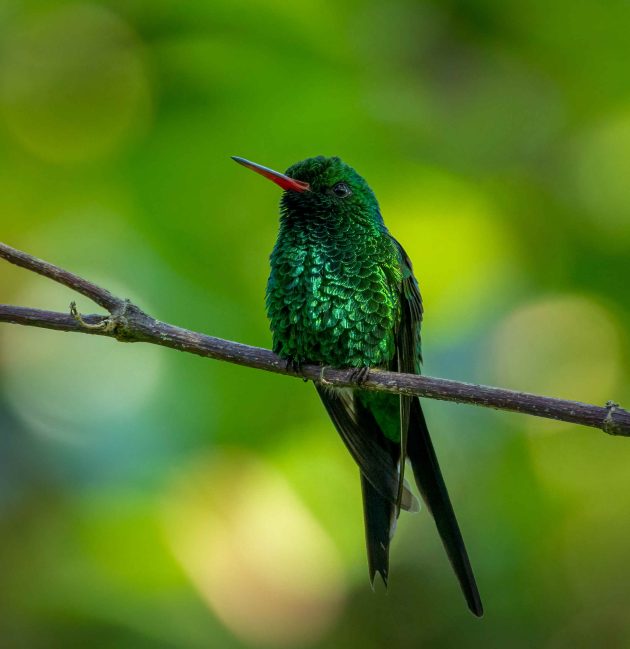
- Cozumel Emerald (Cynanthus forficatus) – A beautiful hummingbird found only on the island of Cozumel.
- Cozumel Vireo (Vireo bairdi) – A Cozumel endemic and a very cute vireo.
- Yucatán Jay (Cyanocorax yucatanicus) – One of the peninsula’s most charismatic endemic birds.
- Gray-throated Chat (Granatellus sallaei) – A regional specialty that is always high on the wish list of visiting birders.
- Yucatán Wren (Campylorhynchus yucatanicus) – A localized endemic of the northern coast with an interesting story to tell about glaciations and neotropical birds.
- Orange Oriole (Icterus auratus) – I love Orioles, and this one is endemic!
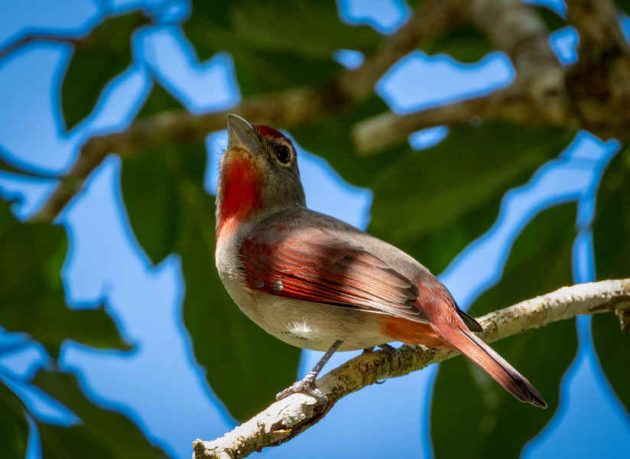
- Rose-throated Tanager (Piranga roseogularis) – Our endemic beautiful Tanager.
Cozumel Emerald (photo: Rob Arnold)
Can you outline at least one typical birdwatching trip in your area? Please briefly describe the locations, the key birds, and the approximate duration of such a trip
One of my favorite birding trips takes place in Muyil, on the edge of the Sian Ka’an Biosphere Reserve, a UNESCO World Heritage Site. We begin early in the morning exploring the mixed habitats surrounding a small Maya village, including secondary jungle, forest edge, and areas of disturbed vegetation while searching for some of the peninsula’s most iconic birds, such as Turquoise-browed Motmot, Keel-billed Toucan, Collared Aracari, Yucatán Jay, Rose-throated Tanager, and many other species.
Rose-throated Tanager (photo: Rob Arnold)
Later, we visit the ancient Maya city of Muyil, one of my favorite archaeological sites in the Maya area and one of the least visited. Good place to bird also! From there, we walk along a beautiful boardwalk through flooded forest that leads to a freshwater lagoon, offering excellent opportunities to observe both birds and this unique ecosystem. Every season brings different highlights, making each visit unique.
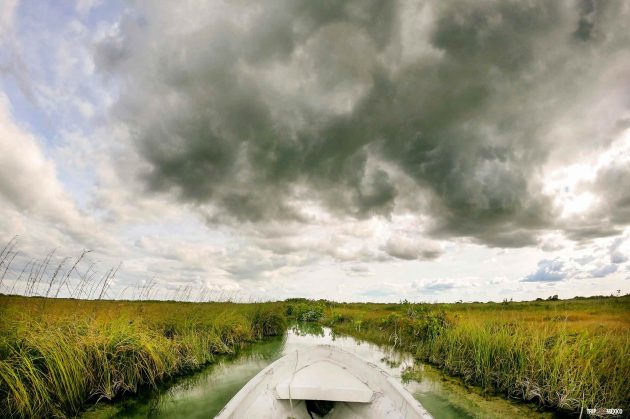
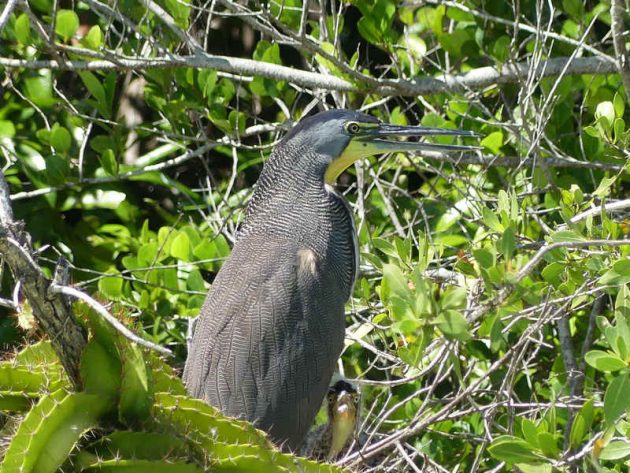
For those who wish to experience more of Sian Ka’an, the tour can be extended with a boat trip through the reserve’s lagoons, wetlands, and ancient Maya canals. Besides offering a wonderful opportunity to experience more of this remarkable protected area, the wetlands often provide additional birding highlights such as Lesser Yellow-headed Vulture, Mangrove Cuckoo, Boat-billed Heron, Bare-throated Tiger-Heron, and, with a bit of luck, even Jabiru.
Ancient Maya Channel
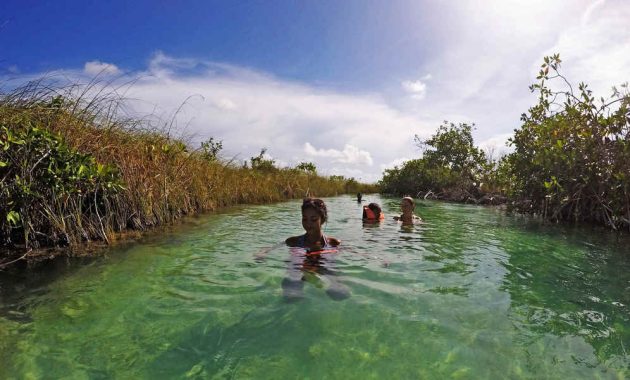
The excursion ends with a gentle float down a crystal-clear natural channel that has connected the inland lagoons with the Caribbean coast since ancient Maya times. We float along a peaceful section of this historic waterway, surrounded by mangroves and the sounds of nature. After a morning of birding and sweating, I can’t think of a better way to finish a tour than quietly floating in crystal-clear rainwater.
The birding portion of the tour lasts approximately five hours, while the optional boat extension adds about two more hours, offering a wonderful combination of birdwatching, wildlife, archaeology, and one of the most memorable nature experiences in the Yucatán Peninsula.
What other suggestions can you give to birders interested in your area?
- My first piece of advice? Go birding with a local guide ; ) The Yucatán Peninsula may look flat and uniform on a map, but it’s surprisingly diverse. Many of its specialty birds are closely associated with very specific habitats or regions. Understanding those subtle differences, and knowing where to look, can make a huge difference during a birding trip.
- If you don´t do well in the heat and would like the opportunity of seeing the North American winter migrants, come any time from November until March.
- If your schedule allows, spend several days exploring different parts of the peninsula rather than trying to see everything in a single location. Every additional morning in the field increases your chances of finding some of the region’s most sought-after birds.
- I also encourage visitors to stay curious about everything that makes the Yucatán Peninsula such a remarkable bioregion. Explore its Caribbean coastline, its extraordinary cenotes, its wetlands and tropical forests, and don’t miss the opportunity to discover its fascinating history and Maya culture. For me, birding combines naturally with all of these experiences, making the entire journey even more rewarding.
If any readers of 10,000 Birds are interested in birding with you, how can they best contact you?
The best way to contact me is through Amar Aves, the birdwatching division I created in collaboration with Mexico Kan Tours. You can explore our birding tours at Birdwatchingtulum.com or contact me directly at miguel@mexicokantours.com. Whether you’re planning a dedicated birding trip across the Yucatán Peninsula or simply have a free morning while visiting the Riviera Maya, I’d be happy to help you discover the birdlife of this remarkable region.
Bare-throated Tiger-heron (photo: Miguel Amar)







Leave a Comment