


What is your favorite bird species?
That’s a difficult question, as I love many birds. If I had to choose, it would probably be owls. Their mystery, silent flight, remarkable hunting skills, and cultural significance in Nepal make them truly fascinating to me.
What is your name, and where do you live?
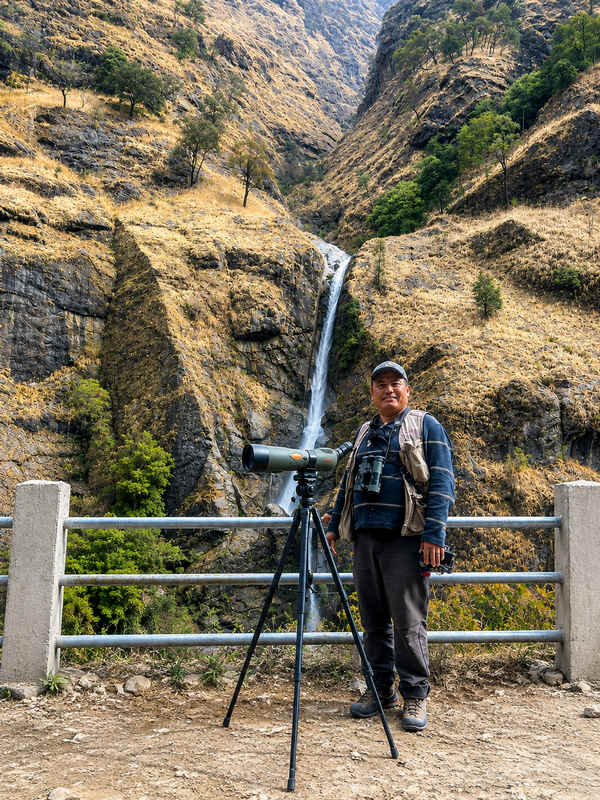
My name is Rajendra Gurung, and I live in Kathmandu, Nepal.
What are the main regions or locations you cover as a bird guide?
I guide birdwatching tours throughout Nepal, covering the entire country from east to west and from north to south. I also lead birding tours in Bhutan.
How long have you been a bird guide?
I have been working as a bird guide for over 20 years, leading birdwatching and nature tours across Nepal and Bhutan.
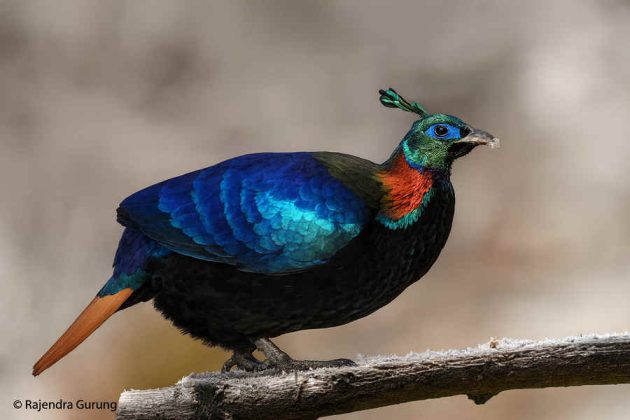
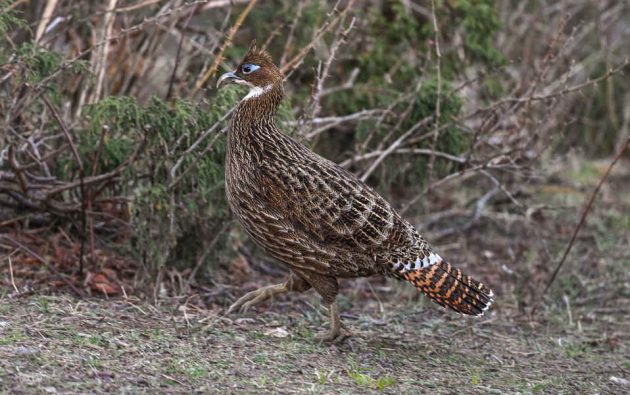
Himalayan Monal (m/f)
How did you get into bird guiding?
While working as a trekking guide, I became fascinated by nature, especially colourful birds, their calls, behaviour and flight. My interest gradually grew, and I started spending more time quietly observing birds in forests, wetlands and the Himalayas, learning to identify them by their size, shape, plumage, calls and behaviour. That passion eventually led me to become a bird guide.
What are the aspects of being a bird guide that you like best? Which aspects do you dislike most?
The part I enjoy most is sharing Nepal’s rich birdlife with visitors and helping them discover new or memorable species. Nothing is more rewarding than seeing the excitement and happiness on my clients’ faces after a special sighting.
What I dislike most is seeing natural habitats being destroyed by unplanned development. Habitat loss threatens birds and wildlife and ultimately harms the environment that we all depend on.
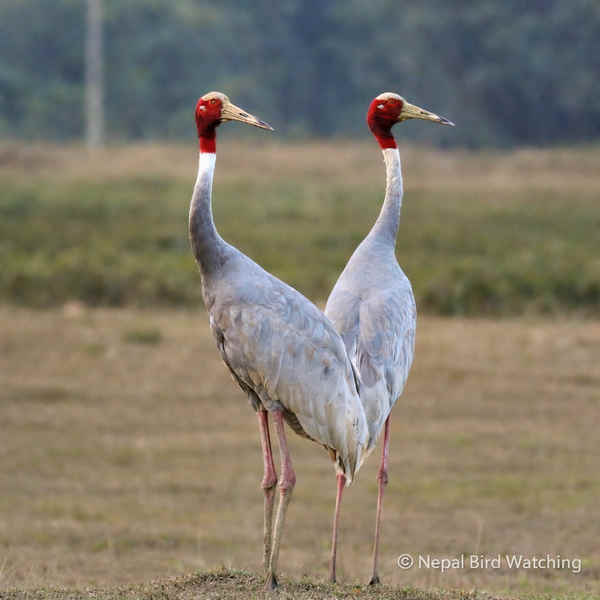
Sarus Crane
What are the top 5–10 birds in your region that are the most interesting for visiting birders?
Top 10 Must-See Birds of Nepal
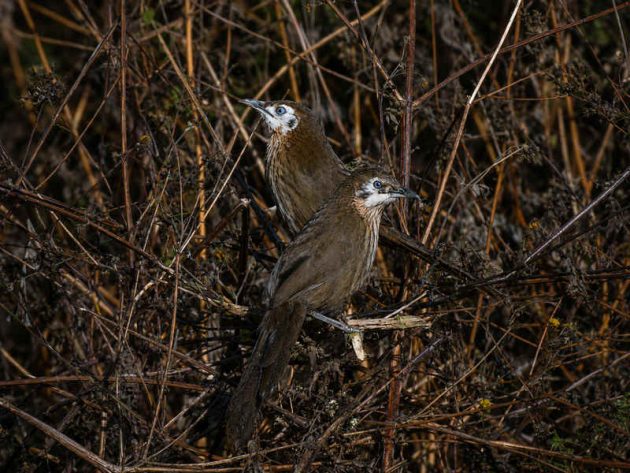
1. Spiny Babbler – Nepal’s only endemic bird species.
2. Himalayan Monal – The national bird of Nepal.
3. Ibisbill – A unique and iconic Himalayan river bird.
4. Sarus Crane – The world’s tallest flying bird.
5. Satyr Tragopan – One of the Himalayas’ most beautiful pheasants.
6. Bengal Florican – A critically endangered grassland specialist.
7. Swamp Francolin – A rare and localized grassland bird.
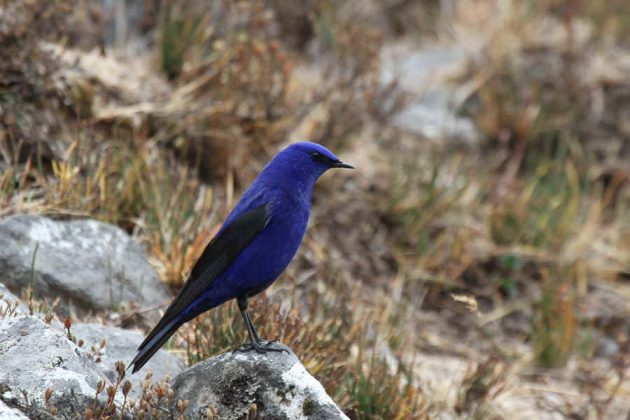
8. Grandala – A striking blue bird of the high Himalayas.
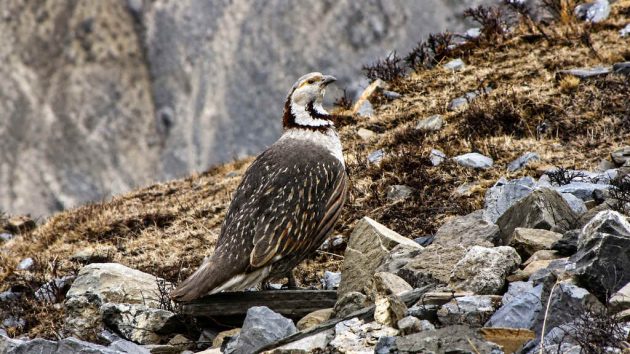
9. Himalayan Snowcock – A spectacular high-altitude gamebird.
10. Himalayan Cutia – A colourful and highly sought-after Himalayan forest species.
Spiny Babbler
Can you outline at least one typical birdwatching trip in your area? Please briefly describe the locations, the key birds and the approximate duration of such a trip.
Classic Bird & Wildlife Tour of Nepal:
- This classic birding and wildlife tour begins with your arrival in Kathmandu, followed by birdwatching in the forests of Phulchowki, Nepal’s premier birding destination.
- From there, travel to Pokhara, a beautiful valley renowned for its spectacular Himalayan scenery, including three 8,000-metre peaks. During winter, Pokhara is also one of the best places in Nepal for raptor watching and photography.
- The journey continues to Chitwan National Park, Nepal’s most popular wildlife destination, offering excellent opportunities to see a wide variety of birds and mammals, including the Greater One-horned Rhinoceros.
- Next, visit Lumbini, the birthplace of Lord Buddha. Besides its cultural importance, Lumbini is an outstanding birding destination, with forests, wetlands and farmlands supporting a rich diversity of bird species, including the majestic Sarus Crane.
- The tour then heads west to Bardia National Park, one of Nepal’s finest destinations for Bengal Tigers, along with many western bird species and other fascinating wildlife.
- This 12–14-day journey offers an excellent chance to observe over 300 bird species, including Nepal’s endemic Spiny Babbler, as well as iconic mammals such as the Bengal Tiger, Greater One-horned Rhinoceros, Asian Elephant, and many more.
- Best Season: October through June.
Grandala
What other suggestions can you give to birders interested in your area?
- Best season: October–June.
- Gear: Bring a warm, neutral-colored jacket, comfortable walking shoes, binoculars, and a camera.
- Travel with an experienced local bird guide to maximize your birding opportunities.
- Allow 10–14 days to experience Nepal’s diverse bird habitats.
- Be prepared for different elevations and weather conditions, from tropical lowlands to the high Himalayas.
If any readers of 10,000 Birds are interested in birding with you, how can they best contact you?
They are welcome to contact me through:
- Email: nepalbirdwatching@gmail.com | rajendra@nepalbirdwatching.com
- Phone / WhatsApp: +977 9851074756
Himalayan Snowcock




Leave a Comment