

Highlights
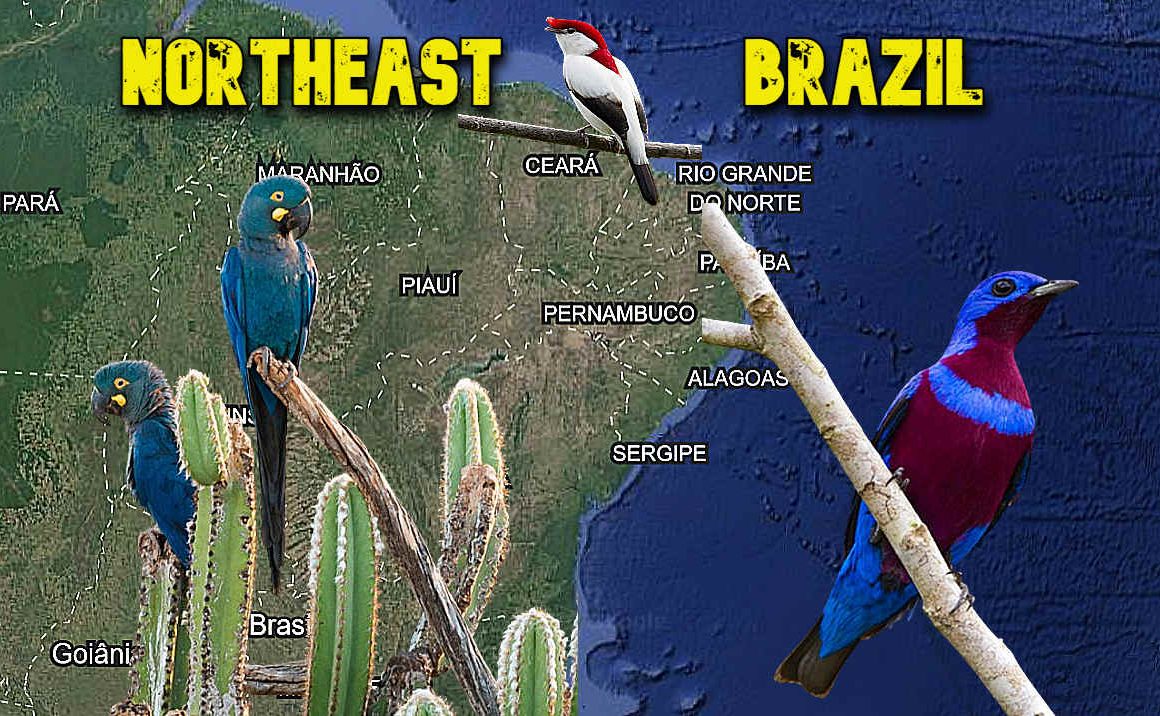
Northeast Brazil is known for its unique and endangered birds. The area is huge! So there are lots of destinations to choose from. Several combinations can be made for a fantastic itinerary, and the options are outstanding! The fact is: there are two major biomes, the Atlantic Rainforest and the Caatinga! This fact makes the possibilities very numerous, so the number of bird species can easily surpass 500 species in a trip. Caatinga is the only exclusive Brazilian biome, a dry savanna with amazing rocky scenery, and several species are found only there. The Atlantic Forest is a totally different environment. The humid tropical remnants found in NE Brazil still have a huge diversity of birds,
The region is a true hotspot for birdwatching, with over 650 bird species recorded. Many are endemic, and unfortunately, the most endangered species of Brazil are found there. Therefore a great place to visit and help the conservation of such natural jewels as Lear’s Macaw, White-collared Kite, Blue-eyed Ground Dove, Alagoas Curassow, Araripe Manakin, Alagoas Antwren, Stresemann’s Bristlefront, Orange-bellied Antwren, and a few others.
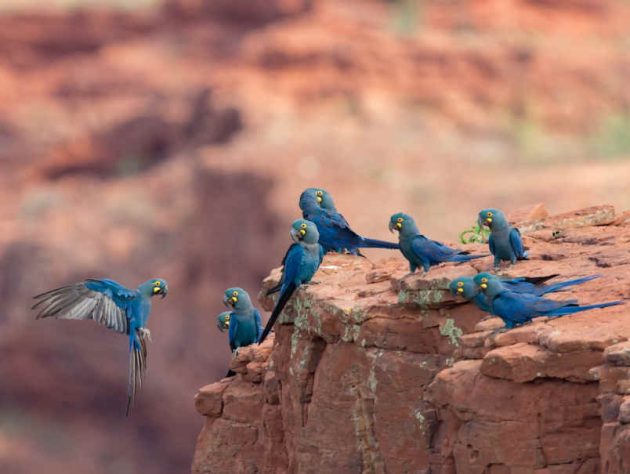
Lear’s Macaw (Photo: Ester Ramirez)
Key Bird Species and Families
- Lear’s Macaw
- Cactus Parakeet
- Red-billed Curassow
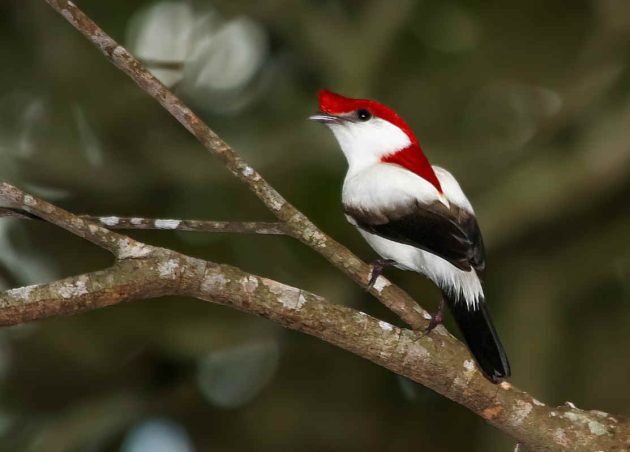
- Araripe Manakin
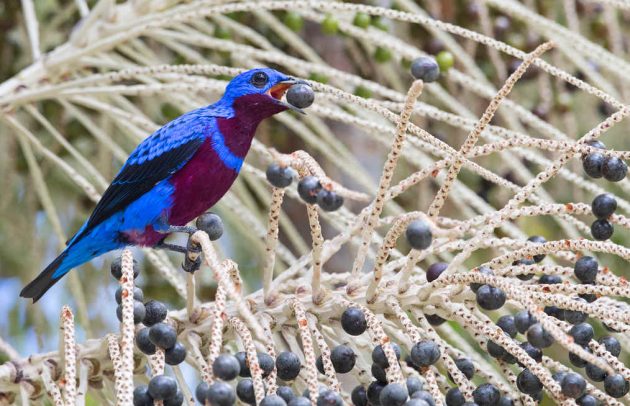
- Banded Cotinga
- White-winged Cotinga
- White-eared Parakeet
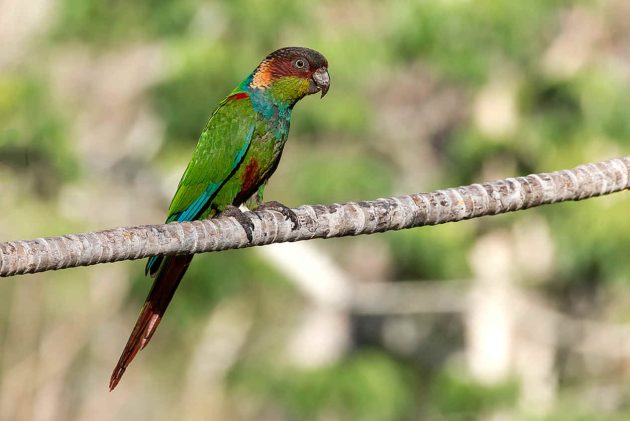
- Ochre-marked Parakeet
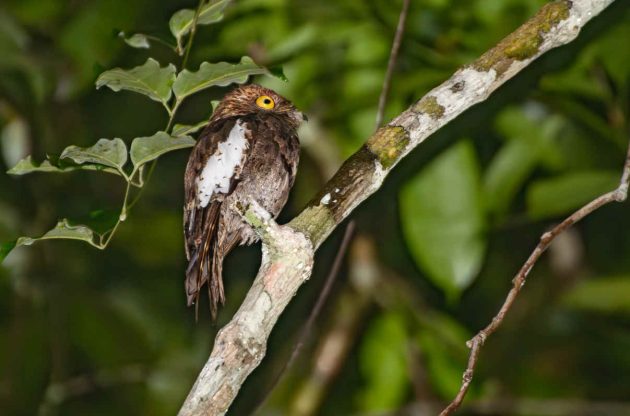
- White-winged Potoo
- Minute Hermit
- Hook-billed Hermit
- Outcrop Sabrewing
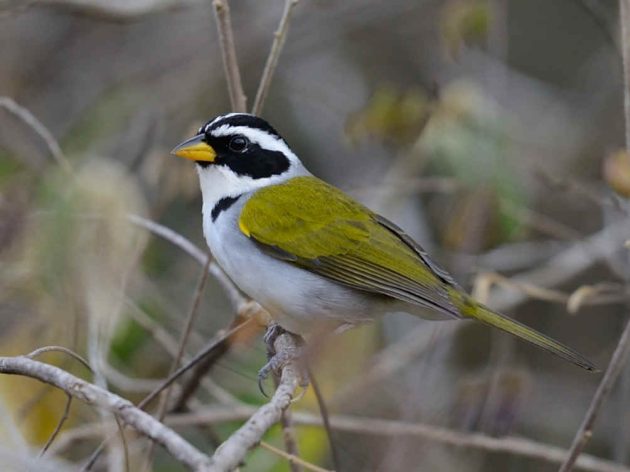
- São Francisco Sparrow
- Caatinga Black-Tyrant
- Minas Gerais Tyrannulet
- Reiser’s Tyrannulet
- Moustached Woodcreeper
- Blue-eyed Ground Dove
Banded Cotinga (Photo: Ciro Albano)
Best Regions for Birding
- Porto Seguro is located South of the Bahia State and is a very touristy city, so you can start here, as it has an airport. Veracel Reserve in Porto Seguro is the largest private Atlantic Forest reserve in Northeast Brazil, spanning over 6,000 hectares, and it is recognized by UNESCO as a Natural World Heritage Site. It plays a vital role in protecting endangered species and sustaining over 115 water springs. The best birds there are Harpy Eagle, Banded Cotinga, Hook-billed Hermit, White-winged Potoo, White-winged Cotinga, Ochre-marked Parakeet, Red-browed Amazon, Sooretama Slaty-Antshrike, and Bahia Antwren, among several others.
- Reserva Mata do Passarinho is a critically important Atlantic Forest refuge located between Bahia and Minas Gerais, created to protect one of the world’s rarest birds, the Stresemann’s Bristlefront. It harbors over 360 bird species and is a hotspot for conservation and birdwatching. It covers approximately 952 hectares (2,352 acres), including primary and secondary forest. Other nice birds found there are: Spot-billed and Saffron Toucanets, Black-eared Fairy, Spotted Piculet, Yellow-fronted Woodpecker, White-eared and Golden-capped Parakeets, Black-billed Scythebill, Black-cheeked Gnateater, and several others.
- Serra Bonita Reserve in Bahia is a pioneering private conservation area protecting one of the last remnants of the submontane Atlantic Forest. It hosts over 400 bird species, including six listed as threatened by the IUCN, and offers excellent birding infrastructure through the Serra Bonita Lodge. Most wanted birds there are Harpy Eagle, Mantled Hawk, Short-tailed Antthrush, East Brazilian Chachalaca, Least Pygmy-owl, Black-necked Araçari, Plumbeous Antvireo, Azure-shouldered Tanager, Rufous-brown Solitaire, Fork-tailed Tody-tyrant, Frilled Coquette, Bahia Spinetail, Pink-legged Graveteiro, Buff-throated Purpletuft, Brown-backed Parrotlet, and many others.
- Boa Nova National Park in Bahia is one of Brazil’s most celebrated birding destinations, protecting a unique transition zone between Atlantic Forest and Caatinga. It is globally recognized for its extraordinary bird diversity and rare species. What a playground for birders! Prepare yourself to be overwhelmed. Possible birds from both biomes are: White-browed Antpitta, Golden-spangled Piculet, Spot-backed Puffbird, Blue-winged Macaw, Yellow-green Grosbeak, Grey-headed Spinetail, Hangnest Tody-tyrant, White-crowned Manakin, Rio-de-Janeiro Antbird, Narrow-billed and Black-bellied Antwrens, and a bird found only at this location, the Slender Antbird.
- Itacaré, in southern Bahia, is another great paradise for birdwatchers and nature lovers, combining Atlantic Forest, mangroves, and stunning beaches. The region is a top destination for spotting Atlantic Forest endemics such as White-necked Hawk, Brown-backed and Golden-tailed Parrotlets, Eared Pygmy-tyrant, Bare-thoated Bellbird, Plain-bellied Emerald, Silvery-flanked and Band-tailed Antwrens, Bahia Tapaculo, Scaled Antbird, Racket-tipped Thorntail, Kinglet Manakin, and several others.
- Chapada Diamantina National Park in Bahia is a top birding destination with over 359 recorded species, including 21 threatened ones. It uniquely hosts birds from three Brazilian biomes—Atlantic Forest, Caatinga, and Cerrado—making it one of the most ecologically diverse parks in Brazil. The scenery will blow your mind, and the birding might be the best of your life. Some of the most wanted birds are Hooded Visorbearer, White-naped Jay, Long-billed Wren, Cinnamon Tanager, Velvety Black-tyrant, Horned Sungem, Collared Crescentchest, Rufous-sided Pygmy-tyrant, White-vented Violetear, Diamantina Tapaculo, Pale-throated Pampa-finch, and a recently described bird found only there, the Sincorá Antwren.
- Estação Biológica de Canudos is located in the Caatinga biome, a semi-arid ecosystem found only in Brazil. This makes it a hotspot for species adapted to dry conditions. That is one of the breeding grounds of the endangered Lear’s Macaw, a striking blue parrot that was once on the brink of extinction. The reserve plays a crucial role in its survival. Apart from this fantastic parrot species, several other Caatinga birds can be found in this very special arid environment, such as Blue-crowned Parrots, Caatinga Cacholote, Bahia Wagtail-tyrant, Ruby-topaz Hummingbird, Broad-tipped Hermit, Scarlet-throated Tanager, Red-shouldered Spinetail, Silvery-cheeked Antshrike, and many others.
- Pedra D’antas and Jaqueira Reserves can be combined, and both protect remnants of the Atlantic Forest, one of the most threatened biomes in the world, offering refuge to rare and endemic species. The most important species there are: Alagoas Tyrannulet, Pinto’s Spinetail, Orange-bellied Antwren, Long-tailed Woodnymph, Golden-spangled Piculet, Scalloped Antbird, Ceara Gnateater, White-bellied Tody-tyrant, White-backed Fire-eye, Jandaya Parakeet, Grey-headed Spinetail, Willi’s Antbird, Horned Sungem, Buff-breasted Tody-tyrant, Bearded Bellbird, among several species.
- Murici Ecological Station in Alagoas is one of Brazil’s most important Atlantic Forest reserves, hosting over 230 bird species, including several endangered and endemic ones. It spans more than 6,000 hectares and is a key site for ornithological research and conservation. The most important species there are Scalloped Antbird, White-winged Cotinga, Pinto’s Spinetail, Long-tailed Woodnymph, Orange-bellied Antwren, Atlantic Woodcreeper, Seven-colored Tanager, Bearded Bellbird, Alagoas Tyrannulet, Great-billed Hermit, Pernambuco Foliage-gleaner, Ochraceous Piculet, Buff-throated Purpletuft, and the last individuals of Alagoas Antwren. This is also where there were the last records of the recently extinct Alagoas Foliage-gleaner and Cryptic Treehunter.
- Serra de Baturité is a mountainous region in Ceará State and has some very important Atlantic Forest enclaves surrounded by Caatinga, creating a unique mix of habitats. Peaks reach over 1,100 meters, providing cooler, humid conditions compared to the surrounding semi-arid lowlands. The region is considered a great birding hotspot on eBird, attracting ornithologists and ecotourists. The best birds are White-browed Guan, Ceara Gnateater, Atlantic Woodcreeper, Plain-bellied Emerald, Cactus Parakeet, Ochre-cheeked Spinetail, Buff-fronted Owl, Paint-billed Crake, Broad-tipped Hermit, Buff-breasted Tody-tyrant, and the endangered and being reintroduced Grey-breasted Parakeet!
- Serra do Araripe is globally renowned for hosting the critically endangered Araripe Manakin, a dazzling bird found nowhere else on Earth. The region supports over 225 bird species, including 21 endemics, making it one of Brazil’s most important birding and conservation hotspots. Other target birds there are Ceara Leaftosser, Pale-bellied Tyrant-manakin, Black-capped and Black-bellied Antwrens, Ochraceous and Spotted Piculets, Scarlet-throated Tanager, Stripe-backed Antbird, Ochre-cheeked Spinetail, Caatinga Cacholote, White Monjita, Great Xenops, and many others.
- Icapuí, on the coast of Ceará State, has a mix of mangroves, beaches, salt flats, and Caatinga scrubland. One of the greatest hotspots for aquatic birds and waders in Brazil. Many species in great numbers can be found, such as Semipalmated Plover and Sandpiper, Whimbrel, Greater and Lesser Yellowlegs, Ruddy Turnstone, Grey-headed and Laughing Gulls, Yellow-billed and Least Terns, American Oystercatcher, Common Gull-billed Tern, Little Blue Heron, Grey Plover, Willet, Red Knot, Sanderling, Black Skimmer, Sandwich Tern, Stilt Sandpiper, and many others.
- Botumirim State Park is located in the northern part of Minas Gerais State and is Part of the Espinhaço Mountain Range. Created in 2018, the park spans over 35,000 hectares and is classified as IUCN Category II, meaning full protection for biodiversity. Home to rare and endemic species, including plants and birds adapted to semi-arid conditions. It’s a hotspot for scientific research and ecological preservation. It was created and became very famous after the rediscovery of the Blue-eyed Ground Dove in 2015. Apart from this super pretty species of dove, other interesting birds found there are Giant Snipe, Horned Sungum, White-vented Violetear, White Woodpecker, Cinereous Warbling-finch, Stripe-backed Antbird, White-browed Antpitta, Helmeted Manakin, Rufous-winged Antshrike, Collared Crescentchest, and many others.
Ochre-marked Parakeet (Photo: Rafael Boni)
Best Birding Season
The dry season in NE Brazil is from August to February. The very best months (and also most busy) are September, October, and November, but December and January will work fine.
Araripe Manakin (Photo: Antonio Nobre)
Birding Trip Suggestion(s)
As previously mentioned, NE Brazil is huge and has several great options to bird. Remember that not all of them can be combined on an itinerary due to long travel distances. Ask your local guide which are the best combinations for the amount of time you are planning to travel, and the possible domestic flights.
Depending on the habitat you are birding in, the weather conditions can vary a lot. In Caatinga environments, it will probably be dry and warm. In the Atlantic Forest, it will be wet and warm, and quick rains can be very possible. So be prepared regarding what to wear and what to bring.
For Canudos and Lear’s Macaw, you will need to make reservations specially if you are not staying at the reserve’s small but very nice lodge.
For the Blue-eyed Ground-dove at Botumirim, you will also need to make a reservation and make a donation to enter the reserve. Last year (2025), the visitation of this critically endangered bird was temporarily halted to avoid the disturbance of such a rare bird.
For Pedra D’antas Reserve, you will need to buy a ticket to get in at the SAVE BRASIL website.
White-winged Potoo (Photo: Itamar Donitza)
Practical Tips
- It can be quite warm on some days, so always bring a bottle of water with you and wear a hat. Wear long pants if you are hiking through trails, and bring insect repellent. If you are allergic to insect bites, bring your proper medicine.
- The outings must be made very early (5 am), as around 9 or 10 am, it might be too warm to have any bird or wildlife activity. The afternoons normally start after 2:30 pm.
- The majority of the places are accessible by earth roads. So if you want to have a more relaxed mind, it is advisable to rent a 4X4 car, as not only can quick rains be a problem, but also deep sand roads.
- You will take hundreds of pictures a day everyday, so be prepared in regard to batteries and memory cards. Bringing a universal outlet plug adaptor, it might save you.
São Francisco Sparrow (Photo: Emerson Kaseker)
Books
- Birds of Brazil: A Field Guide – Ber Van Perlo
- Birds of Brazil: The Atlantic Forest of Southeast Brazil – Martha Argel
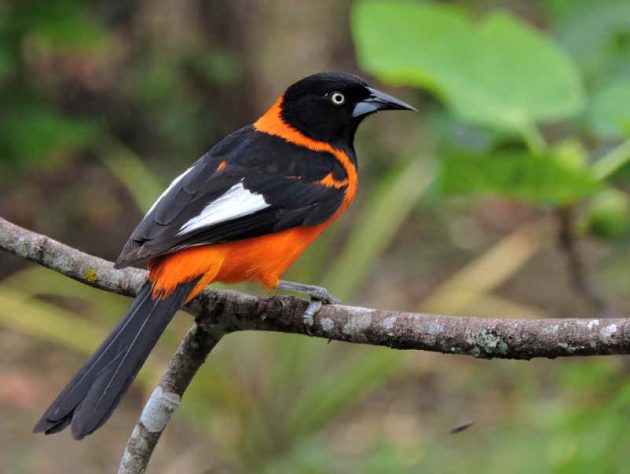
Campo Troupial (Photo: Marco Marcos)
Links
- Veracel Reserve – Estação Veracel: Conservação, Pesquisa e Educação Ambiental
- Mata do Passarinho Reserve – Mata do Passarinho – Fundação Biodiversitas
- Serra Bonita Reserve – Serra Bonita Reserve – Conservation Birding
- Boa Nova National Park – Boa Nova National Park – Wikipedia
- Itacaré – Itacaré – Wikipedia
- Chapada Diamantina National Park – Chapada Diamantina National Park – Wikipedia
- Estação Biológica de Canudos – Estação Biológica de Canudos – Fundação Biodiversitas
- Pedra D’antas Reserve – Visite a RPPN Pedra D’Antas | ASSOCIACAO PARA CONSERVACAO DAS AVES DO BRASIL SAVE BRASIL
- Murici Ecological Station – Murici Ecological Station – Wikipedia
- Serra do Araripe – Chapada do Araripe – Wikipedia
- Icapuí – Turismo Icapuí
By René Santos
René Santos is a bird guide based in SaoPaolo, Brazil. René can be reached at renearara@gmail.com and has been profiled in our series on global bird guides. He is also present on YouTube.









The Brazilian northeast is relatively close to Europe, it’s sunny and as a consequence there are quite a few direct flights (including holiday charters), primarily to Fortaleza. It could be very interesting to book a holiday package to go birding there.
Thanks for pointing this out, Peter. Please let me know of any direct flights from Shanghai.
I asked the internet. There are no direct flights from China to Fortaleza; all routes require at least one connection, typically in Europe (Paris, Lisbon) or the Middle East (Doha, Dubai). The shortest and most frequent options often depart from major hubs like Beijing (PEK) and Shanghai (PVG).
The best flights from the USA to Fortaleza are primarily nonstop routes from Miami (MIA) and Orlando (MCO). LATAM Airlines and GOL Linhas Aéreas are the only carriers currently offering direct service to Fortaleza (FOR) from the United States.