

Highlights
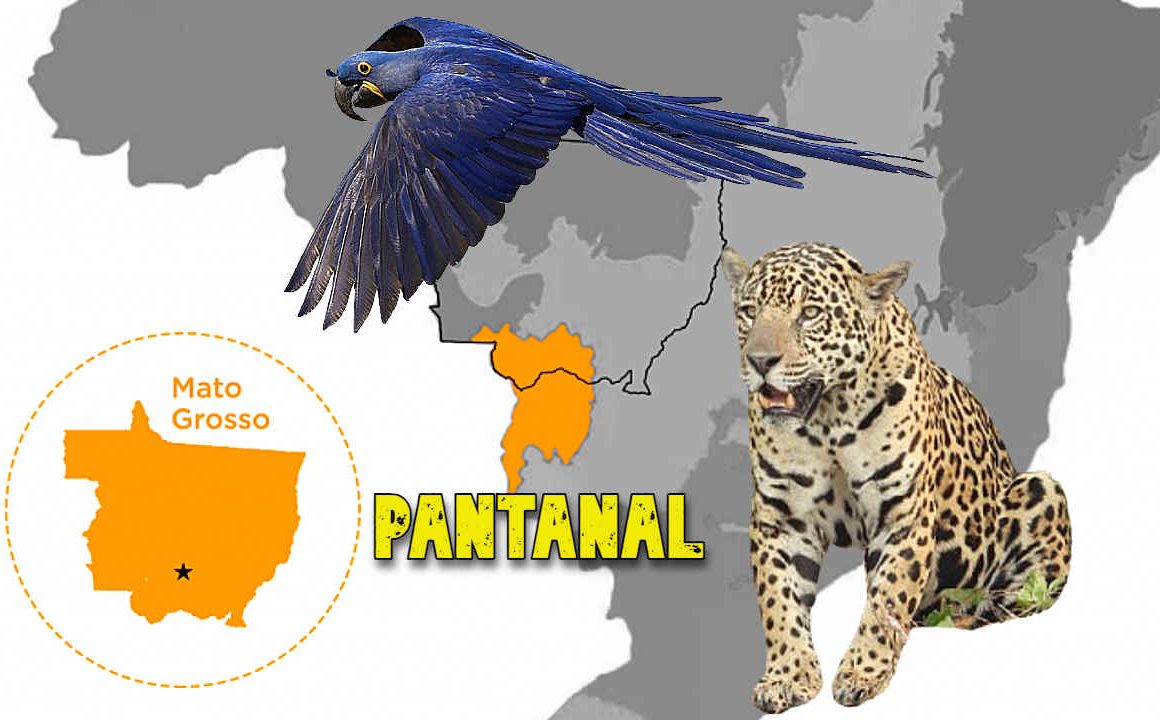
Pantanal is the world’s largest tropical wetland, covering around 150,000 square kilometers. It is home to an absolutely amazing diversity of wildlife, including the highest density of jaguars anywhere on Earth! It is often called the “Kingdom of Waters” because of its seasonal floods that shape the ecosystem. Declared a UNESCO World Natural Heritage Site and Biosphere Reserve for its ecological importance.
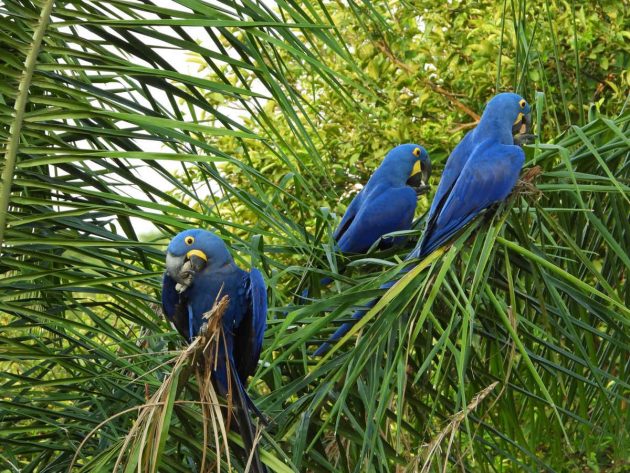
This is the busiest hotspot for bird watching and wildlife photography in Brazil. Over 650 bird species, including the Jabiru Stork, the symbol of the Pantanal, can be easily seen at the many marshes and lagoons. Although the Hyacinth Macaw, the largest parrot in the world, might be the most wanted by birders and photographers. Pantanal is not made only of birds, but also of Jaguars, Anteaters, Tapirs, Capybaras, Coatis, Monkeys, Deers, Caimans, and Anacondas, all of which are all part of the environment. A true Wildlife Safari in South America!
Pantanal during the rainy season

Key Bird Species and Families
- Hyacinth Macaw
- Yellow-collared Macaw
- Jabiru Stork
- Maguari Stork
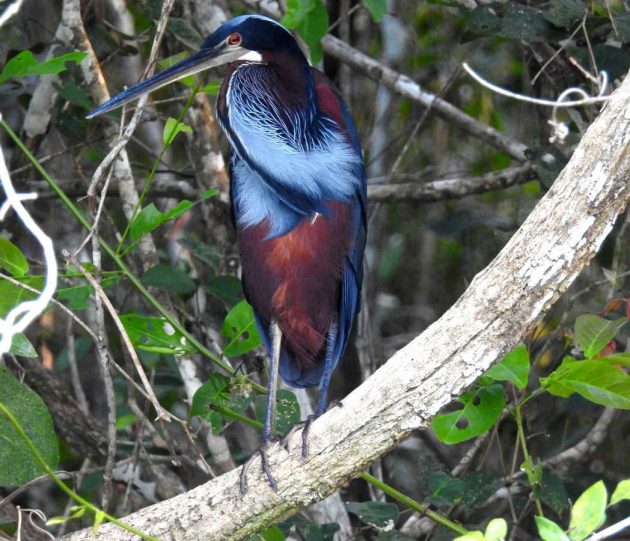
- Agami Heron
- Whistling Heron
- Green-and-rufous Kingfisher
- Black-collared Hawk
- Chestnut-bellied Guan
- Blue-throated Piping-guan
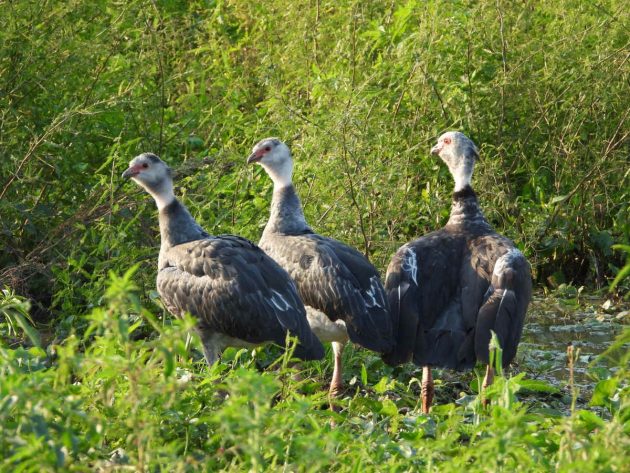
- Southern Screamer
- Scarlet-headed Blackbird
- Orange-backed Troupial
- Great Rufous Woodcreeper
- Mato Grosso Antbird
- Helmeted Manakin
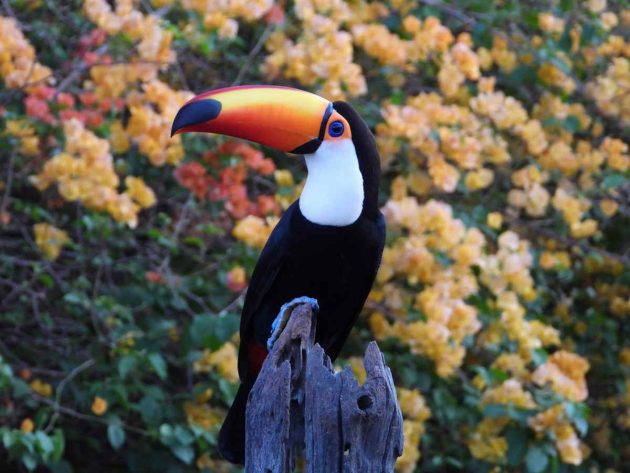
Toco Toucan (Photo: René Santos)
Best Regions for Birding
Pantanal is divided almost in half by the Cuiabá River. In the North Pantanal, the best places to bird are:
- North Pantanal is known by the famous “Transpantaneira road”, a dirt road that crosses it from North to South for more than 100 kilometers. There are many lodges along this road, and at the end, the large Cuiabá is found as a big barrier as it divides two Brazilian States. This road can be very good for birding, stop after stop. Possible birds are: Greater Rhea, Ringed Kingfisher, Savanna Hawk, Chaco Chachalaca, Whistling Heron, Southern Screamer, Limpkin, and a variety of other smaller birds.
- Piuval Lodge is the first one in the Transpantaneira, and it is a transition between the Cerrado and the Pantanal. A very old and famous lodge, and because of that, it is always busy with tourists from all over the world. The property is a 7 thousand hectares farm with lots of different kinds of habitats. On eBird, Piuval has over 500 species of birds! Some possible species are Plumbeous Ibis, Crane Hawk, Red-legged Seriema, Nacunda Nighthawk, Cream-colored Woodpecker, and Black-banded Owl, among several others. This is the best place to look for Giant Anteaters in North Pantanal.
- Aymara lodge is the next on Transpantaneira and has its grounds inside a nice and old forest filled with Howler and Capuchin Monkeys. A very charming place to stay with very good food, awesome accommodations, and birds all around the garden. The birds that are frequent there are Bare-faced Curassow, Chestnut-bellied Guan, Sunbittern, American Pygmy Kingfisher, Amazonian Motmot, White-eyed Attila, Great Rufous Woodcreeper, Crimson-crested Woodpecker, and many others. There are a couple of Hyacinth Macaws that have a nest right in the middle of the garden! The nocturnal safaris can produce Tapirs, Ocelots, Deers and even Jaguars.
- Pouso Alegre lodge is another big farm that became a hotspot for birding and wildlife photography. The lodge is quite rustic, and the food is homecooked typical Brazilian food. They have feeders that can attract Yellow-billed Cardinals, Giant Cowbirds, Chopi Blackbirds, Greyish Baywings, Chestnut-eared Araçaris, and even Toco Toucans. There is a tall canopy tower and several trails to visit. The nocturnal safaris can be very productive.
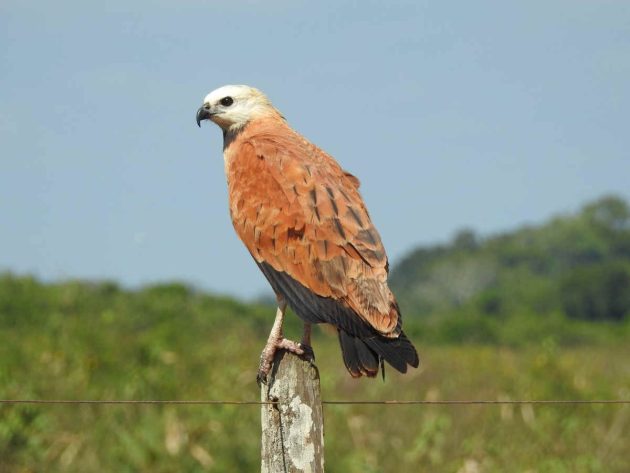
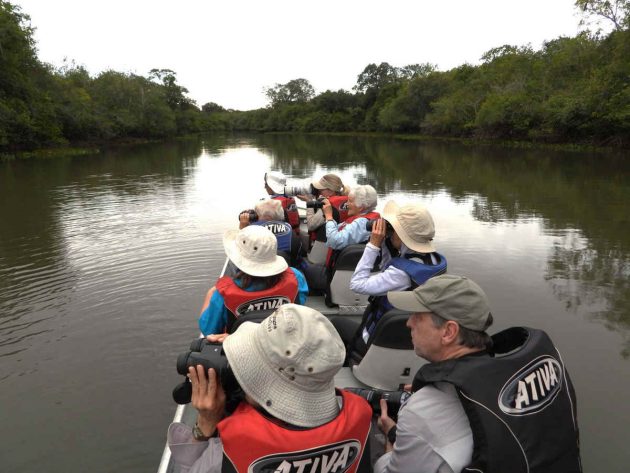
- Rio Claro lodge is famous for its very nice and pleasant boat rides. The river that gives its name is teeming with life. The most wanted birds there are: Jabiru Stork, Sunbittern, Agami Heron, Zigzag Heron, Green-and-rufous Kingfisher, Black-collared Hawk, Rufescent Tiger-heron, Rusty-backed Spinetail, and Lesser Kiskadee, among several others. The feeders normally have Chestnut-bellied Guans, Nanday and Monk Parakeets, Red-crested and Yellow-billed Cardinals, and a few others.
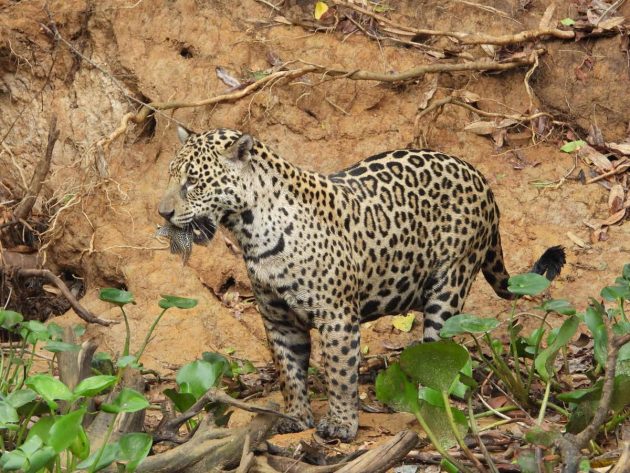
- After crossing many small bridges, you will find the big Cuiaba River, which is “Porto Jofre”. The two largest and best lodges to stay are “Pantanal Norte” and “Santa Rosa”. Both have great accommodation and fantastic food. Birding the grounds can render some great views of Hyacinth and Yellow-collared Macaws, Southern Screamers, Whistling Herons, Wattled Jacanas, Large-billed and Yellow-billed Terns, and others. Those are the lodges that offer the best Jaguar safaris at the “Encontro das Águas State Park”.
- The Jaguar Safari on aluminium boats is made on several rivers around the lodges. After the first and unforgettable jaguar encounter, the pressure is off, and we can pay more attention to the birds. The possible birds on this adventure are many. Anhingas and Neotropical Cormorants abound there, Rufescent Tiger-herons, Cocoi Herons, and Great White Egrets are also very common. Black-collared and Great Black Hawks are very photogenic and are worth stopping the boats a hundred times! Monk, Blue-crowned, White-eyed, and Yellow-chevroned Parakeets are common sightings there. Pay attention, and you might find Giant Otters fishing around!
Black-collared Hawk (Photo: René Santos)
Best Birding Season
Pantanal in the rainy season doesn’t work for obvious reasons. The dry season is from June to October. The very best months (and also most busy) are July, August, and September as flocks of birds gather on drying creeks and ponds, a true feast. Good to look for Anacondas crossing the road.
Jaguar (Photo: René Santos)
Birding Trip Suggestion(s)
To visit Pantanal, you don’t need to pay an entrance fee. You can rent a car and drive for 2 hours to Poconé, the entrance of the North Pantanal.
Remember to make reservations at least one year in advance, as Pantanal is busy. Same thing regarding hiring a guide. Please give preference to Brazilian guides. Also, make sure your guide is provided with a private accommodation, otherwise he will be sleepy and exhausted after the first couple of days of your tour (as there is no proper rest in shared rooms with bus drivers).
Hyacinth Macaw (Photo René Santos)
Practical Tips
Even if you are not planning to visit Pantanal in the rainy season, it is advisable for you to rent a 4×4 car, as rain can be unpredictable. Be very careful driving at night on the Transpaneira road. During the day, when stopping for a picture, don’t stay too far from your car, van, or group. Same thing for trails, avoid having solo strolls, especially at night. Jaguars are very big cats.
It can be quite warm on some days, so always bring a bottle of water with you and wear a hat. Wear long pants if you are hiking through trails, and bring insect repellent. If you are allergic to insect bites, bring your proper medicine.
The outings must be made very early (5 am), as around 9 or 10 am, it might be too warm to have any bird or wildlife activity. The afternoons only start after 3:30 pm and are usually combined with a night safari.
You will take thousands of pictures a day everyday, so be prepared in regard to batteries and memory cards. Bringing a universal outlet plug adaptor might save you.
Southern Screamer (Photo: René Santos)
Books
- Birds of Brazil: A Field Guide – Ber Van Perlo
- Birds of Brazil: Pantanal and Cerrado – Martha Argel
Agami Heron (Photo: René Santos)
Links
- Piuval Lodge – Pousada Piuval | Convenience and comfort in Mato Grosso
- Aymara Lodge – HOME | Aymara Lodge | Mato Grosso
- Pouso Alegre Lodge – Pantanal | Pouso Alegre Lodge | Brasil
- Rio Claro Lodge – Pousada Rio Claro
- Pantanal Norte Lodge – Hotel Porto Jofre – Pantanal Norte
- Santa Rosa Lodge – INÍCIO – Santa Rosa Pantanal Hotel
Tourist group at Rio Claro (Photo: René Santos)
By René Santos
René Santos is a bird guide based in SaoPaolo, Brazil. René can be reached at renearara@gmail.com and has been profiled in our series on global bird guides. He is also present on YouTube.





Yep. Another dream of mine…
When my wife and I were taken by my Brazilian godson and his parents to the Pantanal we did not see any large snakes or jaguars, but boy, did we see a lot of birds! Macaws and parrots everywhere, little dinky birds and even the ever-disappointing hummingbirds, it’s all rather splendid.