
Which bird species do you think is the biggest attraction to visitors of your lodge?
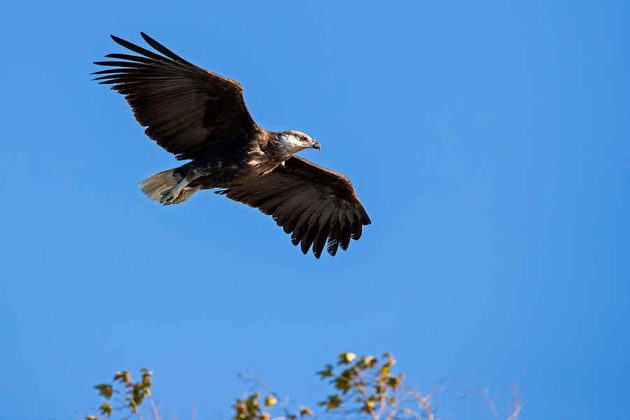
The Madagascar Fish Eagle (Haliaeetus vociferoides). Majestic, rare, and endemic to Madagascar, this extraordinary bird of prey is one of the treasures of Anjajavy. Our protected area offers exceptional opportunities to observe the Madagascar Fish Eagle (photo: David Pattyn) in its natural environment, particularly during an excursion to the spectacular Moramba Bay. But perhaps what makes this encounter so special is not simply seeing the bird. It is the feeling of entering its world, quietly and respectfully, at the other end of the world.
What is the name of your lodge, and since when has your lodge been operating?
Our name is Anjajavy le Lodge.
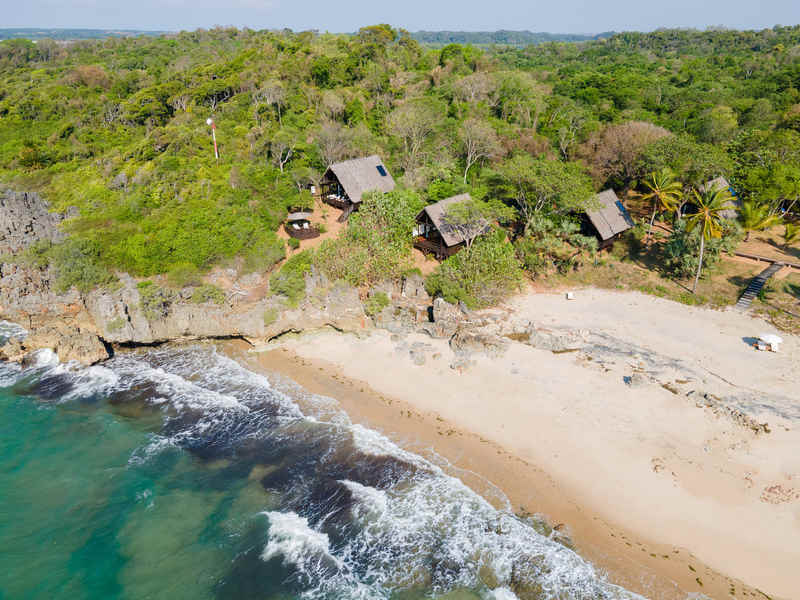
It all began in 2000, when Dominique Prat discovered the Anjajavy peninsula while exploring some of the most remote lands of Madagascar. Fascinated by the beauty and exceptional biodiversity of this place, he decided to create a lodge here, with a vision of integrated ecotourism dedicated to preserving this unique environment.
In 2010, the Rajabali family took over Anjajavy le Lodge and continued this adventure with the same commitment to conservation, while placing an even stronger emphasis on the relationship between nature and local communities.
Today, Anjajavy is much more than a place to stay. It is an invitation to travel differently: to slow down, reconnect with nature and allow ourselves to be transformed by the encounters we make along the way.
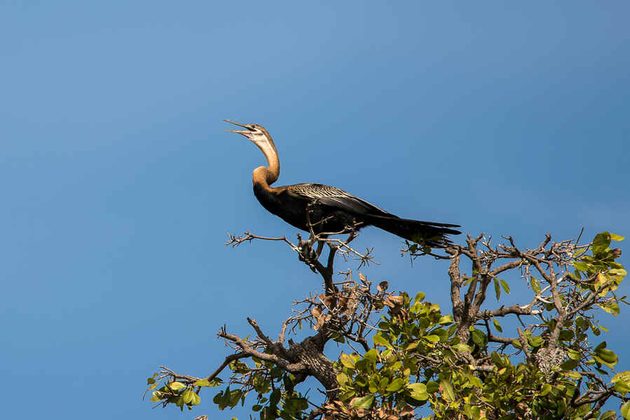
African Darter (photo: Louise Jasper)
How best to travel to your lodge?
Anjajavy is truly at the end of the world. There is no road access to the Lodge. The most comfortable and direct way to reach us is by air, with regular flights connecting Antananarivo to Anjajavy three times a week. The flight takes approximately 1 hour 40 minutes. From our private airstrip, the journey continues through the protected area before reaching the Lodge. We believe this remoteness is part of the experience. Leaving the roads and the noise of everyday life behind prepares us for something different: a peaceful journey into a place where nature sets the pace.
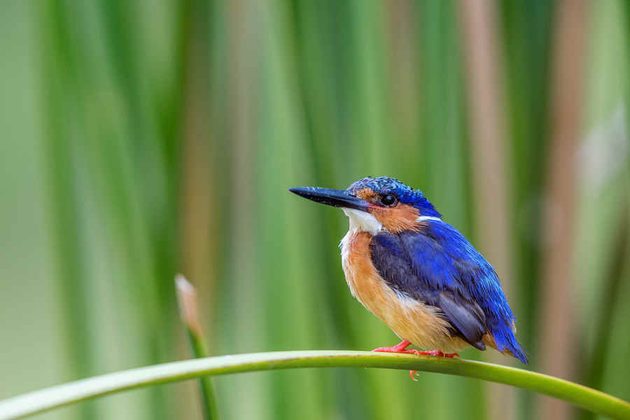
Madagascar Kingfisher (photo: David Pattyn)
What kind of services – except for accommodation and food – does your lodge offer to visiting birders
Anjajavy is a natural playground for birdwatchers and lovers of wildlife. Our guests can explore the protected area along marked trails, independently or accompanied by one of our naturalist guides. Our guides know the forest intimately and are delighted to share their knowledge and passion for the extraordinary biodiversity of Anjajavy. Day walks can be complemented by night walks, when another world awakens.
We particularly recommend exploring the different habitats of Anjajavy (dry deciduous forest, mangroves, coastline and marine environments) as each ecosystem offers different opportunities for discovery.
A boat excursion to Moramba Bay is especially rewarding. There, surrounded by spectacular limestone formations and ancient baobabs, guests can search for the Madagascar Fish Eagle while discovering the exceptional landscapes and wildlife of the bay.
And perhaps this is the most important thing for a birder to remember at Anjajavy: We are the visitors here. The birds, lemurs, and other animals are not here to visit us. This is their home, and we are privileged to be invited into their world.
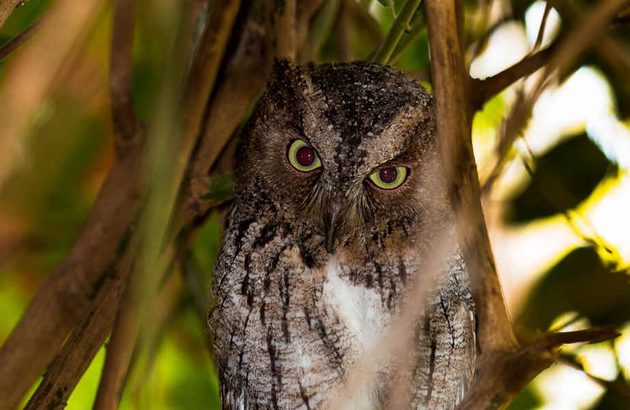
Madagascar Scops Owl
What makes your lodge special?
At Anjajavy, we like to think that we are the ones being invited into the world of the lemurs. We are guests in their forest, in their home, in their territory. The Coquerel’s sifakas and other lemurs are not here to entertain us or to visit the Lodge. They live here. We are the ones who have the privilege of entering their world and discovering it, quietly and respectfully. This is what makes Anjajavy so special.
At the end of the world, on a remote peninsula in northwestern Madagascar, far from the noise and rhythm of everyday life, nature sets the pace. The forest, the sea, the mangroves, the baobabs and the wildlife invite us to slow down, to observe, to listen and simply to be present. Anjajavy is therefore much more than a lodge or a destination. It is a journey in the truest sense of the word: a journey that takes us far away geographically, but also brings us closer to what really matters.
Here, encounters are at the beginning of everything: encounters with the forest and its extraordinary biodiversity, with our guides who generously share their knowledge and love of this land, and with the communities who live alongside this protected environment. And these encounters have the power to transform us.
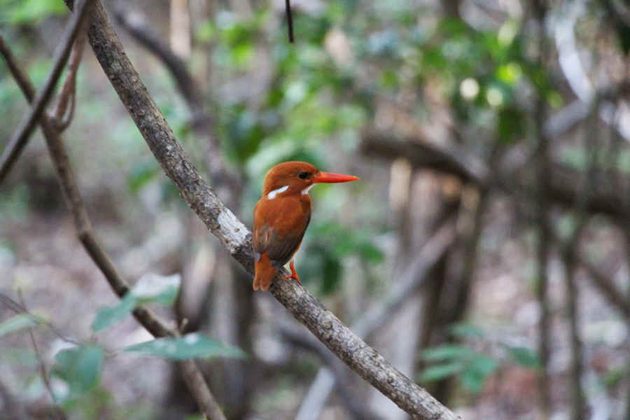
Madagascar Pygmy Kingfisher (photo: Cédric & Meryl MARTIN)
What are the 10–20 most interesting birds that your lodge offers good chances to see?
Anjajavy’s biodiversity inventories record more than 134 bird species, making the protected area a remarkable destination for birdwatchers and naturalists. Among the most emblematic birds to look for are:
- Madagascar Fish Eagle (Haliaeetus vociferoides)
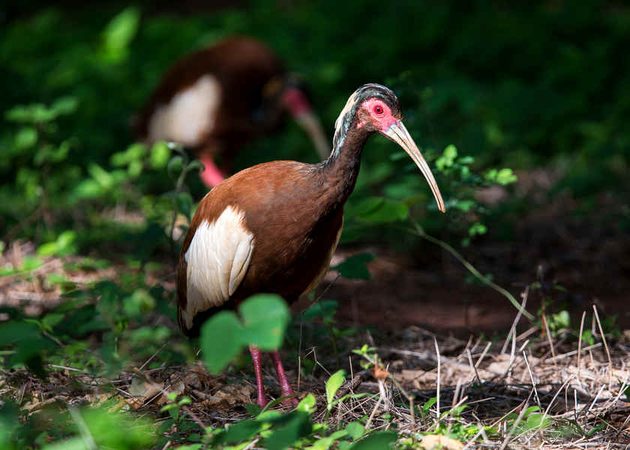
- Madagascar Crested Ibis (Lophotibis cristata)
- Madagascar Mannikin (Lepidopygia nana)
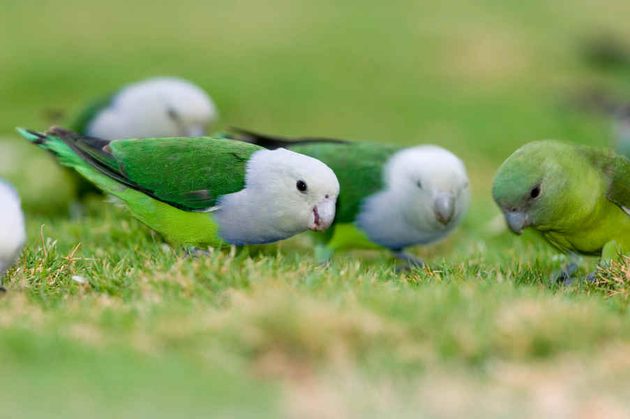
- Grey-headed Lovebird (Agapornis canus)
- African Darter (Anhinga rufa)
- Caspian Tern (Sterna caspia)
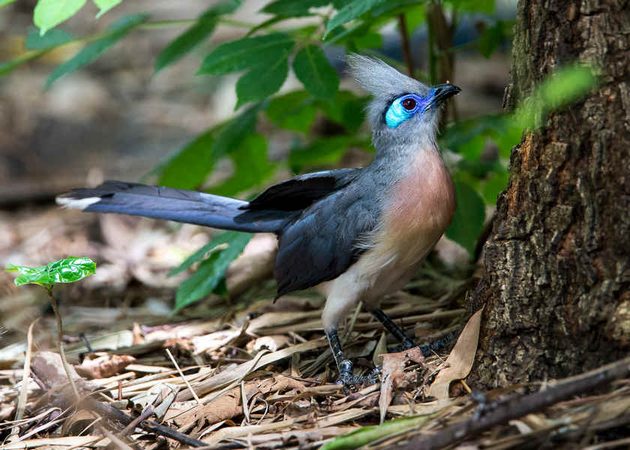
- Crested Coua (Coua Cristata)
- Madagascar Hoopoe (Upupa marginata)
- Madagascar Crested Drongo (Dicrurus forficatus)
- Madagascar Kingfisher (Corythornis vintsioides)
- Madagascar Pygmy Kingfisher (Ceyx madagascariensis)
- Madagascar Scops Owl (Otus rutilus)
- Long-billed Tetraka (Bernieria madagascariensis)
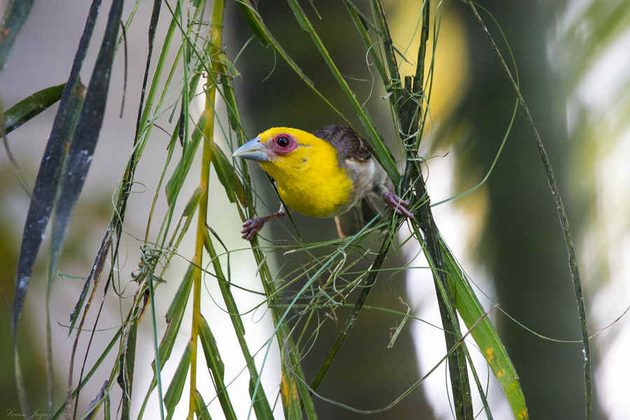
- Sakalava Weaver (Ploceus sakalava)
- Grey Heron (Ardea cinerea)
- Souimanga Sunbird (Cinnyris souimanga)
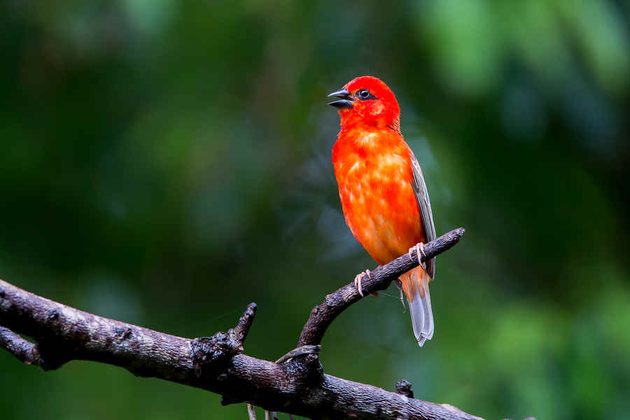
- Madagascar Red Fody (Foudia madagascariensis)
Among these, the Madagascar Fish Eagle, Madagascar Crested Ibis and Madagascar Red Fody are particularly emblematic of Anjajavy and are specifically highlighted in our biodiversity information. However, the most memorable encounter may not always be the rarest bird. Sometimes, it is simply the moment when we realise that we are guests in a living world that was here long before us.
Madagascar Red Fody
What is the best time to visit your lodge, and why?
For birdwatchers, we recommend choosing the period according to the experience they are looking for. The biodiversity of Anjajavy is present throughout the year, and each season offers its own discoveries.
The dry season, generally from April/May to October, is particularly pleasant for exploring the forest and walking the trails. The weather is more comfortable, and the paths are easier to explore.
The greener months bring another atmosphere to the peninsula, with lush vegetation and
seasonal changes in wildlife activity.
The Lodge is seasonally closed from 15 January to 15 March, during the period of greatest
cyclone risk.
Madagascar Crested Ibis
Is your lodge involved in conservation efforts? If yes, please describe them.
Conservation is at the heart of Anjajavy. Our protected landscape combines a 1,030-hectare Private Reserve with the 9,773-hectare official Protected Area, representing more than 10,800 hectares of protected land in total. The official Protected Area was accepted in 2017 and established by government decree in April 2018.
Our conservation projects include the protection of dry deciduous forests and their endemic biodiversity, the preservation of mangrove ecosystems, the protection of our private marine reserve, reforestation projects, and the reintroduction of endangered species.
The reintroduction of Madagascar’s giant tortoises is particularly symbolic. Anjajavy has been involved in restoring an important component of Madagascar’s lost megafauna, alongside projects dedicated to endangered species such as the aye-aye.
But for us, conservation cannot exist without people. Since the Rajabali family acquired Anjajavy in 2010, cooperation with local elected representatives and village communities has continued to grow. A Representative Council brings together the Lodge, elected representatives and village representatives to discuss projects, budgets and the management of the Private Reserve. Our vision is simple: nature conservation and community development must move forward together.
Grey-headed Lovebird (photo by Blin)
What other suggestions can you give to birders interested in visiting your lodge?
Come without rushing: At Anjajavy, the most beautiful encounters cannot be scheduled. A bird appearing between two branches, a sifaka leaping through the canopy, the silhouette of a Madagascar Fish Eagle above the water, a conversation with a local guide, or a meeting with a village community can become the moments that remain with us long after we have left.
Bring good binoculars, a camera if you enjoy wildlife photography, a Madagascar bird field guide, comfortable walking shoes, sun protection, and insect repellent. A small flashlight or headlamp is useful for night walks.
But above all, bring curiosity and time. Let yourself be guided. Our naturalist guides know the forest intimately. They will help you see what might otherwise remain invisible: a movement in the canopy, a call in the distance, the signs left by an animal, or the story of a plant that has been part of this ecosystem for generations. We are the visitors here. The best way to experience Anjajavy is therefore with respect, patience, and wonder.
Crested Coua (photo: Louise Jasper)
Do you have activities for non-birders? If so, please describe.
- Absolutely. Anjajavy is a destination for all lovers of nature, adventure and beauty. Guests can explore the forest, discover the mangroves, walk along the beaches, go kayaking, paddleboarding, snorkelling or traditional sailing, or set out by boat towards the extraordinary landscapes of Moramba Bay.
- Night walks offer another way of entering the forest, when the nocturnal world awakens and reveals a completely different side of Anjajavy.
- Guests can also discover the neighbouring communities and their traditions, and experience the cultural richness of the Sakalava people.
- For those who love the sea, Moramba Bay offers an exceptional marine experience, with its turquoise waters, limestone formations, ancient baobabs, beaches, sea turtles, and rich marine ecosystem
Sakalava Weaver (photo: Louise Jasper)
If any reader of 10,000 Birds is interested in staying at your lodge, how can they best contact you?
We would be delighted to welcome them to Anjajavy. Our booking office can be contacted directly:
- Anjajavy le Lodge – Booking Office
- 1st Floor, Shopping Center DYVE GARDEN
- Anosivavaka, Antananarivo 101, Madagascar
- Telephone: +261 (0) 34 44 447 47
- Email: bookings@anjajavy.com
- Guests can also contact us through the reservation form on our website: anjajavy.com
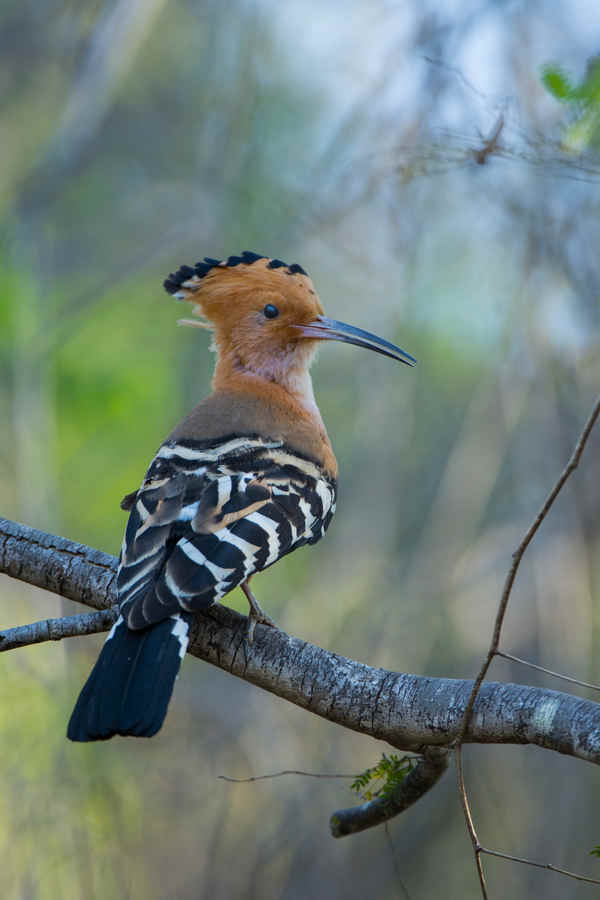
Madagascar Hoopoe (photo: Sam Rowley)
Is there anything else you would like to share with the readers of 10,000 Birds?
Perhaps this is what we would most like the readers of 10,000 Birds to understand about Anjajavy:
You do not come here simply to see Madagascar. You come here to meet it. And when you meet a place like Anjajavy, you quickly understand that you are not the centre of the story. The lemurs are at home here. The birds are at home here. The forest is at home here. The communities have lived with this land for generations.
We are the guests. At the other end of the world, in the peaceful and remote landscape of Anjajavy, this change of perspective can be deeply liberating. We are part of a much larger living world. And perhaps this is the greatest gift that Anjajavy can offer: the opportunity, for a few precious days, to step away from our usual lives, reconnect with nature and with others, and return home carrying something that cannot be packed into a suitcase: a different way of seeing the world.
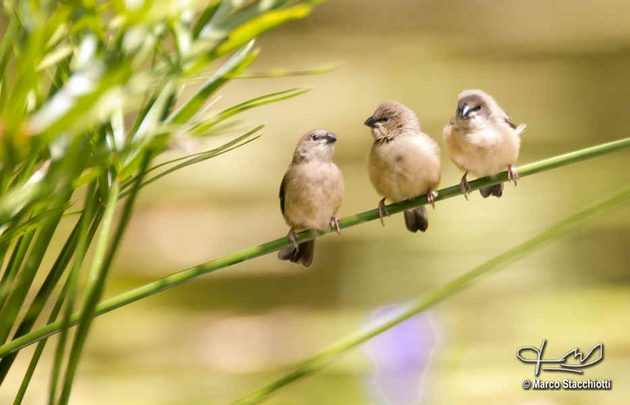
Madagascar Mannikin (photo: Marco Staccioti)

Leave a Comment