

Which bird species do you think is the biggest attraction to visitors to your lodge?
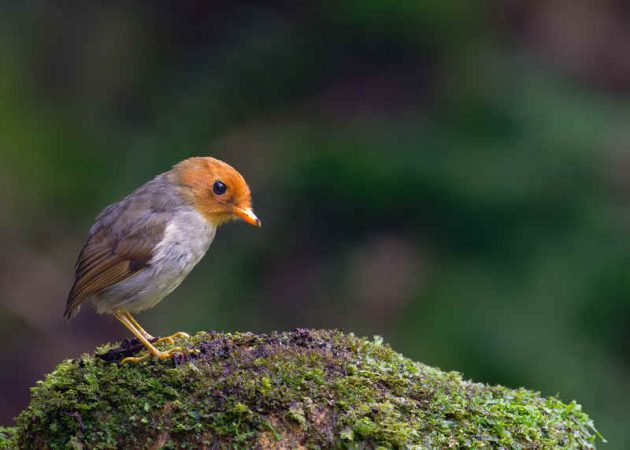
The Hooded Antpitta (Grallaricula cucullata) is one of Colombia’s most mythical and highly sought-after birds. At La Drymophila, we have the only specialized feeding station we know of where this species can be seen easily and regularly, giving our visitors an exceptional opportunity to observe and photograph it at close range.
What is the name of your lodge, and since when has your lodge been operating?
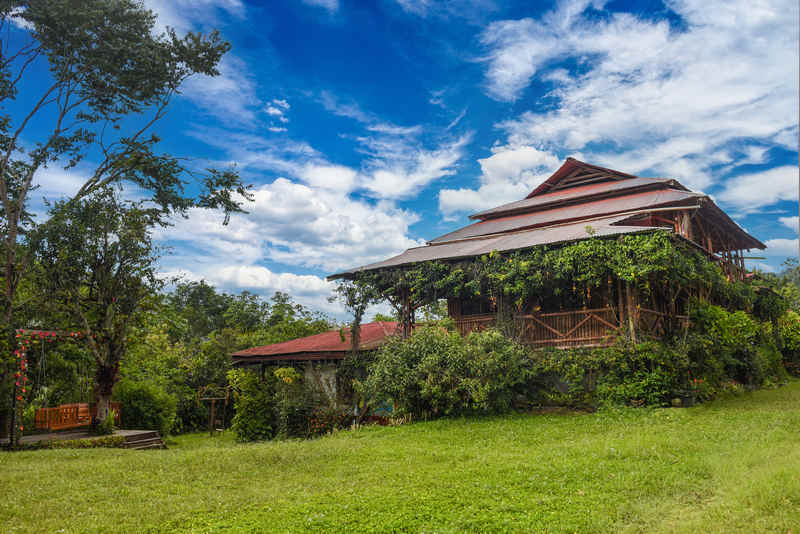
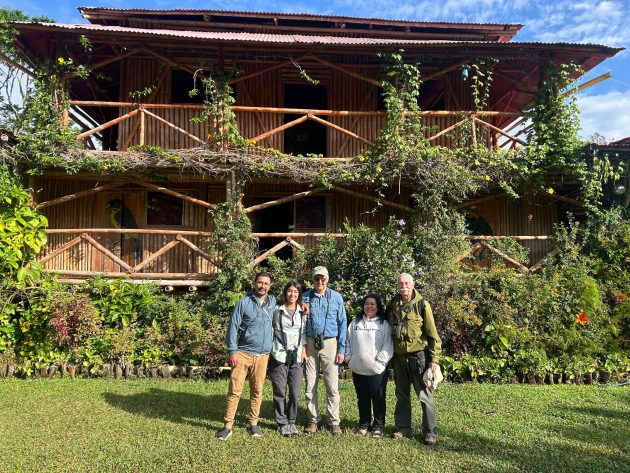
Our lodge is called El Encanto. Its name dates back to 1997, when our family purchased the property. During the construction of the house, an ancient Indigenous guaca – a traditional burial or ceremonial deposit – was discovered. This led people in the local community to say that the place was “enchanted,” or encantado in Spanish.
In 2015, El Encanto was officially declared a Civil Society Nature Reserve, and since then it has focused on nature tourism specializing in birdwatching and bird photography.
How best to travel to your lodge?
The best way to reach El Encanto is to travel first to Pitalito, Huila, where Contador Airport is located. The airport has daily flights from Bogota, as well as regional connections from Cali and Medellin. From Pitalito, El Encanto is approximately 22 kilometers away by paved road, with a journey time of about one hour. We can also help arrange transportation from the airport or from the city to the reserve.
What kind of services – except accommodation and food – does your lodge offer to visiting birders?
El Encanto offers both introductory and specialized birdwatching and bird photography guiding services, adapted to beginners as well as experienced birders with specific target species. To complement the experience, we have photography hides and specialized feeding stations for different groups of birds, allowing visitors to observe and photograph them under favorable conditions.
We also offer local transportation and logistical support for organizing visits to the different birding sites in the region.
What makes your lodge special?
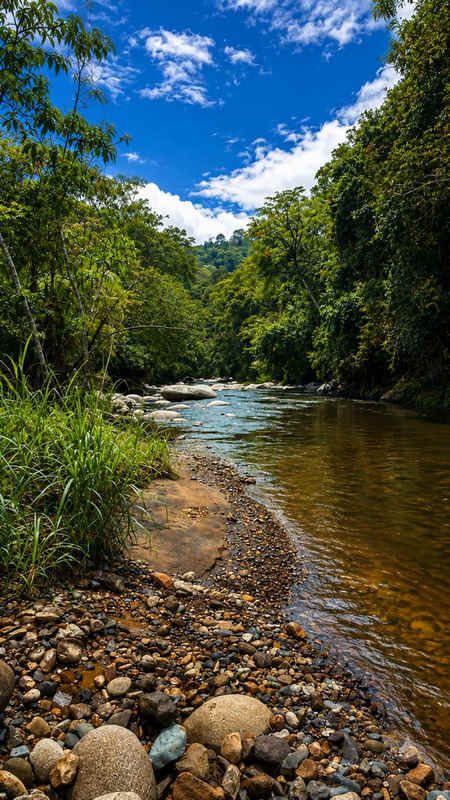
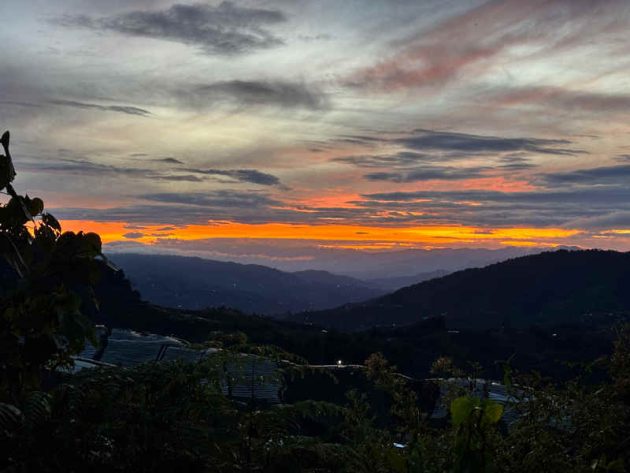
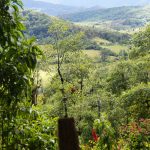
What makes El Encanto special is the opportunity to explore three privately protected nature reserves with different habitats and elevations, all located within a radius of less than eight kilometers. This circuit provides a very complete birding experience without requiring long transfers:
- El Encanto, at 1,350 meters above sea level, is our main reserve and the location of the lodge, restaurant, feeding stations, and photography hides.
- La Drymophila, at 2,000 meters and ecologically connected to Cueva de los Guacharos National Natural Park, protects Andean forest and is home to many of southern Colombia’s most sought-after birds. Several species can be observed from specialized feeding stations and photography hides.
- El Alma, at 1,200 meters, protects open habitats and wetlands currently undergoing restoration, adding different species and landscapes that complement the overall experience.
Together, the three reserves form a birding corridor between 1,200 and 2,000 meters in elevation, where more than 400 bird species have been recorded, including nine endemic species.
What are the 10-20 most interesting birds that your lodge offers good chances to see?
Some of the most interesting species that visitors have good opportunities to observe at El Encanto include:
- Hooded Antpitta (Grallaricula cucullata)
- Tolima Blossomcrown (Anthocephala berlepschi)
- Tolima Dove (Leptotila conoveri)
- Dusky-headed Brushfinch (Atlapetes fuscoolivaceus)
- Velvet-fronted Euphonia (Euphonia concinna)
- Apical Flycatcher (Myiarchus apicalis)
- East Andean Antbird (Drymophila caudata)
- Colombian Chachalaca (Ortalis columbiana)
- Black-chested Fruiteater (Pipreola lubomirskii)
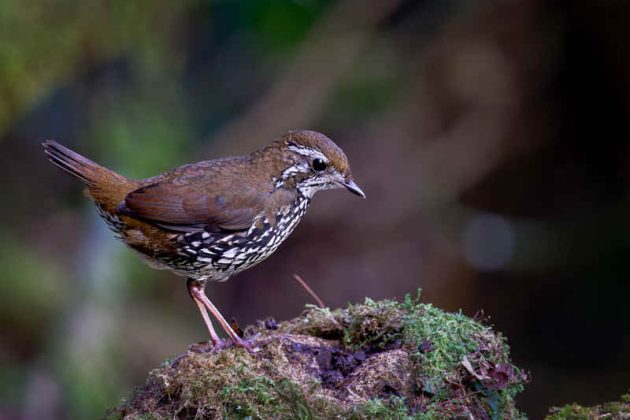
- Schwartz’s Antthrush (Chamaeza turdina)
- Violet-fronted Brilliant (Heliodoxa leadbeateri)
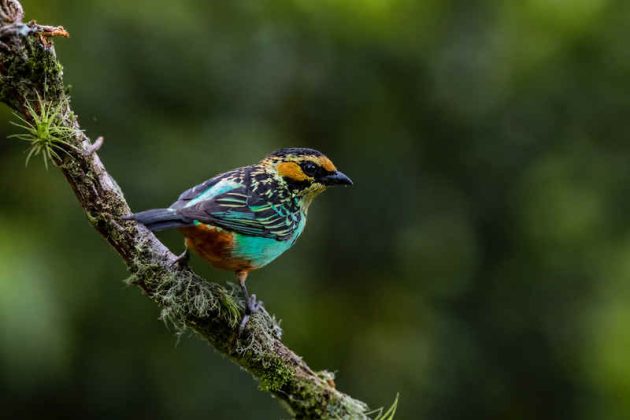
- Golden-eared Tanager (Tangara chrysotis)
- Flame-faced Tanager (Tangara parzudakii)
- White-booted Racket-tail (Ocreatus underwoodii)
- Chestnut Wood-Quail (Odontophorus hyperythrus)
- Yellow-throated Spadebill (Platyrinchus fulvigularis)
- Black-streaked Puffbird (Malacoptila fulvogularis)
- Black-billed Treehunter (Thripadectes melanorhynchus)
- Western Fire-eye (Pyriglena maura)
- Uniform Antshrike (Thamnophilus unicolor)
This selection includes endemic and range-restricted species, forest specialists, and birds that are particularly attractive for photography. Several of them can be observed with good regularity from our specialized feeding stations and hides.
Schwartz’s Antthrush (photo: Johnnier Arango)
What is the best time to visit your lodge, and why?
El Encanto can be visited throughout the year, as most of our emblematic, endemic, and forest specialist species are resident. Between October and April, the arrival of boreal migrants adds further diversity to the birds already present in the region.
For visitors particularly interested in hummingbirds, the period from July to October usually brings increased activity at our feeding stations, providing excellent opportunities for observation and photography. However, climate change is altering traditional patterns of rainfall, flowering, food availability,
and bird activity, so seasonal conditions can vary from one year to another. For this reason, we recommend contacting El Encanto directly before planning a visit. We can provide current information about bird activity and help visitors select the most suitable dates according to their target species.
Is your lodge involved in conservation efforts? If yes, please describe them
Yes. Conservation is the foundation of El Encanto. Our work began with the transformation of a coffee farm into a property that was more favorable for wildlife through habitat restoration, the planting of native trees, and the adoption of more sustainable agricultural practices. During this process, our family has planted more than 2,000 trees that provide food and habitat for birds. In 2015, the property was officially recognized as a Civil Society Nature Reserve.
Today, El Encanto protects different ecosystems through forest restoration, wetland recovery, biological monitoring, environmental education, responsible nature tourism, and the maintenance of specialized feeding stations and photography hides. These actions help protect endemic, threatened, and range-restricted species while also creating economic opportunities for our family and nearby communities.
In 2026, we added 12 new hectares of Andean forest to our conservation efforts. Located at 2,000 meters above sea level, this land had been affected by timber extraction and was at risk of being converted into pasture or monoculture. The area protects black oaks, critically endangered Colombian magnolias, several streams, and three natural water springs. It also strengthens ecological connectivity with Cueva de los Guacharos National Natural Park.
The story of El Encanto, documented by the American Birding Association, shows how birdwatching enabled a rural family to protect its land, restore forest, and build an alternative economy around biodiversity. Our goal is to demonstrate that conservation and nature tourism can work together to keep forests standing and ensure their long-term protection.
Golden-eared Tanager
What other suggestions can you give to birders interested in visiting your lodge?
We recommend bringing comfortable clothing suitable for humid and rainy conditions, a waterproof jacket, footwear with good traction, insect repellent, and sunscreen. Because activities take place between approximately 1,200 and 2,000 meters above sea level, dressing in layers is advisable, as temperatures can change throughout the day.
We also suggest bringing binoculars, rain protection for cameras and optical equipment, a small backpack, a reusable water bottle, and any necessary personal medication. Some birding days begin very early and may include walks along mountain trails, so visitors should inform us in advance of any physical limitations or special requirements.
To make the most of the visit, we recommend sharing a target-species list with us beforehand. This allows us to organize the most suitable routes, schedules, guides, and birding locations for each visitor.
Do you have activities for non-birders? If so, please describe them.
Yes. El Encanto offers hiking and environmental interpretation activities, during which visitors can learn about the forests, wetlands, landscapes, and conservation processes within our reserves, accompanied by local guides.
We also offer a flower tour focused on finding and interpreting native plant species, particularly orchids, as well as a coffee tour, where visitors can learn about one of the region’s most important products, including its cultivation, processing, and connection to local culture. These experiences allow visitors to enjoy the natural and cultural identity of the region without needing any previous knowledge of birds.
If any reader of 10,000 Birds is interested in staying at your lodge, how can they best contact you?
Our preferred methods of contact are email and WhatsApp:
- Email: info@elencantonaturereserve.com
- WhatsApp: +57 322 711 6781
Readers can also learn more about El Encanto and follow our latest news through:
- Instagram: @elencantonaturereserve
- Facebook: @ElEncantoNatureReserve
- Website: elencantonaturereserve.com
Is there anything else you would like to share with the readers of 10,000 Birds?
El Encanto operates by advance reservation only. To confirm a visit, we require a deposit of 30% of the total amount, with the remaining balance payable during the stay. We recommend booking in advance, particularly when specialized guides, transportation, or target-species itineraries are required.
We also follow a policy of responsible playback use. Playback is restricted to our guides and is used only when necessary, for short periods, and at a moderate volume. We do not use playback near nests, during breeding behavior, with sensitive species, or when any signs of stress are observed. We ask visitors not to use playback independently. Our priority is to provide excellent birdwatching and photography opportunities without unnecessarily disturbing the birds’ natural behavior.
Photos of Hooded Antpitta and Schwartz’s Antthrush were taken by Johnier Arango / The Andean Birder. All other photographs by El Encanto Nature Reserve.








Sounds like a fabulous place to visit. Some of the birds mentioned have wonderful names – I’d love to see a Tolima Blossomcrown or a Violet-fronted Brilliant.