
Which bird species do you think is the biggest attraction to visitors of your lodge (please only name one species)?
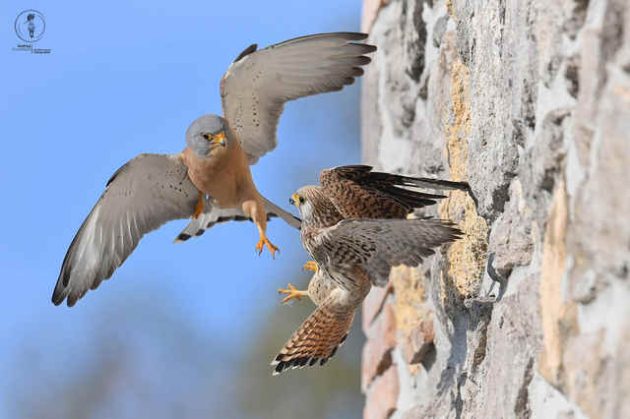
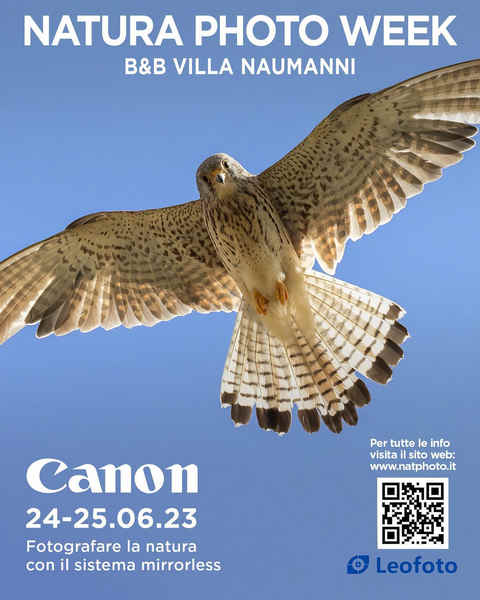
Lesser Kestrel (Falco naumanni)
What is the name of your lodge, and since when has your lodge been operating?
Locanda Villa Naumanni – open 2013
How best to travel to your lodge?
By car: Fly to Rome Fiumicino, then rent a car; take the highway for 50 km.
What kind of services – except for accommodation and food – does your lodge offer to visiting birders?
Photo booths; guided tours available upon request and must be scheduled in advance.
What makes your lodge special?
Only colony of the Falco naumanni in central and northern Italy; the hawk nests in the cavities in the walls of the house
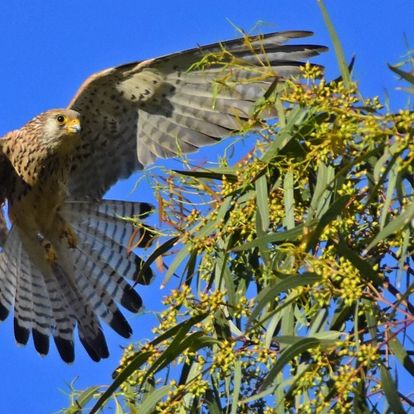
What are the 10 – 20 most interesting birds that your lodge offers good chances to see?
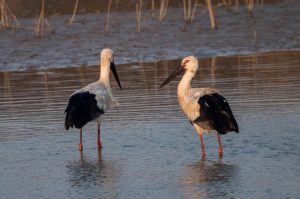
1. Black Stork (Ciconia nigra)(E)
2. White Kite (Circaetus gallicus) (N)
3. Red Kite (Milvus milvus)(N)
4. Black Kite (Milvus migrans) (N)
5. Marsh Harrier (Circus aeruginosus)(M)
6. Hen Harrier (Circus cyaneus) (M)
7. Harrier lesser (Circus pygargus) (N)
8. White-tailed Buzzard (Buteo rufinus) (E)
9. Honey Buzzard (Pernis apivorus) (N)
10. Lesser Kestrel (Falco Naumanni ) (N)
11. Red-footed Falcon (Falco vespertinus) (M)
12. Hobby (Falco subbuteo) (N)
13. Queen’s Hawk (Falco eleonorae)(E)
14. Peregrine falcon (Falco peregrinus) (N)
15. Sparrowhawk (Accipiter nisus)(N)
16. Quail (Coturnix coturnix) (N)
17. Long-eared Owl (Burhinus oedicnemus) (N)
18. Crested Cuckoo (Clamator glandarius) (N)
19. Scops Owl (Otus scops) (N)
20. Nightjar (Caprimulgus europaeus) (N)
21. Great Swift (Apus melba) (M,N?)
22. Hoopoe (Upupa epops) (N)
23. Bee-eater (Merops apiaster) (N)
24. European Roller (Coracias garrulus) (N)
25. Little-eared Duck (Galerida crestata) (N)
26. Woodlark (Lullula arborea) (N)
27. Calandrella (Melanocorypha calandra) (N)
28. Woodpecker (Calandrella brachydactyla) (N)
29. Rufous Swallow (Cecropis daurica)(N)
30.Calandrum (Anthus campestris)(N)
31. White Wheatear (Oenanthe oenanthe)(M)
32. Wheatear (Oenanthe hispanica)(M)
33. Stonechat (Saxicola torquatus)(N)
34. Whinchat (Saxicola rubetra)(M)
35. Blue Rock Thrush (Monticola solitarius)(N)
36. Sardinian Warbler (Sylvia melanocephala)(N)
37. Common Whitethroat (Sylvia communis)(N)
38. Sardinian Whitethroat (Sylvia conspicillata(
N) 39. Common Whitethroat (Sylvia cantillans)(N)
40. Little Cisticola (Cisticola juncidis)(N)
41. Cetti’s Warbler (Cettia cetti)(N)
42. Woodchat Shrike (Lanius senator)(N)
43. Red-backed Shrike (Lanius collurio)(N)
44. Grey Shrike (Lanius minor)(N)
45. Eurasian Golden Oriole (Oriolus oriolus)(N)
46. Corn Bunting (Emberiza calandra)(N)
47. Cirl Bunting (Emberiza cirlus)(N)
48. Black-capped Bunting (Emberiza melanocephala)(N)
49. Ortolan Bunting (Emberiza hortulana)(N)
Some of them are passing through during the migration period between March and May (M), others are nesting (N) and/or summer visitors (E) and are present from the end of March (April) to the end of August (September).
What is the best time to visit your lodge, and why?
- Courtship – March/April
- Mating – April/May
- Incubation – May/June
- Fledging – June/July
- Fleeting – July/August
Is your lodge involved in conservation efforts? If yes, please describe them.
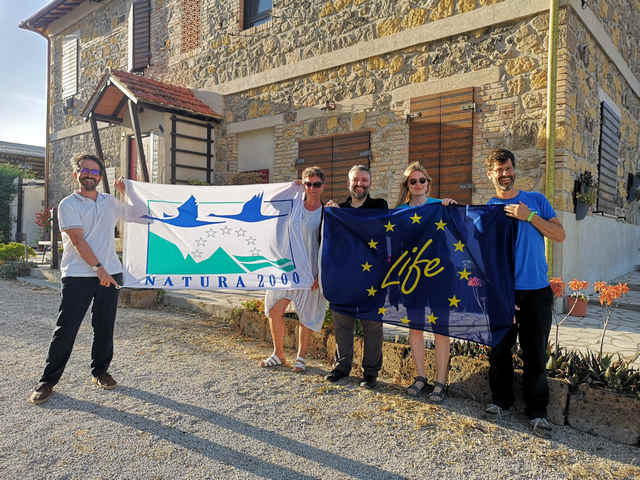
We are a privately managed natural area recognized by the European Community’s LIFE EPCN project; Natura 2000 network
What other suggestions can you give to birders interested in visiting your lodge? (for example, what to bring, how to prepare for the visit, etc.)
No special equipment is required. The activity takes place in the garden and at the photography stations.
Do you have activities for non-birders? If so, please describe.
Our property is located 5 minutes from the historic center of Tarquinia, an Etruscan city, and 10 minutes from the sea. Within a 60km radius, there are over 20 historical and naturalistic sites to visit
If any reader of 10,000 Birds is interested in staying at your lodge, how can they best contact you?
- e-mail: info@villanaumanni.it
- WA: 0039 393 9305408





Leave a Comment