

Highlights
Despite its relatively small size, Ecuador is one of the world’s greatest birding destinations, with more than 1,600 recorded bird species. Its remarkable diversity of ecosystems—from the Pacific lowlands and Chocó Cloud Forest to the Andes and Amazon Rainforest—allows birdwatchers to observe an extraordinary variety of species within just a few hours of travel. In addition, Ecuador offers excellent opportunities for bird photography, a high level of endemism, and professional local guides.
Key Bird Species and Families
- Hummingbirds
- Quetzals
- Macaws
- Toucans
- Antbirds
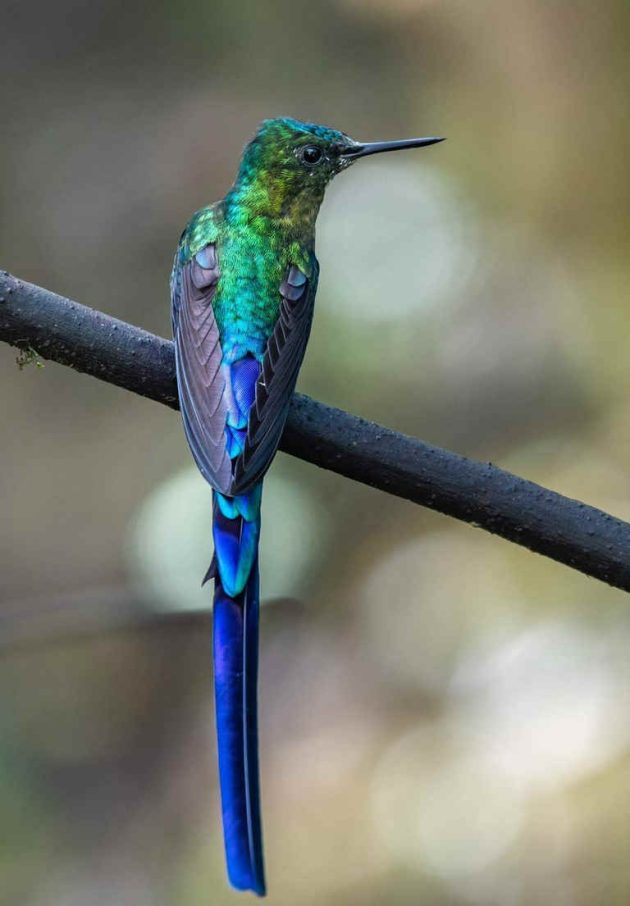
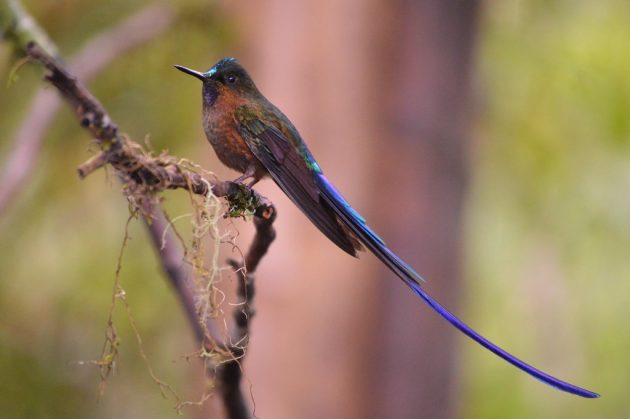
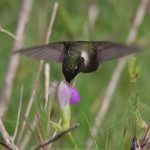
Violet-tailed Sylph
Best Regions for Birding
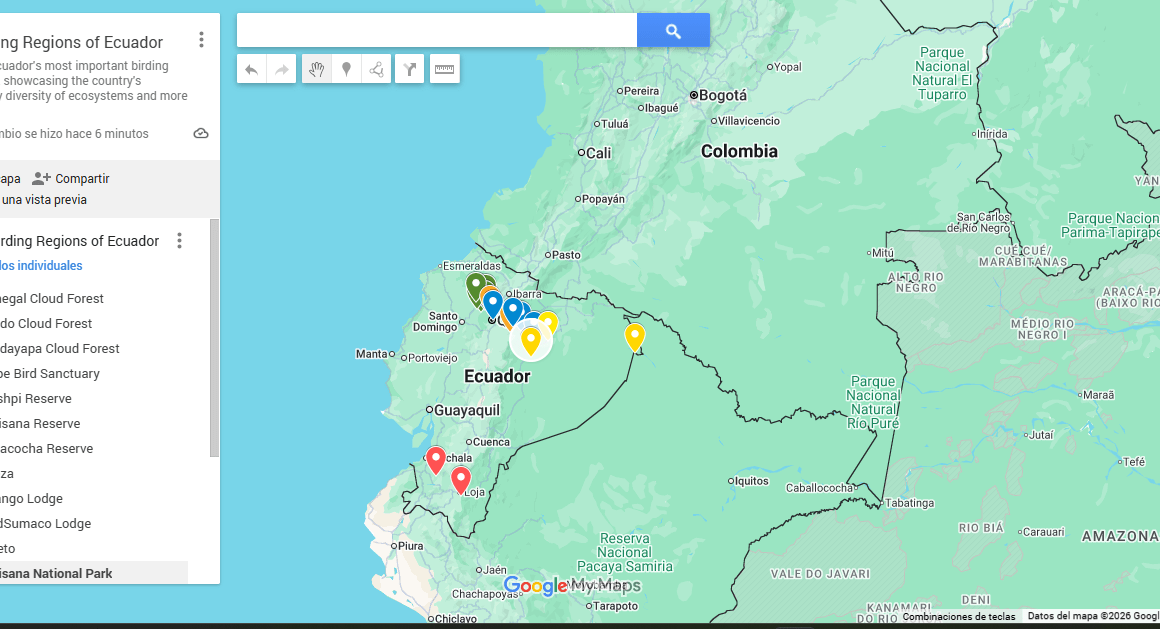
1. Chocó Andean Cloud Forest
Main Locations
- Nanegal
- Tandayapa
- Mindo
- Milpe
- Mashpi
- Refugio Paz de las Aves
Highlights
- Chocó endemic species
- Toucan Barbet
- Plate-billed Mountain Toucan
- Andean Cock-of-the-rock
- Moss-backed Tanager
- Orange-breasted Fruiteater
- Exceptional hummingbird diversity
2. High Andes
Main Locations
- Antisana National Park
- Yanacocha Reserve
- Papallacta Pass
- Zuroloma
Highlights
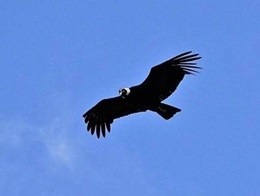
- Andean Condor
- Black-faced Ibis
- Giant Hummingbird
- Ecuadorian Hillstar
- Sword-billed Hummingbird
- Silvery Grebe
3. Eastern Andean Slopes
Main Locations
- Wildsumaco
- Guango Lodge
- San Isidro
- Cosanga
- Baeza
Highlights
- Cock-of-the-rock
- Inca Jay
- Mountain Toucans
- Torrent Ducks
- Mixed-species flocks
4. Amazon Rainforest
Main Locations
- Loreto
- Shandia
- Misahuallí
- Río Napo
- Yasuní National Park
Highlights
- Macaws
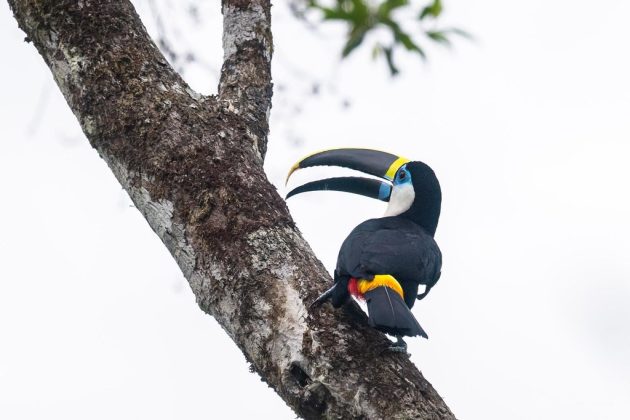
- Toucans
- Hoatzin
- Antbirds
- Cotingas
- Hundreds of rainforest specialties
5. Southern Ecuador
Main Locations
- Tapichalaca
- Buenaventura
- Jorupe
- Podocarpus National Park
Highlights
- Jocotoco Antpitta
- El Oro Parakeet
- Gray-breasted Mountain Toucan
- Rainbow Starfrontlet
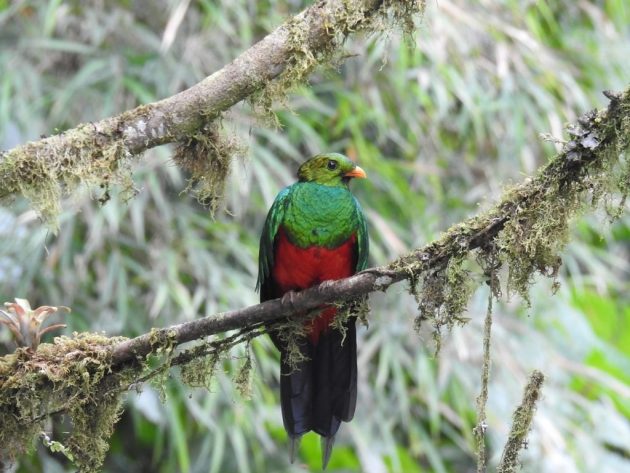
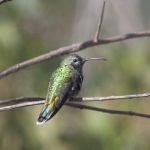
Golden-headed Quetzal
Best Birding Season
One of Ecuador’s greatest advantages as a birding destination is that excellent birdwatching is possible throughout the year. Because the country lies on the equator, there are no extreme seasonal changes, allowing visitors to enjoy outstanding birding in every season. However, weather conditions and bird activity vary slightly between regions.
January – May
This period is considered one of the best times to visit the Chocó Andean Cloud Forest and many parts of the Amazon. Forests are lush and green, birds are highly active, and many species are breeding or displaying. Butterfly diversity is also at its peak.
Highlights
- Excellent bird activity
- Peak butterfly season
- Beautiful green landscapes
- Great opportunities for bird photography
June – August
These months generally bring drier weather to the Andean region, making hiking and birding more comfortable. High-Andean destinations such as Antisana National Park and Yanacocha Reserve often experience clear mornings with spectacular mountain views.
Highlights
- Clear mountain scenery
- Excellent condor observation
- Comfortable hiking conditions
September – December
Another outstanding period for birdwatching across Ecuador. Activity increases again in many cloud forest areas, and weather conditions are often excellent for photography.
Highlights
- Excellent bird activity
- Pleasant weather
- Outstanding photography opportunities
- Ideal for Chocó endemics and hummingbirds
Conclusion
Although Ecuador offers world-class birdwatching throughout the year, the periods from January to May and September to December are generally considered the most rewarding for visitors seeking exceptional bird diversity, photography opportunities, and unforgettable experiences in the country’s diverse ecosystems.
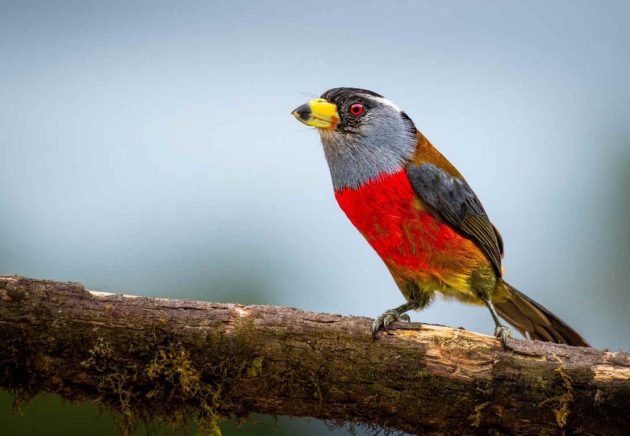
Toucan Barbet
Birding Trip Suggestion(s)
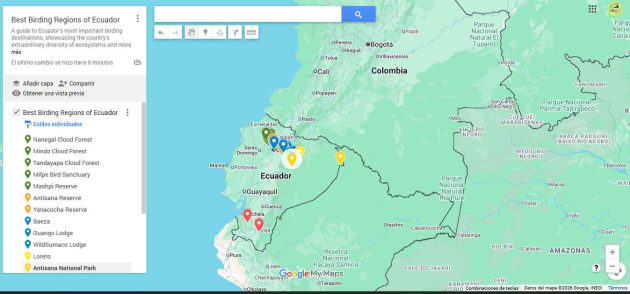
Suggested Route:
- Quito
- Nanegal – Chocó Cloud Forest
- Mindo
- Antisana National Park
- Cosanga – Eastern Andes
- Amazon Rainforest
- Southern Ecuador
Suggested Tours:
Choosing the Right Trip
| Trip Length | Best For |
| 1 Day | Short visits from Quito |
| 3 Days | Introduction to cloud forest birding |
| 7 Days | Chocó endemic specialties |
| 14 Days | Ecuador’s major birding regions |
| 21 Days | Complete birding experience |
1. One-Day Birding Tour
Best for: Visitors with limited time.
Suggested destinations
- Yanacocha Reserve
- Antisana National Park
- Nanegal Cloud Forest
- Mindo Cloud Forest
Highlights
- Hummingbirds
- Andean Condor
- Toucan Barbet
- Golden-headed Quetzal
2. Three-Day Cloud Forest Birding Tour
Best for: First-time visitors.
Suggested route
Quito ? Nanegal ? Tandayapa ? Mindo
Highlights
- Chocó endemic birds
- Cock-of-the-rock
- Hummingbird feeders
- Butterfly photography
3. Seven-Day Northwest Ecuador Birding Tour
Best for: Birdwatchers seeking Chocó endemics.
Suggested route
Quito ? Nanegal ? Mashpi ? Milpe ? Tandayapa ? Mindo
Highlights
- Toucan Barbet
- Plate-billed Mountain Toucan
- Moss-backed Tanager
- Orange-breasted Fruiteater
4. Fourteen-Day Ecuador Birding Tour
Best for: Birders wanting to explore Ecuador’s main ecosystems.
Suggested route
Quito ? Chocó Cloud Forest ? High Andes ? Eastern Andes ? Amazon Rainforest
Highlights
- More than 500 bird species
- Hummingbirds
- Quetzals
- Macaws
- Toucans
- Antbirds
- Mixed-species flocks
5. Twenty-One-Day Grand Ecuador Birding Expedition
Best for: Serious birdwatchers and photographers.
Suggested route
- Chocó Cloud Forest
- High Andes
- Eastern Andes
- Amazon Rainforest
- Southern Ecuador
Highlights
- Ecuador’s most important birding regions
- Endemic species
- Bird photography
- Wildlife observation
- Butterfly photography
Andean Condor
Practical Tips – General
A successful birdwatching trip in Ecuador is about more than choosing the right destination. Proper preparation, suitable equipment, and respect for nature will greatly improve your experience while helping protect the country’s extraordinary biodiversity.
1. Start Early
Bird activity is highest during the first hours after sunrise. Most birding tours begin between 5:30 a.m. and 6:00 a.m., when birds are actively feeding and singing.
2. Wear Appropriate Clothing
Choose comfortable clothing in neutral colors such as green, brown, or gray to blend into the environment.
Recommended:
- Lightweight long-sleeved shirts
- Long pants
- Waterproof jacket
- Hiking boots with good grip
- Hat or cap
3. Bring the Right Equipment
Essential equipment includes:
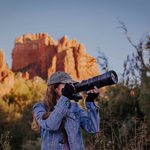
- Binoculars (8×42 or 10×42)
- Camera with a telephoto lens (optional)
- Extra batteries and memory cards
- Rain cover for your camera
- Small backpack
- Reusable water bottle
4. Be Patient and Quiet
Many birds will approach naturally if you remain still and avoid sudden movements. Speaking softly and moving slowly will increase your chances of observing shy species.
5. Respect Wildlife
- Never disturb nesting birds.
- Stay on designated trails.
- Do not feed wildlife.
- Avoid excessive use of bird-call playback.
- Leave no litter behind.
Responsible birdwatching helps protect Ecuador’s unique ecosystems for future generations.
6. Prepare for Changing Weather
Weather conditions in Ecuador can change quickly, especially in cloud forests and the Andes.
Always carry:
- A light rain jacket
- Waterproof protection for electronics
- Quick-drying clothing
7. Hire a Local Birding Guide
A knowledgeable local guide can greatly improve your birding experience by helping you locate target species, recognize bird vocalizations, and understand local habitats and conservation efforts.
Conclusion
With proper preparation and a respectful attitude toward nature, birdwatching in Ecuador can become one of the most rewarding wildlife experiences in the world. Patience, curiosity, and an appreciation for the country’s remarkable biodiversity will create unforgettable memories.
Practical Tips – Bird Photography
- Begin birding early in the morning for the highest activity.
- Remain quiet and patient to enjoy closer wildlife encounters.
- Wear neutral-colored clothing.
- Bring rain protection for both yourself and your camera.
- Hire an experienced local guide to maximize bird sightings.
Violet-tailed Sylph
Books
The Birds of Ecuador by Robert S. Ridgely & Paul J. Greenfield
The most comprehensive reference on Ecuador’s birdlife, covering species identification, distribution, and natural history. An essential resource for serious birdwatchers and researchers.
Birds of Ecuador (Helm Field Guides) by Robert S. Ridgely & Paul J. Greenfield
A practical field guide featuring illustrations, maps, and concise descriptions, making it ideal for use in the field.
Birds of Northern South America by Robin Restall, Clemencia Rodner & Miguel Lentino
An excellent reference for birdwatchers interested in the wider region, including many species found in Ecuador.
White-throated Toucan
Links
- eBird – https://ebird.org
The world’s largest bird observation database, with checklists, hotspot information, and recent sightings. - Macaulay Library – https://macaulaylibrary.org
A comprehensive collection of bird photographs, videos, and sound recordings. - BirdLife International – https://www.birdlife.org
Information on bird conservation, Important Bird Areas (IBAs), and global conservation projects.
Organizations
- Aves y Conservación (BirdLife Ecuador Partner)
- Jocotoco Foundation
- Cornell Lab of Ornithology
These organizations play an important role in bird conservation, scientific research, and environmental education throughout Ecuador.
By Julio Ayala
Julio Ayala is an Ecuadorian naturalist, birding guide, wildlife photographer, and founder of Butterfly & Bird Julio Tours – Ecolodge in Nanegal, Ecuador. Raised in the cloud forests of the Chocó Andean region, he has spent more than two decades exploring its extraordinary biodiversity. Julio specializes in birdwatching, bird photography, butterfly photography, and personalized nature tours throughout Ecuador. Passionate about conservation, he also rescues birds after window collisions whenever possible and works with local children to promote environmental education. Through his guiding and photography, he hopes to inspire visitors from around the world to discover and protect Ecuador’s remarkable wildlife.





Excellent and comprehensive guide to what is clearly a very rich country for birds. Makes me want to pack my bag!
I am beginning to thing you might be working on a Where to Watch Birds of the Planet Earth?